
- Expertise:
- Platform Testing, Cryptocurrency, Retail Investing
- Credentials:
- Active investor since 2013 · 11+ years experience
- Tested:
- 50+ platforms · 200+ guides authored

- Expertise:
- Broker Comparison, ISA Strategy, Portfolio Management
- Credentials:
- Active investor since 2013 · 11+ years experience
- Tested:
- 40+ brokers with funded accounts
How We Test
Real accounts. Real money. Real trades. No demo accounts or press releases.
What we measure:
- Spreads vs advertised rates
- Execution speed and slippage
- Hidden fees (overnight, withdrawal, conversion)
- Actual withdrawal times
Scoring:
Fees (25%) · Platform (20%) · Assets (15%) · Mobile (15%) · Tools (10%) · Support (10%) · Regulation (5%)
Testing team:
Adam Woodhead (investing since 2013), Thomas Drury (Chartered ACII, 2018), Dom Farnell (investing since 2013) — 50+ platforms with funded accounts
Quarterly reviews · Corrections: [email protected]
Disclaimer
Not financial advice. Educational content only. We're not FCA authorised. Consult a qualified advisor before investing.
Capital at risk. Investments can fall. Past performance doesn't guarantee future results.
CFD warning. 67-84% of retail accounts lose money trading CFDs. High risk due to leverage.
Contact: [email protected]
To Buy Bitcoin in Australia, Here’s What You Need to Do:
- Create an account with a crypto exchange like Pepperstone Crypto or Coinbase.
- Verify your identity and deposit AUD into your account.
- Research cryptocurrencies such as Bitcoin or Ethereum.
- Purchase crypto via the exchange’s app or website.
- Use a crypto wallet for secure storage or keep it on the exchange.
 Spot Crypto Exchange
Digital Assets are highly volatile. You may lose some or all of your investment. Please ensure you understand and accept the risks.
Introduction
When I first stepped into the world of cryptocurrency, I was both intrigued by its revolutionary potential and cautious about its volatility. Starting small with Bitcoin, I navigated the learning curve through trial and error, uncovering valuable insights about security, tracking, and market trends. This guide shares my experience to help you confidently start your cryptocurrency journey, tailored specifically for Australian users.
How Can First-Timers Purchase Bitcoin in Australia?
For first-timers, the thought of buying Bitcoin can feel overwhelming, but it doesn’t have to be. When I started, I opted for a beginner-friendly platform — and Pepperstone Crypto’s Convert mode made the process straightforward. The interface made everything clear: from funding my account via OSKO/NPP to seeing my Bitcoin balance update in real-time.
Here’s what I learned:
- Start small: My first purchase was just $100 AUD—it helped me learn without too much risk.
- Research platforms: Pepperstone Crypto offers a flat 0.1% fee with no hidden spreads, while eToro provides social trading features to learn from others.
- Prioritise security: Always transfer your Bitcoin to a secure wallet after purchase.
To Buy Cryptocurrency in Australia, Here’s What You Need to Do:
- Find a trusted exchange: Choose a platform that supports Australian users and AUD transactions.
- Create an account: Sign up with your email and personal details to get started.
- Complete identity verification: Submit your ID and proof of address to meet KYC requirements.
- Add funds: Deposit AUD into your account using methods like PayID, BPAY, or bank transfer.
- Make your first purchase: Select a cryptocurrency, enter the amount, and finalise the transaction.
- Protect your investment: Move your crypto to a private wallet for added security.
Step 1: Which Exchange Should You Use to Buy Bitcoin in Australia?
Choosing the right exchange is the first step, and it largely depends on your goals. Beginners should look for platforms with simplicity and strong customer support, while advanced traders might prioritise low crypto fees and extensive tools. Personally, I started with Coinbase for its clean interface but now primarily use Pepperstone Crypto for its flat 0.1% fees and Kraken Pro for advanced charting.
How to Choose the Right Exchange
Selecting the right platform is essential for secure and smooth cryptocurrency investing. Keep these factors in mind:
Security Features
Look for exchanges that provide:
- Two-factor authentication (2FA) for added login protection.
- Offline cold storage to safeguard funds against hacks.
- Strong encryption protocols to secure transactions and data.
Transaction Costs
Evaluate the Crypto platform’s fees, including:
- Trading fees (maker/taker).
- Deposit and withdrawal fees, as they can significantly impact long-term returns.
Ease of Use
If you’re new to cryptocurrency, choose a platform with:
- An intuitive interface that simplifies navigation.
- Step-by-step guides for making your first trades.
- Reliable customer support to assist when needed.
Legal Compliance
Ensure the exchange complies with Australian regulations and is registered with AUSTRAC (Australian Transaction Reports and Analysis Centre). Compliance ensures the platform meets high standards for security and anti-money laundering (AML) practices.
Below, I’ll discuss three standout platforms for Australians, but you can find a more comprehensive comparison of these exchanges here: Best Crypto Exchanges
| Feature | Pepperstone Crypto | eToro | Kraken | Coinbase |
|---|---|---|---|---|
| Ease of Use | Clean interface with Convert feature for beginners and Spot trading for advanced users. | User-friendly, ideal for beginners with CopyTrading features. | Advanced interface, best for experienced traders. | Extremely user-friendly, great for first-time buyers. |
| Fees | Lowest flat fees; 0.1% maker and 0.1% taker with no hidden spread. | Medium fees; includes spread and withdrawal costs. | Low fees; 0.16% maker, 0.26% taker. | High fees; 1.49% transaction fee plus spread, extra for debit/credit cards. |
| Funding Options | OSKO/NPP bank transfer (free, near-instant). | PayID, POLi, credit/debit cards, bank transfers. | Bank transfer, crypto deposits, wire transfer. | Bank transfer, debit/credit card, PayPal. |
| Crypto Selection | 39 cryptocurrencies (7 Spot + 32 Convert). | 70+ cryptocurrencies, focuses on popular assets. | 200+ cryptocurrencies, including niche options. | 250+ cryptocurrencies, with a focus on variety and education. |
| Security | 2FA, AUSTRAC-registered, Proof of Reserves, institutional-grade custody. | 2FA, cold storage, regulated by global financial authorities. | 2FA, cold storage, SSL encryption. | 2FA, biometric logins, AES-256 encryption. |
| Regulatory Compliance | AUSTRAC registered (100889269), backed by Pepperstone Group (16 years). | Regulated under ASIC and other global financial authorities. | Complies with global standards, including AUSTRAC. | Registered as a Money Services Business and AUSTRAC compliant. |
When I began exploring exchanges, Pepperstone Crypto’s flat 0.1% fee structure caught my attention — no hidden spreads, no tiered complexity. For advanced charting, Kraken Pro stands out, but Coinbase remains my go-to for quick transactions. eToro’s CopyTrading is useful for learning from experienced traders.
Step 2: Register and Verify Your Identity
How to Register and Verify on Pepperstone Crypto
After selecting the platform that suits your needs best, the next step is registering your account. Using Pepperstone Crypto as an example, here’s a simple guide to help you navigate the process.
The registration and verification steps might feel overwhelming at first, but they’re essential for safeguarding your investments and complying with Australian regulations.
Registration Process
- Visit pcrypto.com and click on ”Sign Up”.
- Enter your email address and create a strong password.
- Agree to Pepperstone Crypto’s terms and conditions.
- Confirm your email to activate your account.
KYC Verification
To complete the Know Your Customer (KYC) process:
- Provide your full name, date of birth, and residential address.
- Upload a government-issued ID (e.g., passport or driver’s licence).
- Complete a selfie verification step to confirm your identity matches your ID.
Verification on Pepperstone Crypto is typically fast — in my experience, the entire KYC process was completed in under 35 minutes. As an AUSTRAC-registered exchange (registration 100889269), Pepperstone takes compliance seriously. Once verified, you’ll have full access to Pepperstone Crypto’s Convert mode for simple trades and Spot trading for advanced order types.
This process not only safeguards your account from unauthorised access but also ensures compliance with AUSTRAC and Australian regulatory standards, giving you peace of mind as you begin trading.
Why Is KYC Verification Necessary in Australia?
KYC, or Know Your Customer, is a mandatory process in Australia to comply with federal regulations, including those enforced by AUSTRAC (Australian Transaction Reports and Analysis Centre). It ensures that cryptocurrency exchanges verify user identities to prevent fraud, money laundering, and terrorism financing.
While the process might feel like an extra step, KYC is essential for safeguarding both users and the broader crypto market. Personally, I find it reassuring to know that Australian exchanges prioritise compliance and security, creating a safer environment for investors.
Step 3: Deposit Funds into Your Account
How to Fund Your Pepperstone Crypto Account
Once your Pepperstone Crypto account is verified, the next step is adding funds in Australian dollars (AUD). Pepperstone Crypto supports OSKO/NPP bank transfers, which are free and near-instant — making them the recommended deposit method for Australian users.
Before making a deposit, double-check the payment details provided by Pepperstone Crypto to avoid any errors or delays. The platform’s clean interface will guide you through the funding process step by step.
Here’s a step-by-step guide to depositing AUD into your Pepperstone Crypto account:
- Log in to your Pepperstone Crypto account and go to the “Deposit” section.
- Select AUD bank transfer via OSKO/NPP as your deposit method.
- Enter your deposit amount and note the provided bank details and reference number.
- Complete the transfer from your bank using the details provided — OSKO/NPP transfers typically arrive within seconds.
- Wait for confirmation: OSKO/NPP deposits are near-instant, so your AUD balance should update almost immediately.
Most platforms today cater to Australian regulations, making the process safe and seamless. By taking it step by step, you’ll gain confidence as you go.
What Payment Options Can Australians Use to Fund Their Accounts?
| Payment Method | Speed | Fees | Best For |
|---|---|---|---|
| PayID | Instant | Free | Small, quick deposits |
| BPAY | 1–2 days | Low | Large transactions |
| POLi | Instant | Low | Bank-linked payments |
| Bank Transfer | 1–3 days | Low | High-value transactions |
| Credit/Debit Card | Instant | High | Immediate purchases |
Each payment method has its strengths. For Pepperstone Crypto, I recommend OSKO/NPP bank transfers — they’re free, near-instant, and the simplest way to fund your account. For other exchanges, PayID and BPAY remain solid options depending on the platform’s supported methods.
Step 4: Placing Your First Bitcoin Order
After funding your wallet, the process of buying Bitcoin is simple. Search for Bitcoin on your chosen exchange, select the amount you want to purchase, and confirm the transaction. The first time I bought Bitcoin, I triple-checked everything before hitting “Buy”—it felt like a monumental decision!
How Do You Place a Buy Order on Pepperstone Crypto in Australia?
Pepperstone Crypto offers two ways to buy Bitcoin: Convert mode for beginners who want a simple buy/sell experience, and Spot trading for advanced users who need access to 7 order types including trailing stops.
Using Convert Mode (Beginners):
- Select Convert: Navigate to the Convert section on Pepperstone Crypto.
- Choose BTC/AUD: Select Bitcoin as the cryptocurrency you want to buy.
- Enter the amount: Specify how much AUD you want to spend or how much BTC you want to buy.
- Review and confirm: Check the quoted price and confirm your purchase.
Using Spot Trading (Advanced):
- Navigate to Spot Trading: Open the BTC/AUD trading pair.
- Select your order type: Choose from market, limit, stop-limit, trailing stop, and other advanced order types.
- Enter your order details: Set your price and quantity.
- Review and confirm: Double-check all details before placing your order.
Trading fees on Pepperstone Crypto are a flat 0.1% maker / 0.1% taker with no hidden spreads — what you see is what you pay. My first BTC purchase on Pepperstone Crypto took less than 5 minutes using Convert mode. The clean interface made the process smooth, even as a first-time user. Once completed, your Bitcoin will appear in your Pepperstone Crypto portfolio, ready to be managed or transferred to a private wallet.
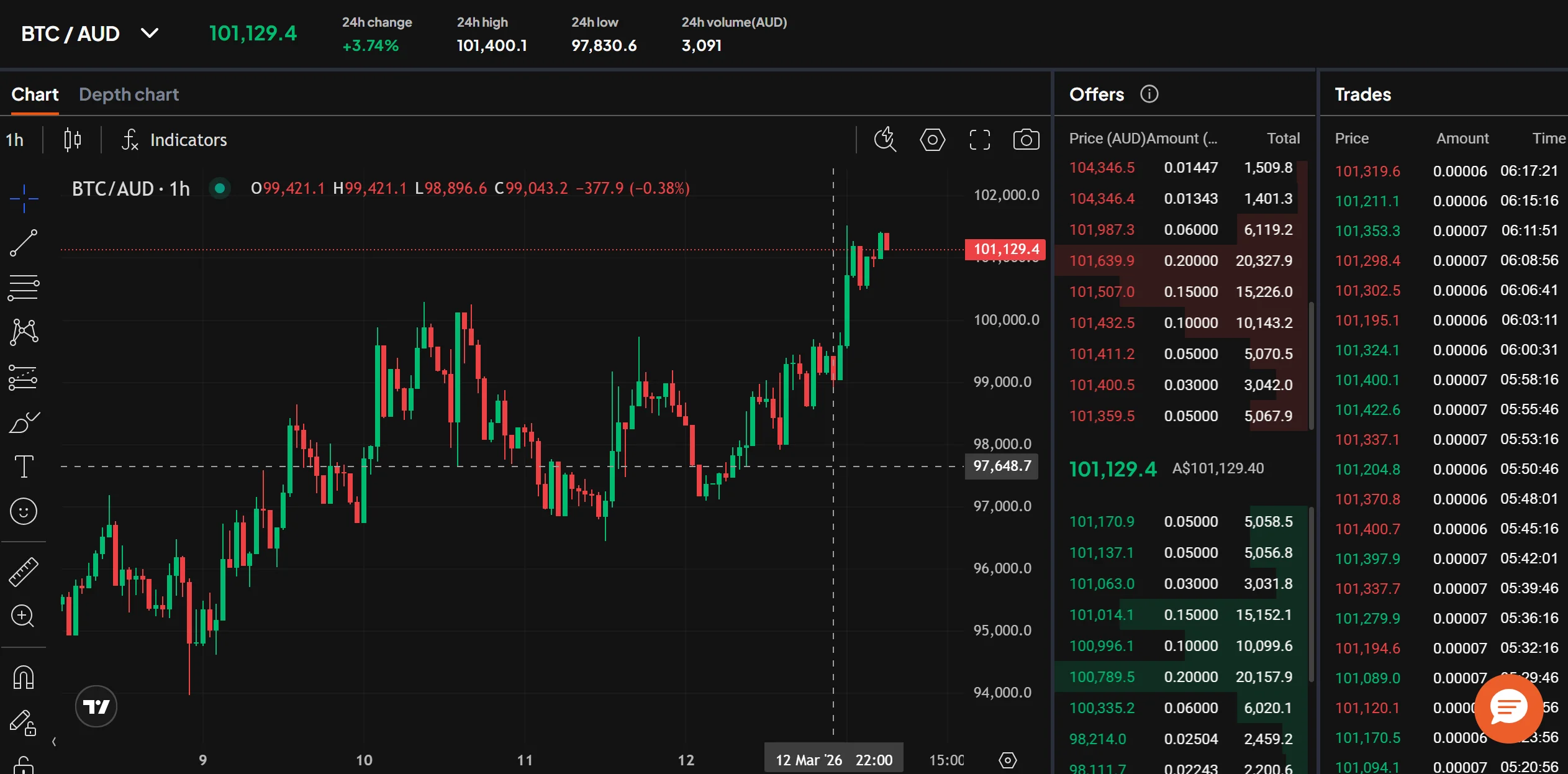
What’s the Difference Between Market and Limit Orders?
- Market Order: Buys crypto instantly at the current price. Ideal for beginners but may have higher costs due to price slippage.
- Limit Order: Sets a specific price for your purchase. Useful for advanced traders seeking better control.
I started with market orders to keep things simple, but now I prefer limit orders for better pricing during volatile markets.
Step 5: Storing your Bitcoin Investment Safely
Should You Store Your Crypto on an Exchange or in a Wallet?
Storing your Bitcoin on an exchange offers convenience, especially for frequent traders, but it comes with risks like potential hacks or platform failures. In contrast, a private wallet provides greater security and full control of your assets, protecting them from external threats.
Personally, I keep a small portion of my crypto on exchanges for quick trades but store the bulk in a hardware wallet for maximum security.
What Are the Pros and Cons of Keeping Crypto on an Exchange?
Keeping Crypto on an Exchange
Pros:
- Convenience: Easy access for frequent trading.
- Ease of Use: No need to manage private keys.
Cons:
- Security: Vulnerable to hacks and outages.
- Control: No full control as the exchange holds your keys.
Using a Private Wallet
Pros:
- Security: Provides full control and ownership of your assets.
- Risk Mitigation: Enhanced security, reducing risks of hacks or exchange failures.
Cons:
- Know-how: Requires setup and understanding of wallet usage.
- Convenience: Less convenient for regular trading due to additional steps for deposits and withdrawals.
The choice depends on your needs. If you’re actively trading, an exchange might be more practical. For long-term storage and higher security, a private wallet is the better option.
How Do You Transfer Crypto to a Private Wallet?
Set Up Your Wallet:
- Hardware wallets (e.g., Ledger Nano X, Trezor Model T) for long-term security.
- Software wallets (e.g., Trust Wallet, Exodus) for active trading.
- Follow the wallet’s setup instructions: Create your account and securely store backup information, such as private keys or recovery phrases.
- Backup your private keys: Store backups in multiple secure locations to ensure access if the wallet is lost or damaged.
Initiate the Transfer from Pepperstone Crypto:
- Log in to your Pepperstone Crypto account and navigate to your Bitcoin balance.
- Click on ”Withdraw” and select Bitcoin (BTC) as the cryptocurrency to transfer.
Enter Your Wallet’s Public Address:
- Copy your wallet’s public address (ensure it matches the cryptocurrency type, e.g., BTC for Bitcoin).
- Paste the address into the designated withdrawal field on Pepperstone Crypto.
- Double-check the address carefully—any mistake can result in a permanent loss of funds.
- Specify the amount of Bitcoin you wish to transfer.
Authorise and Confirm the Transaction:
- Complete any additional security verifications required by Pepperstone Crypto (e.g., two-factor authentication).
- Confirm the transaction to initiate the transfer.
- Your Bitcoin will arrive in your wallet once the blockchain processes the transaction, which may take a few minutes to an hour.
By moving your Bitcoin to a private wallet, you gain full control over your digital assets and reduce the risk of losing them to exchange breaches or online attacks. For me, the peace of mind from using a hardware wallet far outweighs the initial setup effort.
What Are the Best Wallets for Securing Bitcoin in Australia?
| Wallet | Type | Features | Security Level | Price (AUD) |
|---|---|---|---|---|
| Ledger Nano X | Hardware | Offline storage, Bluetooth-enabled | Very High | $239 AUD |
| Trezor Model T | Hardware | Easy setup, touchscreen interface | Very High | $299 AUD |
| Trust Wallet | Software | Mobile-friendly, supports multi-crypto | Medium | Free |
| Exodus Wallet | Software | Desktop/mobile compatibility, staking options | Medium | Free |
I personally use the Ledger Nano X—it feels reassuring to know my Bitcoin is stored offline. For those who prefer simplicity, Trezor is an excellent choice.
Check out our guide for an in-depth look at wallet options tailored for Australians. Explore the Best Wallets for Australians
Step 6: Tracking and Managing Your Bitcoin Investment
How to Track Your Bitcoin Investment
Tracking your Bitcoin investment is essential to stay informed about BTC/AUD price movements, halving cycles, and broader market trends. I check my holdings daily — it’s a simple habit that keeps me in control of my position and helps me make better decisions about when to hold or accumulate more.
Portfolio Dashboards
Pepperstone Crypto provides a clean portfolio dashboard that offers real-time tracking of your Bitcoin holdings and performance. Key features include:
- BTC/AUD Price Tracking: Monitor your Bitcoin position against the Australian dollar in real time.
- Trade History: Review all your past Bitcoin purchases and sales with timestamps, prices, and fees.
- Proof of Reserves: Pepperstone Crypto publishes publicly accessible Proof of Reserves, so you can verify that your Bitcoin is fully backed at all times.
For me, having full transparency over my holdings — including the ability to verify reserves — has been invaluable. It gives me confidence that my Bitcoin is where it should be.
Price Alerts and Order Management
Pepperstone Crypto’s Spot trading platform supports 7 order types, including trailing stops, which let you automate your Bitcoin strategy:
- Trailing Stop Orders: Automatically adjust your stop price as Bitcoin moves in your favour — a powerful tool for locking in gains during volatile BTC/AUD price swings.
- Limit Orders: Set target buy prices for Bitcoin and let the platform execute when the price reaches your level.
These tools have saved me from missing key entry points on more than one occasion, particularly around Bitcoin halving events when volatility tends to spike.
Market News and Bitcoin Insights
Staying informed about Bitcoin-specific developments is critical for long-term success. Key metrics I track regularly include:
- BTC/AUD Exchange Rate: The primary price pair for Australian Bitcoin investors.
- Bitcoin Dominance: Bitcoin’s share of the total cryptocurrency market cap — a useful gauge of market sentiment.
- Halving Cycle Timing: Bitcoin’s supply halves roughly every four years (most recently in April 2024), which historically impacts price trends.
I keep an eye on these metrics through a combination of Pepperstone Crypto’s trading interface and external resources.
Additional Tools for Tracking
For a broader market perspective, I use external tools to complement Pepperstone Crypto’s dashboard:
- CoinGecko: Tracks live BTC/AUD prices, Bitcoin market cap, and historical price charts.
- CoinMarketCap: Offers detailed Bitcoin trading volumes, dominance charts, and on-chain metrics.
- Crypto Pro: A portfolio tracker with advanced analytics, price alerts, and news aggregation tailored for Bitcoin holders.
Combining Pepperstone Crypto’s built-in tools with external platforms like CoinGecko and Crypto Pro provides a comprehensive view of Bitcoin’s position in the market. These resources make it easier to track BTC/AUD trends and time your investment decisions.
How Can Bitcoin ATMs Be Used Alongside Exchanges in Australia?
Bitcoin ATMs are a convenient way to buy Bitcoin using cash. Scattered across Australian cities, these machines are perfect for quick, small purchases when you’re on the go. However, the fees are generally higher compared to online exchanges, so I only use them occasionally.
To make the most of Bitcoin ATMs:
- Pair them with an online wallet for instant storage.
- Use them as a backup option when traditional methods aren’t accessible.
While they’re not my first choice, Bitcoin ATMs are a handy alternative for cash-based transactions.
What Mistakes Should Australians Avoid When Buying Bitcoin?
Buying Bitcoin can be exciting, but there are pitfalls to avoid:
- Falling for scams: Only use trusted platforms and never share your private keys.
- Using unsecured platforms: Choose exchanges with strong security and regulatory compliance.
- Panic-selling: The market fluctuates, but patience often pays off.
Always transfer your Bitcoin to a private wallet after purchase for added security. Double-check wallet addresses and transaction details to avoid costly errors. These simple steps have saved me from potential losses more than once.
What Should You Know About Bitcoin Before You Buy?
How Does Bitcoin Work?
Bitcoin is a decentralised digital currency that operates on blockchain technology. Instead of relying on banks, transactions are verified by a network of computers called nodes. Each transaction is recorded on a public ledger, ensuring transparency and security.
I was initially fascinated by how Bitcoin eliminates the need for traditional intermediaries. Learning how blockchain works gave me confidence in its potential as a future-proof asset.
What’s the Role of Blockchain in Bitcoin Transactions?
Blockchain is Bitcoin’s foundation, acting as a secure and tamper-proof ledger. Each transaction is grouped into a “block” and linked to the previous one, creating an immutable chain. Cryptographic verification ensures the data can’t be altered, preventing fraud.
This structure means every Bitcoin transaction is traceable and secure, which is one of the reasons I trust it as a long-term investment. Blockchain is the game-changer that makes Bitcoin truly unique.
Is Bitcoin a Smart Investment for Australians?
What Makes Bitcoin an Appealing Asset?
Bitcoin’s limited supply (capped at 21 million coins) and global acceptance make it a sought-after digital asset. Its decentralised nature gives it resilience against inflation, and its potential for high returns attracts both retail and institutional investors.
For me, Bitcoin’s appeal lies in its accessibility—I can buy and store it anytime without relying on traditional banks. It’s empowering to own a piece of what feels like the future of finance.
What Risks Are Involved in Bitcoin Investing?
Bitcoin’s volatility is its most significant risk—prices can swing dramatically in short periods. Additionally, cybersecurity threats pose risks if you don’t secure your holdings properly.
To mitigate these risks, I invest cautiously, only using funds I can afford to lose. I also moved my Bitcoin to a hardware wallet for peace of mind, knowing it’s safe from potential hacks.
What Is Bitcoin’s Long-Term Potential as an Investment?
Bitcoin’s increasing adoption by companies, institutions, and governments suggests it holds long-term value. Its fixed supply and decentralised design make it an attractive hedge against inflation.
In my view, Bitcoin’s biggest strength is its resilience—it’s survived market crashes and continues to grow in popularity. For those willing to hold through market fluctuations, Bitcoin could remain a key digital asset for years to come.
How Does Bitcoin Compare to Other Cryptocurrencies?
Bitcoin is the pioneer of cryptocurrencies, offering unmatched security and widespread global acceptance. While other cryptocurrencies like Ethereum bring innovations such as smart contract functionality, they often come with added complexity.
For me, Bitcoin stands out because of its simplicity as digital money. It’s easier to understand as a beginner and remains a reliable choice even as I explore other projects like Ethereum, XRP or Solana. If you’re interested in faster, lower-cost transactions, see our guide on how to buy XRP in Australia.
What Are the Final Steps to Start Your Bitcoin Journey in Australia?
Starting your Bitcoin journey is simple:
- Start small: Buy a manageable amount to learn how the market works.
- Secure your Bitcoin: Transfer it to a trusted wallet.
- Educate yourself: Stay informed about the market and investment strategies.
Platforms like Pepperstone Crypto or Coinbase are great starting points for Australians. When I began, I made small, calculated moves and gradually gained confidence. Taking that first step is the hardest but most rewarding part.
Your capital is at risk.
Frequently Asked Questions
Is it legal to buy Bitcoin in Australia?
Yes, buying and selling Bitcoin is completely legal in Australia. Cryptocurrency exchanges must register with AUSTRAC (Australian Transaction Reports and Analysis Centre) and comply with anti-money laundering (AML) and counter-terrorism financing (CTF) laws. Always use an AUSTRAC-registered exchange like Pepperstone Crypto (registration 100889269) for peace of mind.
How much Bitcoin can I buy with $100 AUD?
You can buy a fraction of Bitcoin with any amount — there's no minimum whole-coin requirement. At current prices, $100 AUD buys a small fraction of one BTC. Most exchanges, including Pepperstone Crypto, let you purchase as little as $1 worth of Bitcoin. The exact amount depends on the current BTC/AUD exchange rate.
Do I pay tax on Bitcoin in Australia?
Yes. The Australian Taxation Office (ATO) treats Bitcoin as property, not currency. Capital gains tax (CGT) applies when you sell, trade, or gift Bitcoin for a profit. If you hold Bitcoin for more than 12 months, you may qualify for a 50% CGT discount. Keep records of all transactions — most exchanges provide transaction history exports to simplify tax reporting.
What is the Bitcoin halving and how does it affect price?
Bitcoin halving is an event that occurs roughly every four years, cutting the mining reward in half. This reduces the rate at which new Bitcoin enters circulation, increasing scarcity. Historically, halvings have preceded significant price increases, though past performance doesn't guarantee future results. The most recent halving occurred in April 2024.
Can I buy Bitcoin with PayID in Australia?
Yes, many Australian exchanges accept PayID for instant AUD deposits. Pepperstone Crypto uses OSKO/NPP bank transfers that arrive near-instantly and are free of charge. PayID is one of the fastest ways to fund your account and start buying Bitcoin in Australia.
References
Digital Assets are highly volatile. You may lose some or all of your investment. Please ensure you understand and accept the risks.