
- Expertise:
- Platform Testing, Cryptocurrency, Retail Investing
- Credentials:
- Active investor since 2013 · 11+ years experience
- Tested:
- 50+ platforms · 200+ guides authored

- Expertise:
- CFD Trading, Forex, Derivatives, Risk Management
- Credentials:
- Chartered ACII (2018) · Trading since 2012
- Tested:
- 40+ forex & CFD platforms with live accounts
How We Test
Real accounts. Real money. Real trades. No demo accounts or press releases.
What we measure:
- Spreads vs advertised rates
- Execution speed and slippage
- Hidden fees (overnight, withdrawal, conversion)
- Actual withdrawal times
Scoring:
Fees (25%) · Platform (20%) · Assets (15%) · Mobile (15%) · Tools (10%) · Support (10%) · Regulation (5%)
Testing team:
Adam Woodhead (investing since 2013), Thomas Drury (Chartered ACII, 2018), Dom Farnell (investing since 2013) — 50+ platforms with funded accounts
Quarterly reviews · Corrections: [email protected]
Disclaimer
Not financial advice. Educational content only. We're not FCA authorised. Consult a qualified advisor before investing.
Capital at risk. Investments can fall. Past performance doesn't guarantee future results.
CFD warning. 67-84% of retail accounts lose money trading CFDs. High risk due to leverage.
Contact: [email protected]
What Is the Cheapest Crypto Exchange in Ireland?
MEXC is Ireland's cheapest crypto exchange with 0% maker fees and taker fees from just 0.01%. However, Kraken ranks first overall as the only major exchange holding a MiCA license from the Central Bank of Ireland, combining competitive 0.16% maker fees with full regulatory protection.
Investing in crypto carries a high level of risk.
Trading and investing involve risk. Capital at Risk
Investing in crypto carries a high level of risk.
Investing in crypto carries a high level of risk.

Investing in crypto carries a high level of risk.
Investing in crypto carries a high level of risk.

Investing in crypto carries a high level of risk.
How Do Ireland's Cheapest Crypto Exchanges Compare?
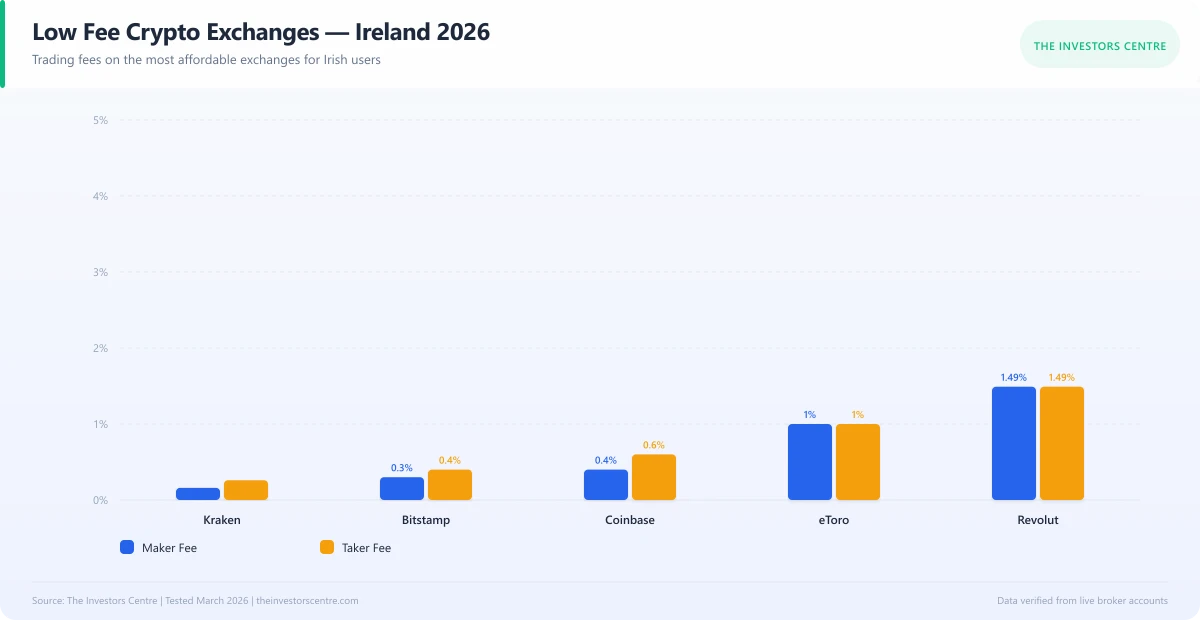
All seven exchanges offer free SEPA transfers for EUR deposits, making bank transfers the most cost-effective funding method for Irish investors. The key differentiator lies in trading fees and regulatory protection, with Kraken being the only platform to hold a full MiCA CASP license directly from the Central Bank of Ireland.
| # | Provider | Maker Fee | Taker Fee | SEPA Deposit | CBI Status | Rating |
|---|---|---|---|---|---|---|
| 1 | Kraken | 0.16% | 0.26% | Free | MiCA Licensed | 4.8/5 |
| 2 | MEXC | 0% | 0.01% | Free | Not Registered | 4.7/5 |
| 3 | Bybit | 0.01% | 0.06% | Free | EU Passported | 4.5/5 |
| 4 | OKX | 0.08% | 0.10% | Free | MiCA Compliant | 4.45/5 |
| 5 | Binance | 0.10% | 0.10% | Free | MiCA Compliant | 4.3/5 |
| 6 | Bitstamp | 0.30% | 0.40% | Free | EU CASP | 4.1/5 |
| 7 | Crypto.com | 0.075% | 0.075% | Free | MiCA Compliant | 3.9/5 |
Here Are The Top 7 Best Low Fee Crypto Exchanges in Ireland:
1. Kraken — Best Overall for Irish Investors
2. MEXC — Cheapest Trading Fees
3. Bybit — Best for Active Traders
4. OKX — Best Low Fees With Advanced Features
5. Binance — Best Overall Value
6. Bitstamp — Best for Free SEPA Withdrawals
7. Crypto.com — Best for Fee-Free Card Deposits
Kraken — Best Overall for Irish Investors
MiCA Licensed by CBI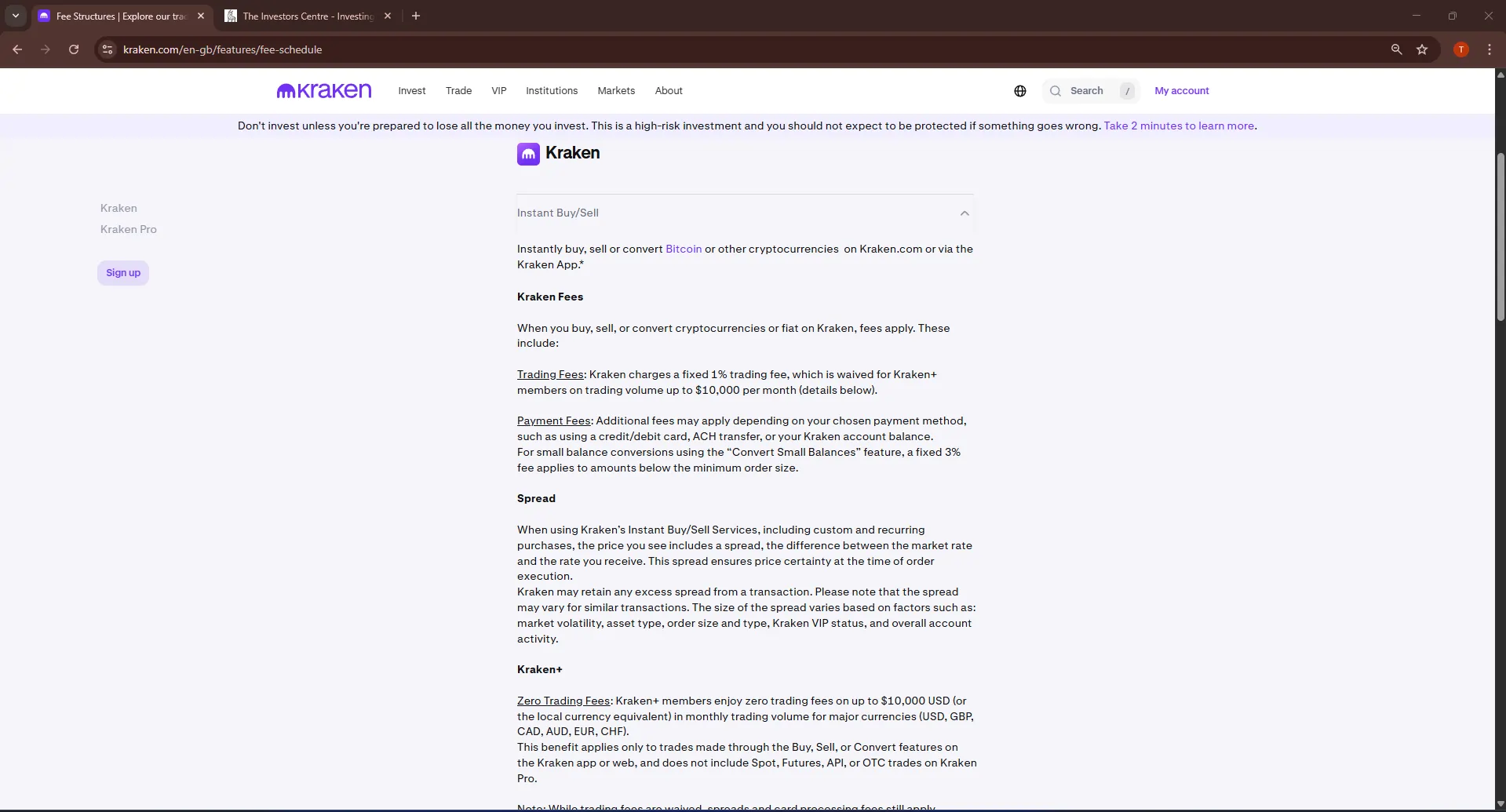
Pros
- MiCA licensed by Central Bank of Ireland (Registration No. C559106)
- Never been hacked since 2011 launch
- Free SEPA deposits with same-day processing
- 400+ cryptocurrencies available
Cons
- Higher fees than MEXC and Bybit
- Card deposits charge 3.75%
What Are Kraken's Trading Fees?
Kraken charges 0.16% maker fees and 0.26% taker fees for spot trading on Kraken Pro. These rates decrease with higher 30-day trading volumes, dropping to 0% maker and 0.10% taker for volumes exceeding $10 million.
While not the cheapest on this list, Kraken's fees remain competitive for a fully regulated exchange. A €1,000 market order costs €2.60 in trading fees, compared to €0.10 on MEXC.
Are There Any Hidden Costs on Kraken?
Kraken's main hidden cost is card deposits at 3.75%, which is higher than most competitors. Withdrawal fees vary by cryptocurrency and network, with Bitcoin withdrawals costing 0.00001 BTC on the Lightning Network or 0.0001 BTC on-chain.
The platform uses transparent pricing with no spread markup on Kraken Pro. Staking services are available with no lock-up periods, though Irish users face restrictions on certain assets under MiCA rules.
How Can You Deposit EUR for Free on Kraken?
SEPA bank transfers are completely free on Kraken and typically arrive within 1-3 business days. Irish investors can also use instant SEPA transfers for faster processing, though some banks may charge a small fee on their end.
To avoid the 3.75% card fee, always choose bank transfer when depositing euros. Kraken also accepts wire transfers, though these carry a €5 fee for deposits under €5,000.
What Is Kraken's Regulatory Status in Ireland?
Kraken holds a full MiCA CASP license directly from the Central Bank of Ireland (Registration No. C559106), granted in June 2025. This makes it the only major global exchange with direct Irish regulatory authorisation under the new EU crypto framework.
The MiCA license provides Irish investors with standardised consumer protections including segregated client funds, transparent fee disclosure, and clear complaint procedures. Kraken's 14-year track record without security breaches adds further confidence for safety-conscious investors.
MEXC — Cheapest Trading Fees
0% Maker Fees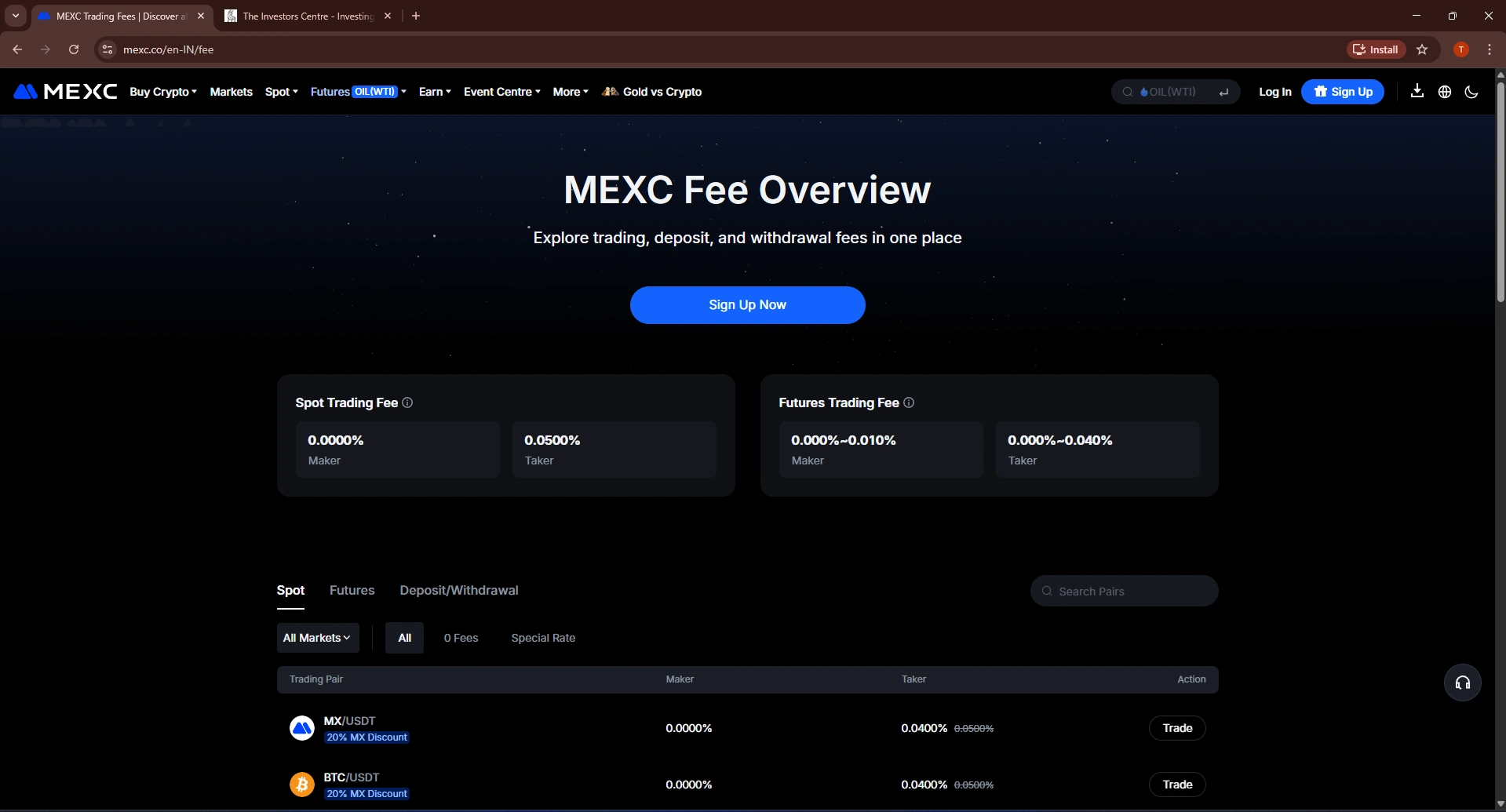
Pros
- 0% maker fees and 0.01% taker fees
- 1,500+ cryptocurrencies available
- Free SEPA deposits
- No minimum deposit requirement
Cons
- Not registered with Central Bank of Ireland or EU CASP
- Card deposits charge 2%
Why Are MEXC's Fees So Low?
MEXC's 0% maker and 0.01% taker fees are designed to attract high-volume traders and compete with established exchanges. The platform generates revenue from other sources including futures trading, margin lending, and listing fees from new cryptocurrency projects.
A €1,000 market order on MEXC costs just €0.10 in taker fees — 26 times cheaper than Kraken's €2.60. Limit orders incur zero fees, making MEXC particularly attractive for patient traders willing to wait for order fills.
How Do You Fund Your MEXC Account?
SEPA bank transfers are free and typically process within 1-3 business days. Card deposits are available with a 2% fee, lower than most competitors but still significant on larger amounts.
MEXC supports multiple fiat currencies including EUR, USD, and GBP. The platform also offers peer-to-peer trading for instant fiat-to-crypto conversions, though P2P rates may include spreads from individual sellers.
What Makes MEXC's Altcoin Selection Special?
MEXC lists over 1,500 cryptocurrencies — the largest selection on this list. The exchange is known for listing new and emerging tokens quickly, often before larger competitors like Binance or Kraken.
This extensive selection appeals to investors seeking early access to potential high-growth projects. However, many smaller altcoins carry higher risk and lower liquidity. Irish investors should conduct thorough research before trading obscure tokens.
What Is MEXC's Regulatory Position in Ireland?
MEXC operates globally under various compliance frameworks but does not hold a MiCA CASP license or registration from the Central Bank of Ireland. The exchange follows international KYC/AML standards and restricts services in certain jurisdictions.
Irish investors should be aware that MEXC may need to obtain EU authorisation or exit the market by December 2025 when Ireland's MiCA transitional period ends. The platform's future availability for Irish residents remains uncertain without regulatory registration.
Bybit — Best for Active Traders
0.01% Maker Fees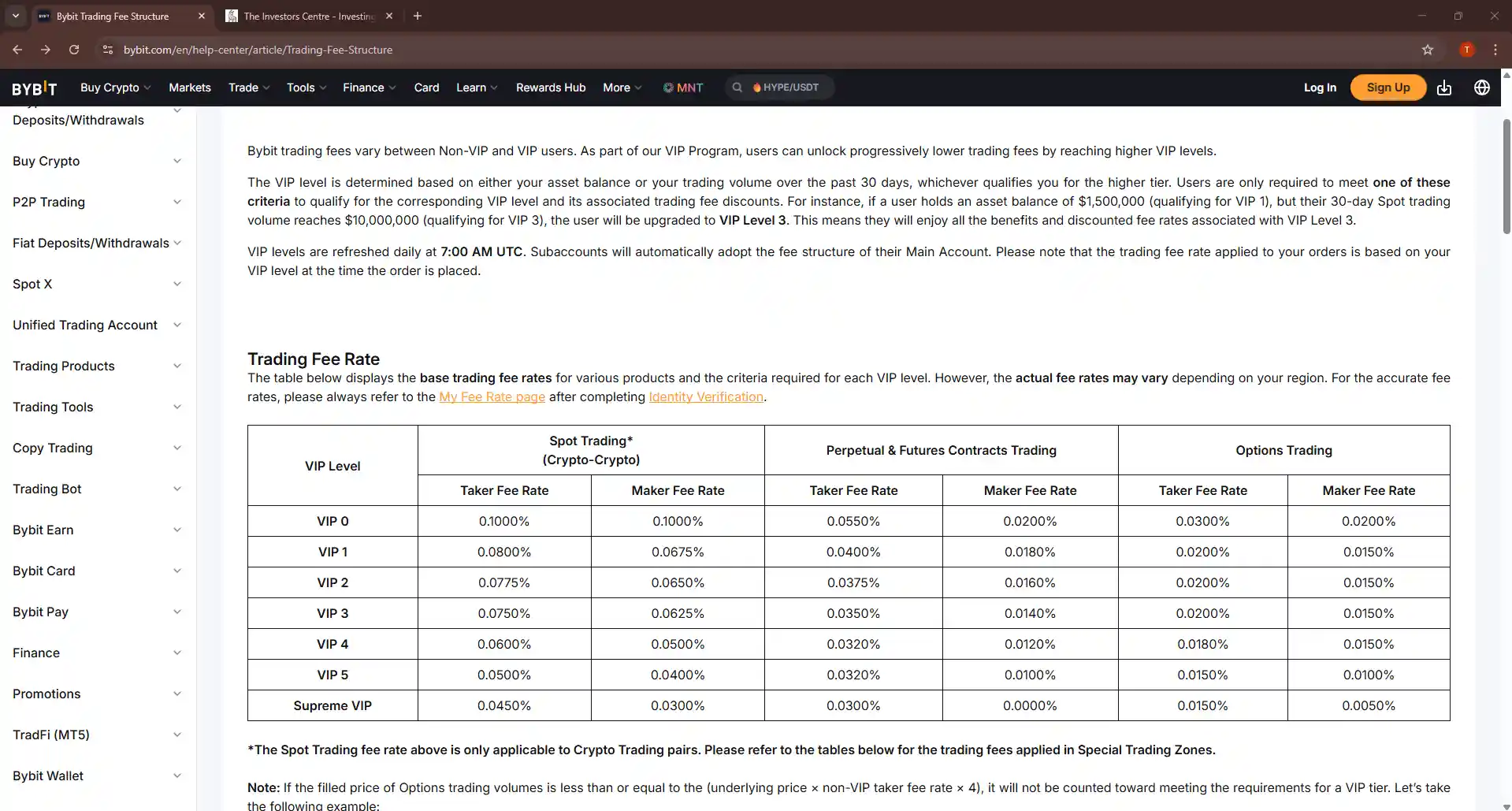
Pros
- 0.01% maker and 0.06% taker fees
- EU passported under MiCA framework
- Advanced trading tools and derivatives
- Copy trading available
Cons
- Complex interface for beginners
- Card deposits charge 1.99%
How Competitive Are Bybit's Trading Fees?
Bybit's 0.01% maker and 0.06% taker fees are among the lowest in the industry. A €10,000 trade costs just €6 in taker fees, compared to €26 on Kraken or €40 on Bitstamp.
Fee discounts are available through Bybit's VIP program, with the highest tiers paying 0% maker and 0.02% taker. The platform also offers fee rebates for market makers providing liquidity on less-traded pairs.
What Trading Tools Does Bybit Offer?
Bybit provides institutional-grade tools including TradingView charts, advanced order types (conditional orders, OCO, iceberg), and API access for algorithmic trading. The platform supports spot, futures, and options trading across 400+ cryptocurrencies.
Grid trading bots automate buy-low-sell-high strategies, while the Bybit app includes trading signals and market analysis. These advanced features make Bybit particularly suitable for experienced traders seeking sophisticated execution options.
How Does Copy Trading Work on Bybit?
Bybit's copy trading allows Irish investors to automatically replicate the trades of experienced traders. You can browse trader performance statistics, including win rates and average returns, before choosing who to follow.
Copy trading uses your own Bybit account funds and you maintain control to stop copying at any time. This feature suits beginners wanting to learn from experts or busy investors preferring passive strategies. However, past performance doesn't guarantee future results.
What Is Bybit's Regulatory Position in Europe?
Bybit operates in Ireland through EU passporting, meaning it holds authorisation from another EU member state that allows it to provide services across the European Economic Area. The exchange is working towards full MiCA compliance ahead of the December 2025 deadline.
While not directly licensed by the Central Bank of Ireland like Kraken, Bybit's EU passporting provides a level of regulatory oversight. Irish investors should verify that their activities fall under passporting provisions and understand the consumer protections available.
OKX — Best Low Fees With Advanced Features
MiCA Compliant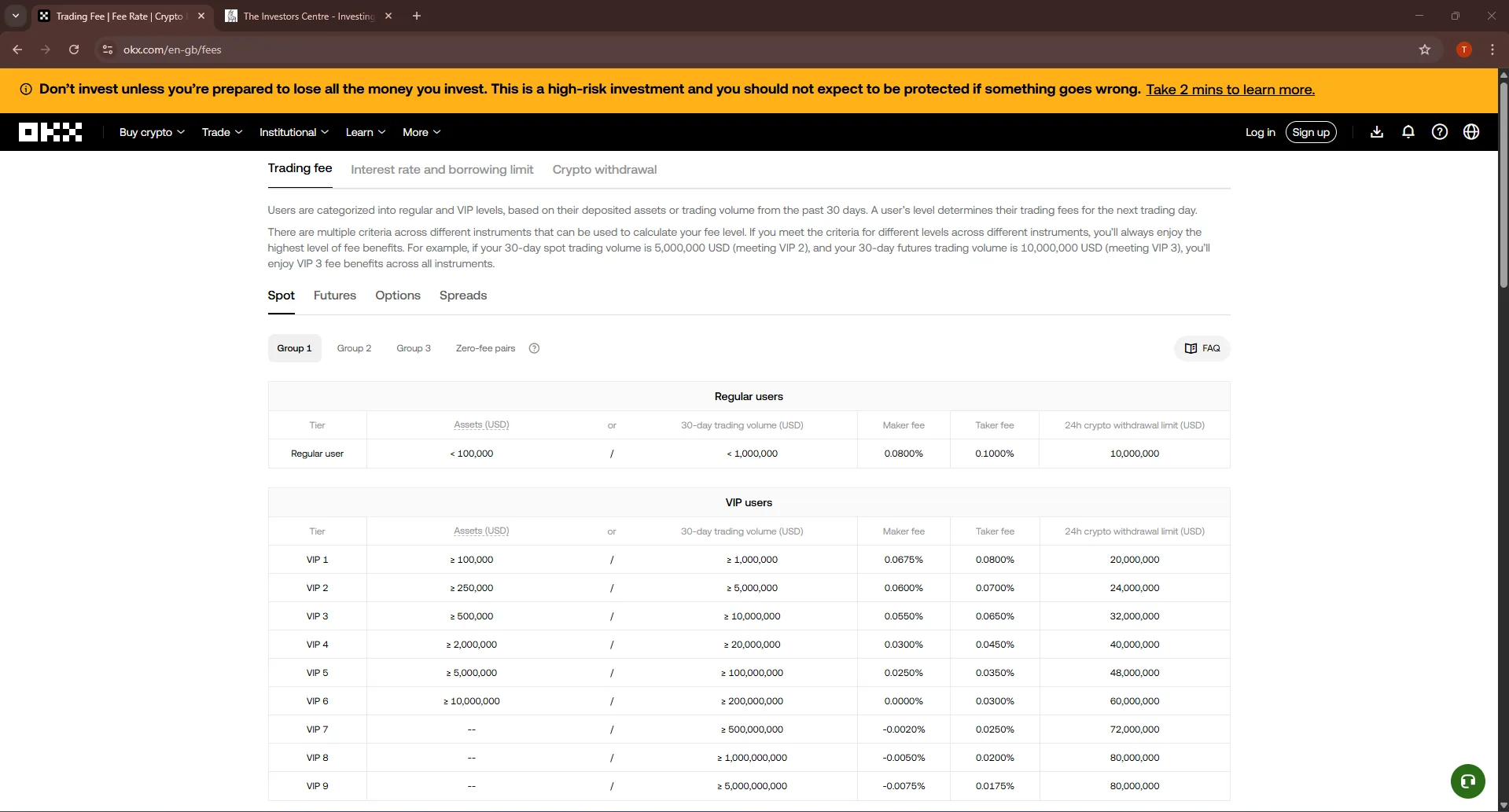
Pros
- 0.08% maker and 0.10% taker fees
- MiCA compliant under EU framework
- Integrated DeFi and Web3 wallet
- 350+ cryptocurrencies and NFT marketplace
Cons
- Not directly licensed by Central Bank of Ireland
- Card deposits charge 1.99%
How Do OKX's Fees Compare?
OKX charges 0.08% maker and 0.10% taker fees, positioning it between ultra-low-cost platforms (MEXC, Bybit) and premium exchanges (Kraken, Bitstamp). A €1,000 trade costs €1 in fees, offering substantial savings versus traditional exchanges.
VIP tiers reduce fees further, with the highest level paying 0% maker and 0.05% taker. OKX also runs promotional campaigns offering fee discounts for new users and high-volume traders.
What Web3 Capabilities Does OKX Provide?
OKX's integrated Web3 wallet connects directly to decentralised applications (dApps), allowing Irish users to participate in DeFi protocols, NFT marketplaces, and blockchain gaming without leaving the platform.
The wallet supports 70+ blockchain networks including Ethereum, Polygon, and Arbitrum. Users can swap tokens directly through DEX aggregators, earning potential savings versus centralised exchange rates. This makes OKX particularly appealing for investors exploring beyond basic trading.
How Does OKX's DeFi Integration Work?
OKX simplifies DeFi access by aggregating yields from major protocols like Aave, Compound, and Curve. Irish users can earn interest on their crypto holdings without manually navigating complex DeFi interfaces.
The platform also offers staking services for proof-of-stake cryptocurrencies with competitive rates. However, DeFi activities carry additional risks including smart contract vulnerabilities and impermanent loss. Irish investors should understand these risks before allocating significant funds.
What Is OKX's MiCA Compliance Status?
OKX operates under MiCA compliance through authorisation from another EU member state, similar to Bybit's passporting arrangement. The exchange has publicly committed to meeting full MiCA requirements and maintaining European operations.
While not holding a direct Central Bank of Ireland license, OKX's EU authorisation provides regulatory oversight and consumer protections under the MiCA framework. The platform's continued availability in Ireland appears secure beyond the December 2025 transitional deadline.
Binance — Best Overall Value
World's Largest Exchange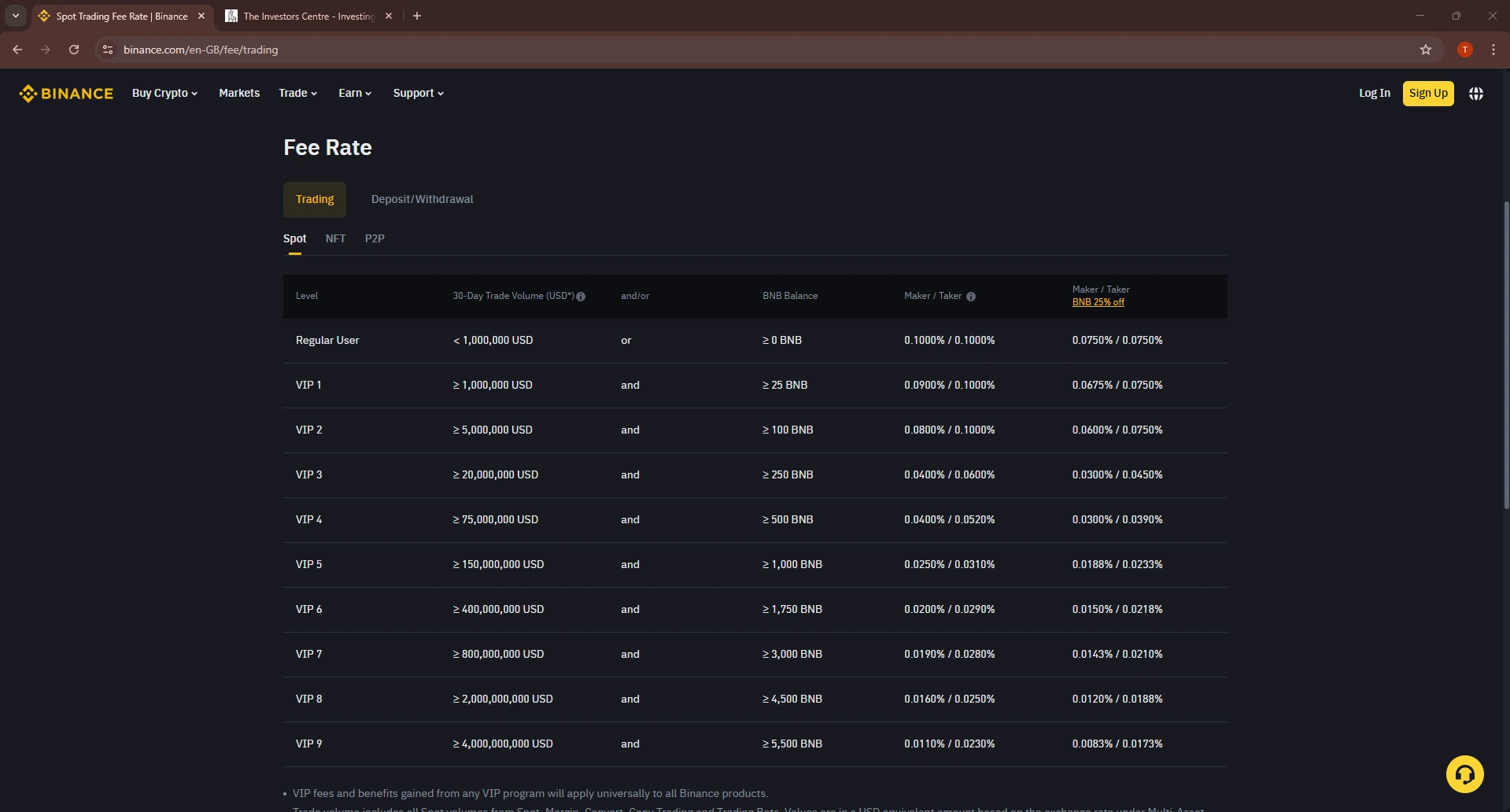
Pros
- 0.10% maker and taker fees
- 600+ cryptocurrencies with deep liquidity
- Beginner-friendly Lite mode available
- Comprehensive earn products (staking, savings, launchpad)
Cons
- Can be overwhelming for complete beginners
- Card deposits charge 1.8%
How Can You Lower Binance's Trading Fees?
Binance's standard 0.10% maker and taker fees already beat most competitors, but discounts are available through holding BNB (Binance Coin) for a 25% reduction. This brings effective fees down to 0.075% — cheaper than Crypto.com and competitive with OKX.
VIP tiers offer further discounts for high-volume traders, with the top tier paying 0.02% maker and 0.04% taker. Irish investors trading over €1 million monthly should investigate VIP status for maximum savings.
Is Binance Suitable for Irish Beginners?
Binance offers "Lite" mode — a simplified interface for beginners focusing on basic buying and selling. This removes the complexity of the pro trading view while maintaining access to Binance's full cryptocurrency selection.
The mobile app includes step-by-step tutorials and an extensive knowledge base covering everything from first purchases to security best practices. Binance Academy provides free educational content about blockchain technology, making it more beginner-friendly than its reputation suggests.
What Earning Opportunities Does Binance Provide?
Binance offers extensive earn products including flexible savings (withdraw anytime), locked staking (higher rates for commitment), and Launchpad (early access to new tokens). Irish users can earn yield on idle crypto without active trading.
Simple Earn provides automatic interest on 180+ cryptocurrencies with no lock-up period. Rates vary by asset and market conditions, typically ranging from 1-8% APY. However, earnings constitute taxable income under Irish tax law, not capital gains.
Why Does Binance's Liquidity Matter?
As the world's largest exchange by trading volume, Binance offers unmatched liquidity. This means tighter spreads on trades, minimal slippage on large orders, and faster execution — particularly important for altcoin traders.
Irish investors trading smaller cap cryptocurrencies benefit significantly from Binance's depth. On less liquid exchanges, a €5,000 order might move the market noticeably. On Binance, the same order typically executes near mid-market price with minimal impact.
Bitstamp — Best for Free SEPA Withdrawals
EU CASP Licensed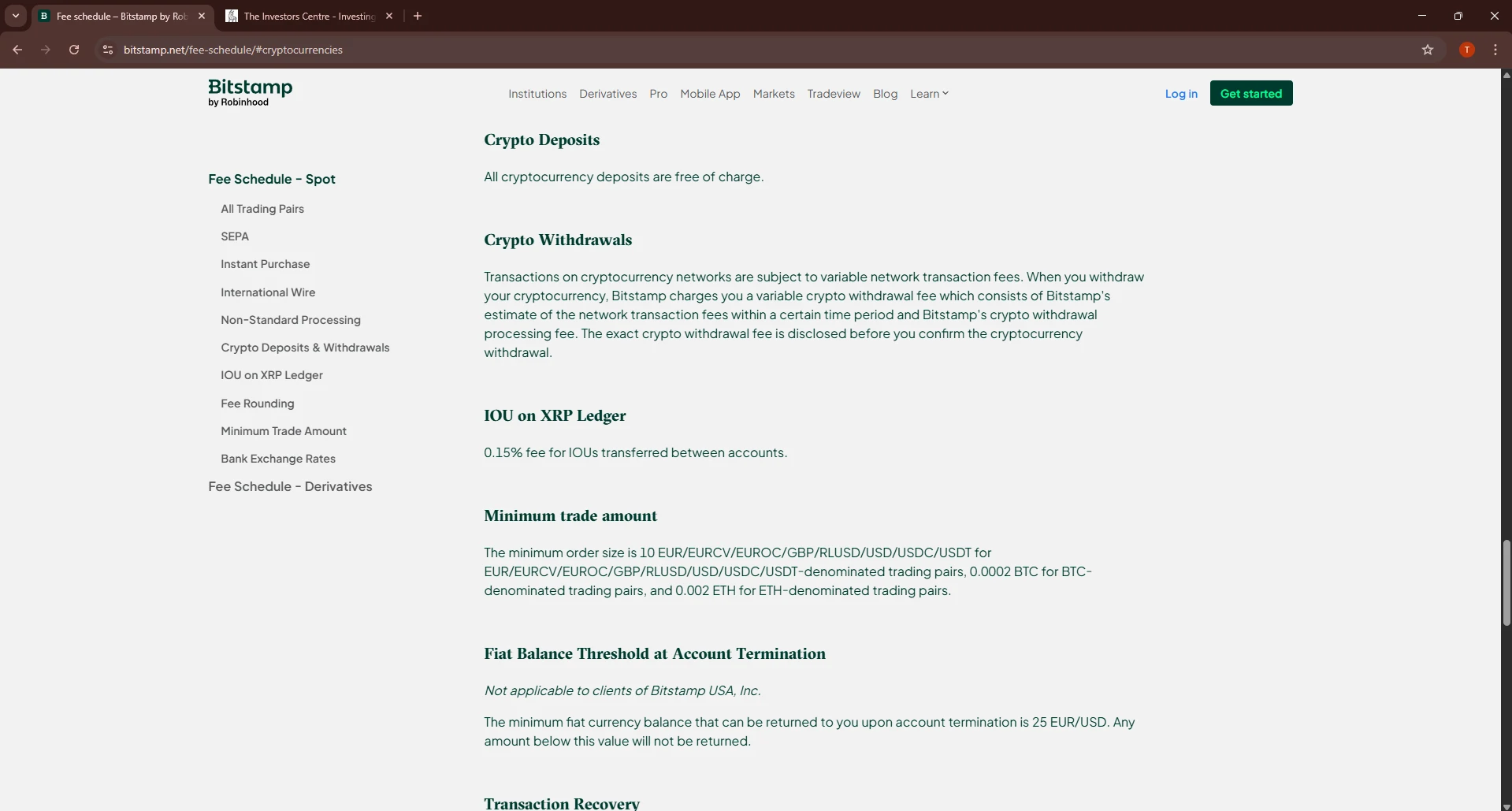
Pros
- EU CASP license with full regulatory compliance
- Free SEPA deposits and withdrawals
- 13-year track record since 2011
- Simple, straightforward interface
Cons
- Highest trading fees on this list (0.30%/0.40%)
- Limited cryptocurrency selection (100+)
Why Are Bitstamp's Trading Fees Higher?
Bitstamp's 0.30% maker and 0.40% taker fees reflect its positioning as a regulated, compliance-focused exchange. The platform prioritises security and regulatory adherence over aggressive fee competition, appealing to conservative investors willing to pay for peace of mind.
For a €10,000 trade, Bitstamp charges €40 — 40 times more than MEXC's €1. However, volume discounts reduce fees for larger traders, with monthly volumes above €20 million paying just 0.10% maker and 0.20% taker.
How Do Free SEPA Withdrawals Save Money?
Bitstamp stands out by charging zero fees for SEPA EUR withdrawals, while most competitors charge €0.50-€1.50. For Irish investors regularly moving funds between exchange and bank account, these savings add up quickly.
Combined with free SEPA deposits, Bitstamp eliminates all fiat transfer costs. This makes it ideal for investors using euro-cost averaging strategies or those who frequently rebalance between crypto positions and cash reserves.
What Does EU CASP Licensing Mean?
Bitstamp holds a Crypto Asset Service Provider license under MiCA, providing the highest level of EU regulatory authorisation. This includes mandatory segregation of client funds, capital adequacy requirements, and regular audits by financial authorities.
For Irish investors, Bitstamp's EU CASP status offers maximum regulatory protection available under current frameworks. While not equivalent to deposit insurance, it provides structured oversight and consumer rights enforcement through EU legal mechanisms.
Who Should Choose Bitstamp?
Bitstamp suits Irish investors prioritising regulatory safety and fiat flexibility over trading cost optimisation. It works well for buy-and-hold strategies involving major cryptocurrencies (Bitcoin, Ethereum), where occasional trades don't create excessive fee burden.
The platform also appeals to those regularly transferring between EUR and crypto, thanks to free SEPA withdrawals. However, active traders or altcoin enthusiasts will find better value on Bybit, OKX, or Binance.
Crypto.com — Best for Fee-Free Card Deposits
0% Card Fees (30 Days)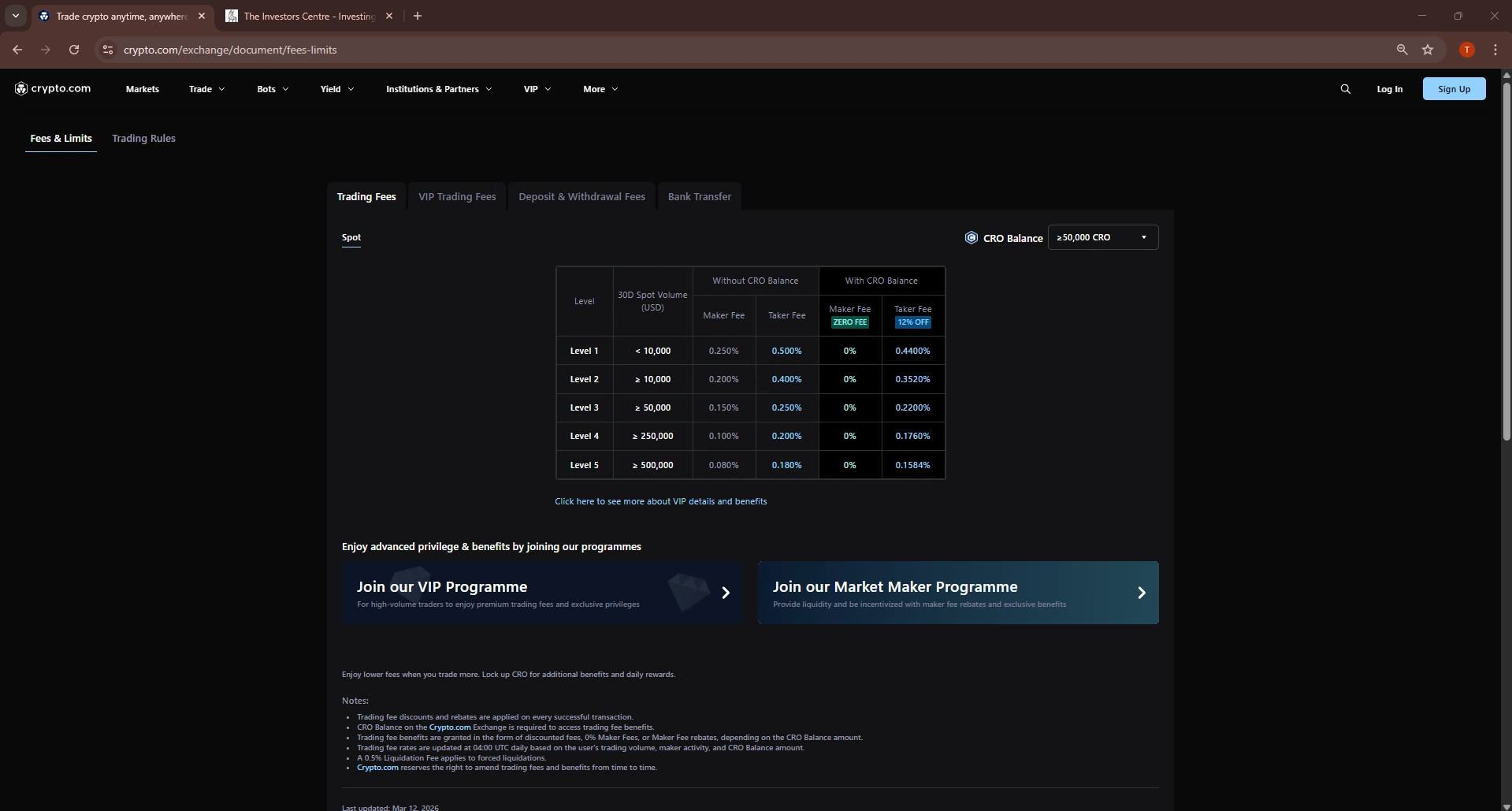
Pros
- Zero card deposit fees for first 30 days
- 0.075% maker and taker fees (identical rates)
- Crypto Visa card with cashback rewards
- MiCA compliant under EU framework
Cons
- App interface includes spread markups on simple buys
- Card fees apply after 30-day promotional period
How Does Free Card Funding Work?
Crypto.com waives all card deposit fees for 30 days after account opening, allowing Irish users to fund instantly without the usual 1.8-5% charges. This promotion applies to both debit and credit cards, though credit card purchases may incur cash advance fees from your card issuer.
After 30 days, card deposits incur standard fees competitive with other platforms. The promotional period provides an excellent opportunity to fund your account and make initial purchases before transitioning to free SEPA transfers for ongoing deposits.
What Are the Benefits of Crypto.com's Visa Card?
Crypto.com offers a crypto-backed Visa card providing cashback rewards on everyday purchases. The base tier offers 1% cashback with no CRO staking requirement, while premium tiers (requiring locked CRO) offer up to 5% cashback plus airport lounge access and Netflix rebates.
Irish cardholders earn rewards in CRO cryptocurrency, which can be sold for euros or reinvested. However, cashback rewards constitute taxable income under Irish law. The card works anywhere Visa is accepted, making it practical for everyday spending while accumulating crypto.
Should You Use the App or Exchange?
Crypto.com operates two separate platforms: the mobile app (simple buying) and Crypto.com Exchange (advanced trading). The app includes spread markups typically 0.5-2% on top of advertised fees, while the Exchange offers true order book trading at 0.075% without spreads.
Irish users should use the Exchange for larger purchases to avoid spread costs. Access requires separate registration but shares the same account. The Exchange also provides limit orders, advanced charting, and API trading unavailable in the app.
How Much Do Spread Markups Cost?
When using Crypto.com's app for instant buys, the platform includes a spread typically 0.5-2% wide depending on market volatility. This cost doesn't appear as a separate fee but increases your effective price paid.
For example, if Bitcoin trades at €50,000 on exchanges, Crypto.com's app might quote €50,500 for buying (1% spread). On a €1,000 purchase, this hidden €10 cost exceeds the €0.75 trading fee. Always compare app quotes against market prices before completing purchases.
How Do You Understand the Full Cost of Trading Crypto?
Trading fees represent only part of your total costs. Understanding maker versus taker fees, deposit charges, withdrawal costs, and spread markups helps Irish investors calculate true expenses.
What Is the Difference Between Maker and Taker Fees?
Maker fees apply when you place a limit order that doesn't execute immediately, "making" liquidity by adding to the order book. Taker fees apply when you place a market order that executes immediately, "taking" liquidity from the order book.
Maker fees are always lower because exchanges reward liquidity providers. On Kraken, a €1,000 limit order costs €1.60 (0.16% maker) while a market order costs €2.60 (0.26% taker). Patient traders should use limit orders whenever possible to save 30-60% on fees.
Why Do Card Deposits Cost More Than SEPA Transfers?
Card deposits carry fees ranging from 1.8% (Binance) to 5% (Bitstamp) because exchanges must pay processing fees to Visa and Mastercard. A €500 card deposit on Coinbase costs €19.95 in fees alone — equivalent to 20 trades worth of maker fees on MEXC.
SEPA bank transfers avoid these payment processor fees entirely. While they take 1-3 business days to arrive, the savings are substantial. Irish investors should always use SEPA transfers unless immediate funding is essential.
What Is the Spread and How Does It Affect Your Costs?
The spread is the difference between buy and sell prices quoted by an exchange. "Simple buy" interfaces often include a 1-2% spread markup that doesn't appear as a separate fee but increases your effective cost significantly.
To avoid spread markups, use each platform's spot exchange or "Pro" trading interface. Kraken Pro, Binance Spot, and Crypto.com Exchange all offer transparent order book pricing without hidden spreads, ensuring you pay only the advertised maker and taker fees.
How Much Does It Really Cost to Trade Crypto in Ireland?
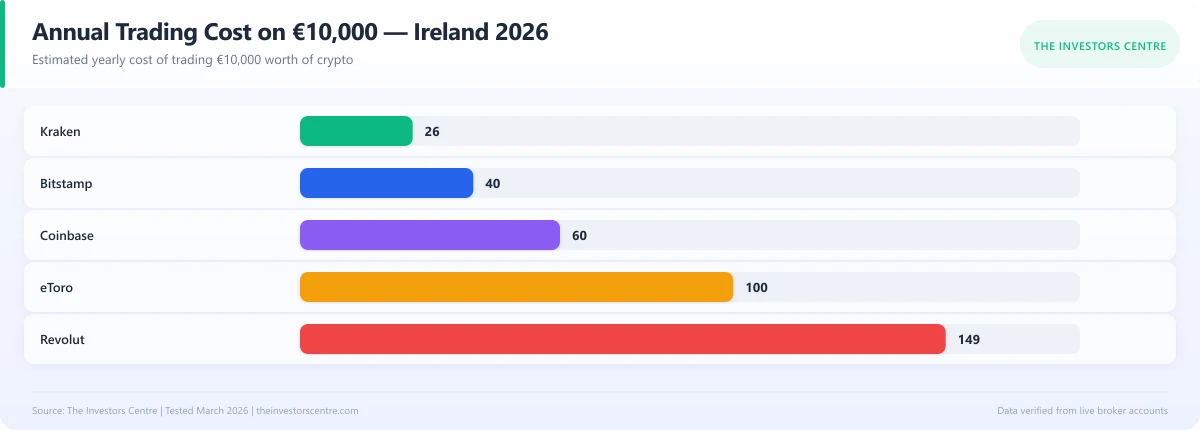
Understanding real-world costs helps Irish investors choose the right exchange for their trading volume and style. The table below shows actual costs for €1,000 and €10,000 trades across all seven platforms.
| Exchange | €1,000 Trade (Taker) | €10,000 Trade (Taker) | Card Deposit Fee (€500) |
|---|---|---|---|
| MEXC | €0.10 | €1.00 | €10.00 |
| Bybit | €0.60 | €6.00 | €9.95 |
| Crypto.com | €0.75 | €7.50 | Free (30 days) |
| OKX | €1.00 | €10.00 | €9.95 |
| Binance | €1.00 | €10.00 | €9.00 |
| Kraken | €2.60 | €26.00 | €18.75 |
| Bitstamp | €4.00 | €40.00 | €25.00 |
For a €10,000 trade, the difference between MEXC (€1) and Bitstamp (€40) is €39 — enough to cover an entire year of trading fees on the cheaper platforms. However, Irish investors must weigh these savings against regulatory protection and platform reliability.
How Are Crypto Exchanges Regulated in Ireland?
Ireland's crypto regulatory framework has evolved significantly with the implementation of MiCA (Markets in Crypto-Assets Regulation), establishing the Central Bank of Ireland as the primary authority for crypto oversight.
What Is MiCA and Why Does It Matter for Irish Investors?
MiCA is the EU's comprehensive crypto regulatory framework that became applicable to Crypto Asset Service Providers (CASPs) on 30 December 2024. Ireland shortened the optional transitional period to 12 months, meaning all exchanges must hold a CASP license by 29 December 2025 to continue operating.
For Irish investors, MiCA provides standardised consumer protections including segregated client funds, transparent fee disclosure, and clear complaint procedures. Exchanges without MiCA authorisation may face restrictions or exit the Irish market after the December 2025 deadline.
Which Exchanges Are Licensed by the Central Bank of Ireland?
Kraken is currently the only major global exchange holding a full MiCA CASP license directly from the Central Bank of Ireland (Registration No. C559106), granted in June 2025. Gemini was the first to receive VASP registration from the CBI in July 2022, though VASP and CASP are different authorisation levels.
Other exchanges on this list operate in Ireland through EU passporting arrangements or transitional provisions. Binance, OKX, and Crypto.com are MiCA compliant under authorisations from other EU member states. MEXC operates under global compliance standards but lacks direct CBI or EU CASP registration.
Do You Need to Pay Tax on Crypto in Ireland?
Yes. The Revenue Commissioners treat cryptocurrency as property, meaning Irish investors must pay Capital Gains Tax (CGT) on profits from selling, swapping, or spending crypto. Understanding your tax obligations is essential before choosing a crypto wallet or exchange.
What Is the Capital Gains Tax Rate on Crypto?
Ireland applies a flat 33% CGT rate on crypto gains with no distinction between short-term and long-term holdings. The first €1,270 of total capital gains per year is exempt, but this allowance covers all asset classes — not just crypto.
Income from mining, staking rewards, airdrops, or crypto salaries is treated as taxable income rather than capital gains, subject to income tax rates of 20-40% plus USC and PRSI contributions.
When Do You Need to Report Crypto Gains to Revenue?
Irish tax reporting follows a split-year system. For disposals between 1 January and 30 November, CGT payment is due by 15 December of the same year. For December disposals, payment is due by 31 January of the following year.
Your full annual tax return (Form 11 or Form CG1) must be filed by 31 October following the tax year. Revenue requires detailed records of all crypto transactions including dates, amounts in EUR, and cost basis calculations using the FIFO (First In, First Out) method.
Final Thoughts
Ireland's cheapest crypto exchange is MEXC with 0% maker fees, but the best overall choice for Irish investors is Kraken. Its MiCA license from the Central Bank of Ireland, 14-year security track record, and competitive 0.16% maker fees deliver the optimal balance of cost and protection.
For traders prioritising absolute lowest costs, MEXC and Bybit offer exceptional value at 0-0.06% fees. Those seeking a middle ground should consider Binance or OKX, which combine sub-0.10% fees with strong MiCA compliance.
Whichever platform you choose, always deposit EUR via free SEPA transfers rather than cards, use the spot exchange instead of "simple buy" features, and maintain detailed records for your 33% CGT obligations to Revenue.
FAQs
Sources
- Central Bank of Ireland. "Markets in Crypto Assets Regulation (MiCAR)." 2025.
- Revenue Commissioners Ireland. "Taxation of Crypto-Assets." 2025.
- European Securities and Markets Authority. "Markets in Crypto-Assets Regulation (MiCA)." 2025.
- Kraken Blog. "Kraken Secures MiCA License from Central Bank of Ireland." June 2025.
- Gemini Blog. "Gemini Becomes First Company to Be Registered as Virtual Asset Service Provider (VASP) in Ireland." July 2022.
- Irish Times. "Crypto trading exchange Kraken secures EU-wide licence from Central Bank." June 2025.
- Statista. "Cryptocurrency Market in Ireland." 2025.