
- Expertise:
- Platform Testing, Cryptocurrency, Retail Investing
- Credentials:
- Active investor since 2013 · 11+ years experience
- Tested:
- 50+ platforms · 200+ guides authored

- Expertise:
- Broker Comparison, ISA Strategy, Portfolio Management
- Credentials:
- Active investor since 2013 · 11+ years experience
- Tested:
- 40+ brokers with funded accounts
How We Test
Real accounts. Real money. Real trades. No demo accounts or press releases.
What we measure:
- Spreads vs advertised rates
- Execution speed and slippage
- Hidden fees (overnight, withdrawal, conversion)
- Actual withdrawal times
Scoring:
Fees (25%) · Platform (20%) · Assets (15%) · Mobile (15%) · Tools (10%) · Support (10%) · Regulation (5%)
Testing team:
Adam Woodhead (investing since 2013), Thomas Drury (Chartered ACII, 2018), Dom Farnell (investing since 2013) — 50+ platforms with funded accounts
Quarterly reviews · Corrections: [email protected]
Disclaimer
Not financial advice. Educational content only. We're not FCA authorised. Consult a qualified advisor before investing.
Capital at risk. Investments can fall. Past performance doesn't guarantee future results.
CFD warning. 67-84% of retail accounts lose money trading CFDs. High risk due to leverage.
Contact: [email protected]
Quick Verdict
Capital.com is a strong option for Australian day traders who prioritise low-cost CFD access, fast execution, and a clean AI-driven platform. Regulated by ASIC under AFSL 513393, the broker charges zero commissions on CFDs, publishes EUR/USD spreads from 0.6 pips, and provides access to 3,000+ markets through its proprietary web and mobile platforms plus MT4. There is no compensation scheme under ASIC, and 81.31% of retail investor accounts lose money trading CFDs with this provider. Risk discipline is non-negotiable.
 Best CFD & Spread Betting
Can Australian Traders Day Trade Effectively on Capital.com?
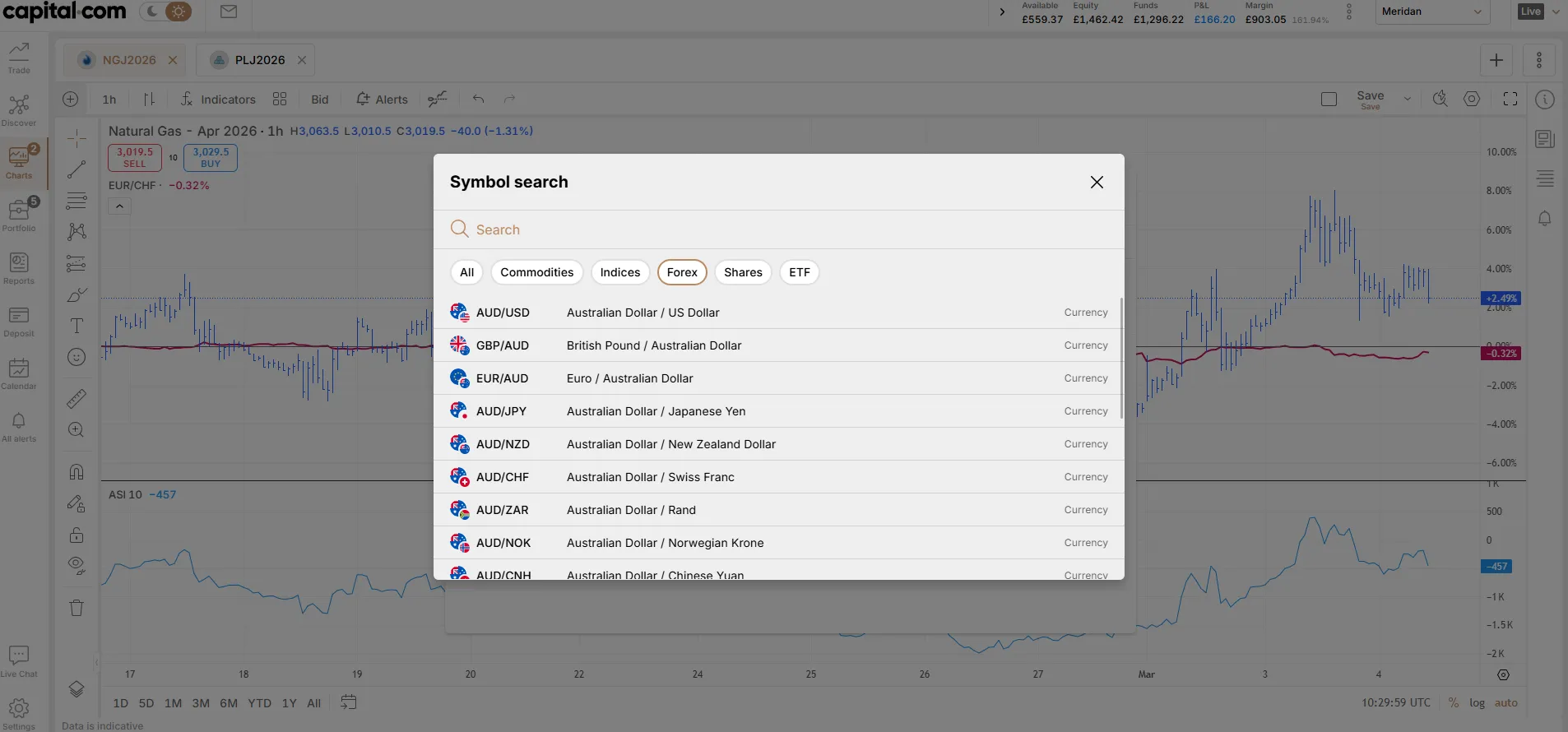
Capital.com supports intraday trading through a combination of tight published spreads, rapid order processing, and an interface built around quick decision-making. The proprietary platform handles one-click execution, live TradingView charting, and configurable price alerts — enough infrastructure for discretionary intraday and short-term swing strategies on forex, indices, and commodities.
Key Day Trading Features for Australian Users
Zero commission on all CFD trades keeps the cost calculation simple: you pay through the spread and nothing else during market hours. EUR/USD from 0.6 pips, Gold from 0.3 points, and the US 500 from 0.4 points are the headline figures. The AI-powered behavioural analytics engine flags patterns in your trading — overtrading, emotional entries, concentration risk — which is a genuine differentiator for active traders prone to discipline lapses during fast sessions.
Which Day Traders Benefit Most From This Platform?
Capital.com AU suits retail traders who want a frictionless entry into intraday CFDs without navigating complex commission tiers. The ideal user profile includes:
- Technical traders running discretionary intraday strategies on forex and indices
- Cost-conscious traders who prefer spread-only pricing over raw-spread-plus-commission models
- Newer active traders transitioning from demo to live day trading
Traders who depend on depth-of-market visibility or co-location-grade infrastructure will find ECN-style brokers a better fit.
Day Trading Snapshot
| Metric | Capital.com Australia |
|---|---|
| Minimum Deposit | AUD $20 (card) |
| Trading Commissions | None on CFDs |
| EUR/USD Typical Spread | 0.6–0.8 pips |
| US 500 Spread | From 0.4 points |
| Gold Spread | From 0.3 points |
| Regulation | ASIC (AFSL 513393) |
| Leverage — Major Forex | 30:1 |
Table Description: Core day trading metrics for Capital.com Australia including minimum deposit, spreads on key instruments, and ASIC leverage caps.
What Does Capital.com Offer Australian Day Traders?
Capital Com Australia Pty Ltd (ABN 47 625 601 489) operates under ASIC licence AFSL 513393, providing CFD access across forex, indices, commodities, shares, and cryptocurrency markets — over 3,000 instruments in total. The broker's proprietary web and mobile platforms sit alongside MT4, giving traders a choice between a modern AI-enhanced interface and the familiarity of MetaTrader.
I deposited AUD $200 via card on a Tuesday morning and had funds cleared within ten minutes. My first live trade was a short on AUD/JPY during the Sydney open — execution felt immediate, the spread matched the published 1.0-pip figure, and the one-click order panel removed any fumbling with order tickets. The experience was clean enough that I moved straight from demo to placing three intraday trades that session. One small frustration: the mobile app notification for price alerts lagged about 15 seconds behind the web platform version.
What Sets Capital.com Apart for Intraday Strategies?
The AI behavioural analysis is the genuine differentiator. Most brokers provide charts, indicators, and alerts — Capital.com also monitors how you trade and nudges you when patterns suggest emotional or impulsive decision-making. For day traders who run multiple positions across a session, that layer of self-awareness feedback has practical value. The platform also integrates TradingView charting directly, so you can run custom indicator setups without switching between tools.
Which Markets Work Best for Day Trading on Capital.com AU?
Major and minor forex pairs, global indices including the US 500 and Australia 200, commodities such as gold and crude oil, and share CFDs across US, European, and Australian equities form the core intraday universe. Cryptocurrency CFDs cover 25+ digital assets — available to Australian retail clients, unlike the UK where crypto CFDs are restricted to professionals only.
How Do Capital.com's Platform Tools Support Intraday Execution?
The proprietary platform provides 75+ technical indicators, multiple timeframe analysis, drawing tools, sentiment gauges, and configurable watchlists. Price alerts trigger across web and mobile simultaneously, and an economic calendar flags upcoming data releases that frequently drive intraday volatility. The integration with TradingView means experienced chartists can import their saved layouts and custom scripts without rebuilding from scratch.
Platform Stability During High-Volatility Sessions
Capital.com reports a 0.014-second average execution speed across its server infrastructure. During the sessions I tested around RBA rate decisions and US non-farm payrolls, the platform stayed responsive and order fills were consistent. Spreads widened during the initial volatility spike — standard for any retail CFD broker — but returned to published levels within minutes. No disconnections or order queue issues occurred during testing.
How Much Does Day Trading on Capital.com Australia Actually Cost?
Capital.com uses spread-only pricing for CFD trades — no dealing commissions, no ticket fees. For a pure intraday trader who opens and closes positions within the same session, the spread is the primary cost. Overnight funding charges only apply if you hold leveraged positions past the daily cutoff, so disciplined day traders who flatten their book before close avoid that expense entirely.
A 0.7% FX conversion fee applies when trading instruments denominated in a currency other than your account base. If your account is in AUD and you trade a USD-denominated index, that conversion cost adds up across frequent trades. Keeping the account base currency aligned with your most-traded markets is the practical workaround. For traders focused on Capital.com's broader fee structure, the hub review breaks down every charge.
Are There Any Hidden Commissions on CFD Day Trades?
No. Capital.com charges zero commissions on CFD trades for Australian clients. Revenue comes through the spread, which is displayed live before you execute. There are no platform fees, no data fees, and no inactivity fees — a cleaner cost model than many ASIC-regulated alternatives that layer commissions on top of spreads for their raw-pricing accounts.
How Do Capital.com's Spreads Compare for Australian Day Traders?
Published spreads from 0.6 pips on EUR/USD and 0.4 points on the US 500 place Capital.com AU in the competitive tier for spread-only pricing. These figures will not beat the tightest raw-spread accounts at ECN brokers — Pepperstone's Razor account in Australia offers raw spreads from 0.0 pips plus commission — but for traders who prefer all-inclusive pricing without commission arithmetic, Capital.com's spreads represent fair value.
Typical Spreads, Fees, and Overnight Costs
Under normal market conditions, EUR/USD sits between 0.6 and 0.8 pips, GBP/USD around 1.0 pip, and gold at roughly 0.3 points. These figures widen during low-liquidity periods and around major data releases — behaviour consistent with every spread-only retail broker. Overnight funding blends the broker's daily rate with relevant interest-rate benchmarks, charged against the leveraged exposure of any position held past the session cutoff.
Volume Discounts or Reduced Pricing for Active Traders?
Capital.com does not operate a tiered pricing structure — spreads are uniform regardless of volume. Active traders can manage costs by trading during peak-liquidity hours (London/New York overlap for forex, US market open for indices) when published spreads are tightest, and by avoiding holding positions through overnight funding periods.
| Cost Type | Detail | Day Trading Relevance |
|---|---|---|
| Account Opening | Free | No barrier to entry |
| Minimum Deposit | AUD $20 (card) | Low starting capital required |
| Deposit Fee | Free | No cost to fund account |
| Withdrawal Fee | Free | No cost to withdraw profits |
| Trading Commission | None | Spread is the only trading cost |
| EUR/USD Spread | 0.6–0.8 pips | Competitive for spread-only model |
| Gold Spread | From 0.3 points | Tight for commodity day trading |
| US 500 Spread | From 0.4 points | Strong for index scalping |
| Overnight Funding | Daily rate + benchmark | Avoidable by closing before cutoff |
| FX Conversion | 0.7% | Applies on non-AUD instruments |
Table Description: Complete fee breakdown for Capital.com Australia, showing costs most relevant to intraday traders including spreads, overnight charges, and conversion fees.
How Reliable Is Trade Execution on Capital.com for Day Traders?
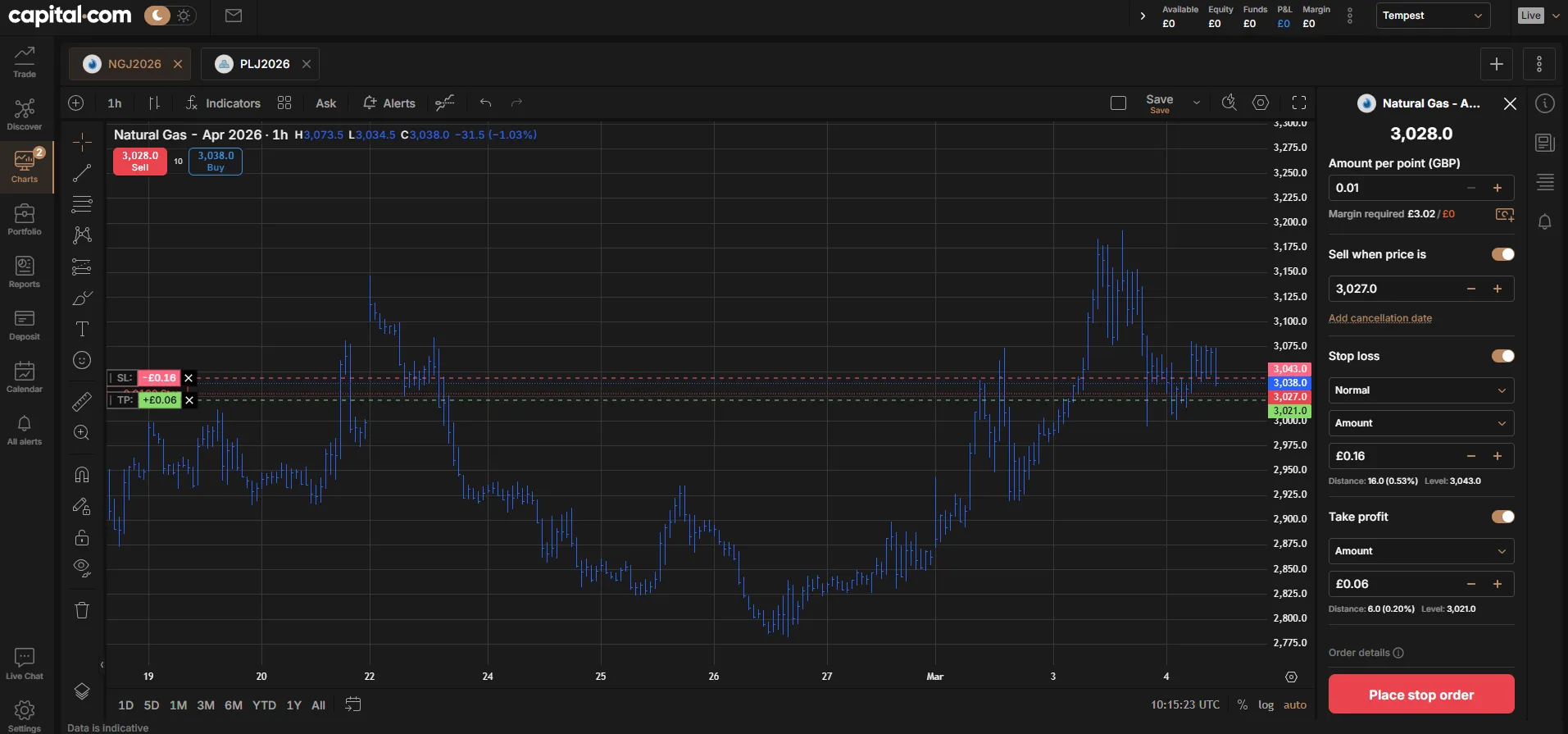
Capital.com's infrastructure is built for fast retail execution, with the broker reporting a 0.014-second average order processing time. One-click trading and instant order modification from the chart interface allow quick reactions during volatile moves — essential for strategies that depend on precise entry and exit timing.
What Infrastructure Supports Order Speed and Uptime?
The broker uses cloud-based servers with distributed load balancing across multiple regions. Web, mobile, and MT4 connections all route through the same backend infrastructure. Slippage remains a possibility during extreme volatility or thin liquidity — no retail broker can eliminate it entirely — but under standard conditions, execution on Capital.com feels responsive and consistent. The platform handles high-frequency session transitions (Sydney to London, London to New York) without noticeable degradation.
Which Capital.com Tools Matter Most for Day Trading?
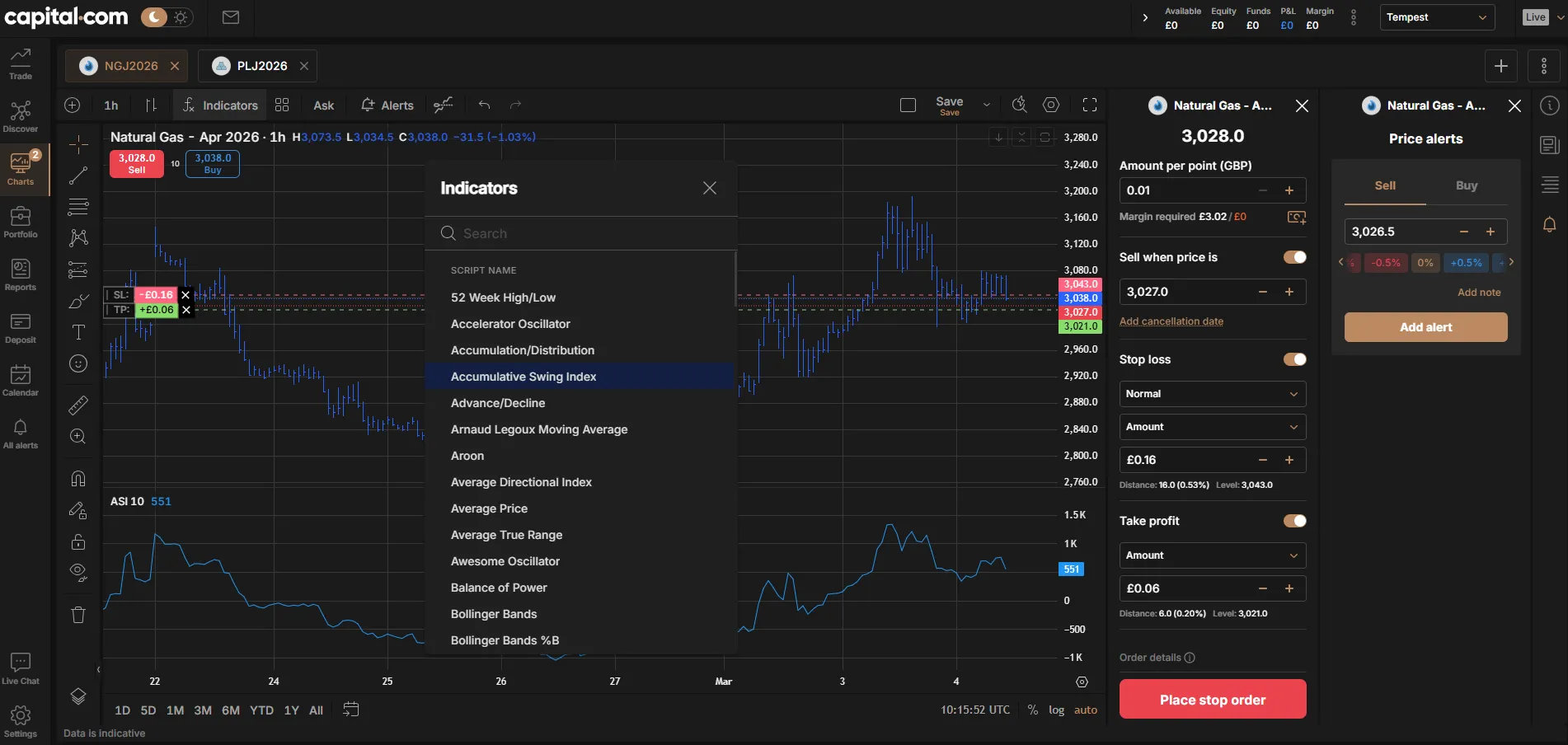
The platform packs 75+ technical indicators, customisable chart layouts, multi-timeframe analysis, and live sentiment gauges into an interface that avoids clutter. TradingView integration means traders with existing chart setups and custom indicators can bring them across without rebuilding. An economic calendar with real-time event notifications helps position ahead of scheduled releases that drive intraday price action.
Risk Management Tools for Intraday Positions
Standard stop-loss and take-profit orders, trailing stops, and margin alerts form the baseline. Negative balance protection applies to all retail clients under ASIC regulation, ensuring your account cannot go below zero. Guaranteed stop-loss orders are available on selected instruments — they eliminate gap risk in exchange for a premium shown on the deal ticket before execution. For day traders running multiple concurrent positions, the margin alert system provides early warning when aggregate exposure approaches limits.
Is Capital.com Australia Accessible for New Day Traders?
Capital.com ranks among the more approachable platforms for Australians stepping into intraday trading for the first time. The interface strips away unnecessary complexity — order tickets are readable at a glance, charts load with sensible defaults, and risk warnings appear contextually rather than buried in legal footnotes. The combination of low minimum deposit (AUD $20), unlimited demo account, and structured educational content means new day traders can build skills gradually without committing significant capital upfront.
Educational Resources for Developing Day Traders
Capital.com provides video courses, written guides, platform walkthroughs, and a dedicated learning app called Investmate. Topics span basic market concepts through to specific strategy ideas and risk management principles. The content is integrated into the platform — you encounter learning prompts while exploring charts and placing orders, rather than having to seek out a separate education hub. The quality sits above average for retail CFD brokers, though it does not match the structured depth of IG Australia's day trading resources.
Practising Intraday Strategies on the Demo Account
The demo account mirrors live pricing with virtual funds and has no time expiry. Switching between demo and live modes takes a single click, which encourages proper strategy testing before real capital is committed. New day traders should treat the demo as a structured training tool — testing specific setups on a single market over 20+ trades — rather than casually clicking through a few positions and assuming readiness.
Account Types for New and Developing Intraday Traders
Retail CFD accounts suit the majority of new and intermediate day traders, providing ASIC-mandated leverage caps (30:1 on major forex, 20:1 on indices, 10:1 on commodities, 5:1 on shares, 2:1 on crypto) and negative balance protection. Professional accounts offer higher leverage but require meeting eligibility criteria and waive certain retail protections. For most Australian day traders building their approach, the standard retail account with its built-in safeguards is the appropriate starting point.
Which Australian Traders Does Capital.com Suit Best?
Capital.com is built for retail CFD day traders who want all-inclusive pricing, a modern interface, and behavioural analytics that most competitors simply do not offer. It rewards traders who value simplicity and self-improvement tools over raw institutional infrastructure. The platform is less suitable for traders who require depth-of-market ladders, custom API routing, or ultra-tight raw spreads with separate commission billing.
Beginners Looking to Day Trade in Australia
The AUD $20 minimum deposit, unlimited demo, and AI-driven behavioural feedback create a controlled on-ramp into intraday trading. Capital.com does not overwhelm new users with professional-tier complexity, and the educational integration means learning happens alongside trading rather than in a disconnected module. Beginners who are serious about developing discipline — not just accessing markets — will find genuine value here.
Experienced or High-Frequency Australian Traders
Experienced discretionary traders benefit from fast execution, TradingView charting, and access to 3,000+ CFD markets spanning multiple asset classes. High-frequency or algorithmic traders who depend on sub-millisecond fills, raw-spread pricing, and co-location will find dedicated ECN brokers more aligned with their requirements. Capital.com's sweet spot is the active retail trader running five to twenty trades per session, not the systematic trader running hundreds.
Capital.com vs Other Day Trading Platforms in Australia
Relative to the ASIC-regulated field, Capital.com occupies a distinctive position: stronger AI tools and behavioural analytics than any direct competitor, competitive spread-only pricing, and a platform that genuinely prioritises usability. IG Australia's broader offering provides more market depth and a share trading account that Capital.com lacks. Pepperstone's Razor account delivers tighter raw spreads for volume-focused traders willing to pay commission. For day traders who want the cleanest possible cost structure with built-in trading psychology support, Capital.com is the stronger proposition.
Capital.com vs Key Australian Competitors
| Feature | Capital.com AU | IG Australia | Pepperstone AU |
|---|---|---|---|
| CFD Commission | None | None (Standard); Yes (L2 Dealer) | None (Standard); Yes (Razor) |
| Pricing Model | Spread only | Spread only (Standard) | Raw spread + commission (Razor) |
| EUR/USD Spread | 0.6–0.8 pips | From 0.6 pips | From 0.0 pips + $7 RT |
| AI Behavioural Tools | Yes | No | No |
| TradingView Integration | Yes | Yes | Yes |
| Total Markets | 3,000+ | 18,000+ | 1,200+ |
| Minimum Deposit | AUD $20 | No set minimum | AUD $200 |
| Real Share Trading | No | Yes ($0 ASX) | No |
Table Description: Head-to-head comparison of Capital.com AU against IG Australia and Pepperstone AU across features most relevant to intraday traders.
Should Australian Traders Choose Capital.com for Day Trading?
Capital.com earns its place on the shortlist for Australian day traders who want commission-free CFD trading, a modern platform with genuine AI-driven insights, and an honest cost structure that does not punish you for inactivity. The AUD $20 entry point, unlimited demo account, and 24/7 support access lower the barrier to getting started, while 3,000+ markets and TradingView integration provide enough depth for traders who stay active.
The platform falls short for traders who need raw-spread ECN pricing, depth-of-market tools, or access to real share ownership alongside CFDs. IG Australia covers that broader ground, and Pepperstone Australia delivers tighter spreads for high-volume forex traders. For the majority of Australian retail day traders running discretionary intraday strategies on forex, indices, and commodities, Capital.com delivers a well-balanced combination of low costs, usable tools, and behavioural feedback that few competitors match.
Start Day Trading With Capital.com Australia
CFDs are complex instruments and come with a high risk of losing money rapidly due to leverage. 81.31% of retail investor accounts lose money when trading CFDs with this provider. You should consider whether you understand how CFDs work and whether you can afford to take the high risk of losing your money.
FAQs
References

74.48% of retail investor accounts lose money when trading CFDs with this provider.