
- Expertise:
- Platform Testing, Cryptocurrency, Retail Investing
- Credentials:
- Active investor since 2013 · 11+ years experience
- Tested:
- 50+ platforms · 200+ guides authored

- Expertise:
- Broker Comparison, ISA Strategy, Portfolio Management
- Credentials:
- Active investor since 2013 · 11+ years experience
- Tested:
- 40+ brokers with funded accounts
How We Test
Real accounts. Real money. Real trades. No demo accounts or press releases.
What we measure:
- Spreads vs advertised rates
- Execution speed and slippage
- Hidden fees (overnight, withdrawal, conversion)
- Actual withdrawal times
Scoring:
Fees (25%) · Platform (20%) · Assets (15%) · Mobile (15%) · Tools (10%) · Support (10%) · Regulation (5%)
Testing team:
Adam Woodhead (investing since 2013), Thomas Drury (Chartered ACII, 2018), Dom Farnell (investing since 2013) — 50+ platforms with funded accounts
Quarterly reviews · Corrections: [email protected]
Disclaimer
Not financial advice. Educational content only. We're not FCA authorised. Consult a qualified advisor before investing.
Capital at risk. Investments can fall. Past performance doesn't guarantee future results.
CFD warning. 67-84% of retail accounts lose money trading CFDs. High risk due to leverage.
Contact: [email protected]
I assess IG Australia's ASIC regulation, fund segregation, account security, and what happens if things go wrong — so you can decide whether it's safe enough for your money.
Quick Answer: Is IG Safe in Australia?
Is IG safe Australia? Yes — IG is one of the safest brokers available to Australian traders. IG Australia Pty Ltd holds AFSL 515106 from ASIC, operates under the parent group IG Group Holdings plc (LSE-listed, FTSE 250), and has been in business for over 50 years. Client funds sit in segregated trust accounts at tier-1 Australian banks, and retail clients receive mandatory negative balance protection. The one significant gap: Australia has no government-backed compensation scheme equivalent to the UK's FSCS, so broker insolvency recovery depends on standard legal proceedings rather than a guaranteed payout.
IG Australia Safety — At a Glance
| Feature | Details | Verdict |
|---|---|---|
| Regulation | ASIC — AFSL 515106 | Yes |
| Company Status | FTSE 250 listed (LSE: IGG) | Yes |
| Years Operating | 50+ years (founded 1974) | Yes |
| Client Money Protection | Segregated trust accounts — tier-1 AU banks | Yes |
| Compensation Scheme | None — no Australian equivalent of FSCS | No |
| Negative Balance Protection | Yes (retail clients — ASIC mandate) | Yes |
 Top Rated
Spread bets and CFDs are complex instruments and come with a high risk of losing money rapidly due to leverage. 67% of retail investor accounts lose money when trading spread bets and CFDs with this provider. You should consider whether you understand how spread bets and CFDs work, and whether you can afford to take the high risk of losing your money.
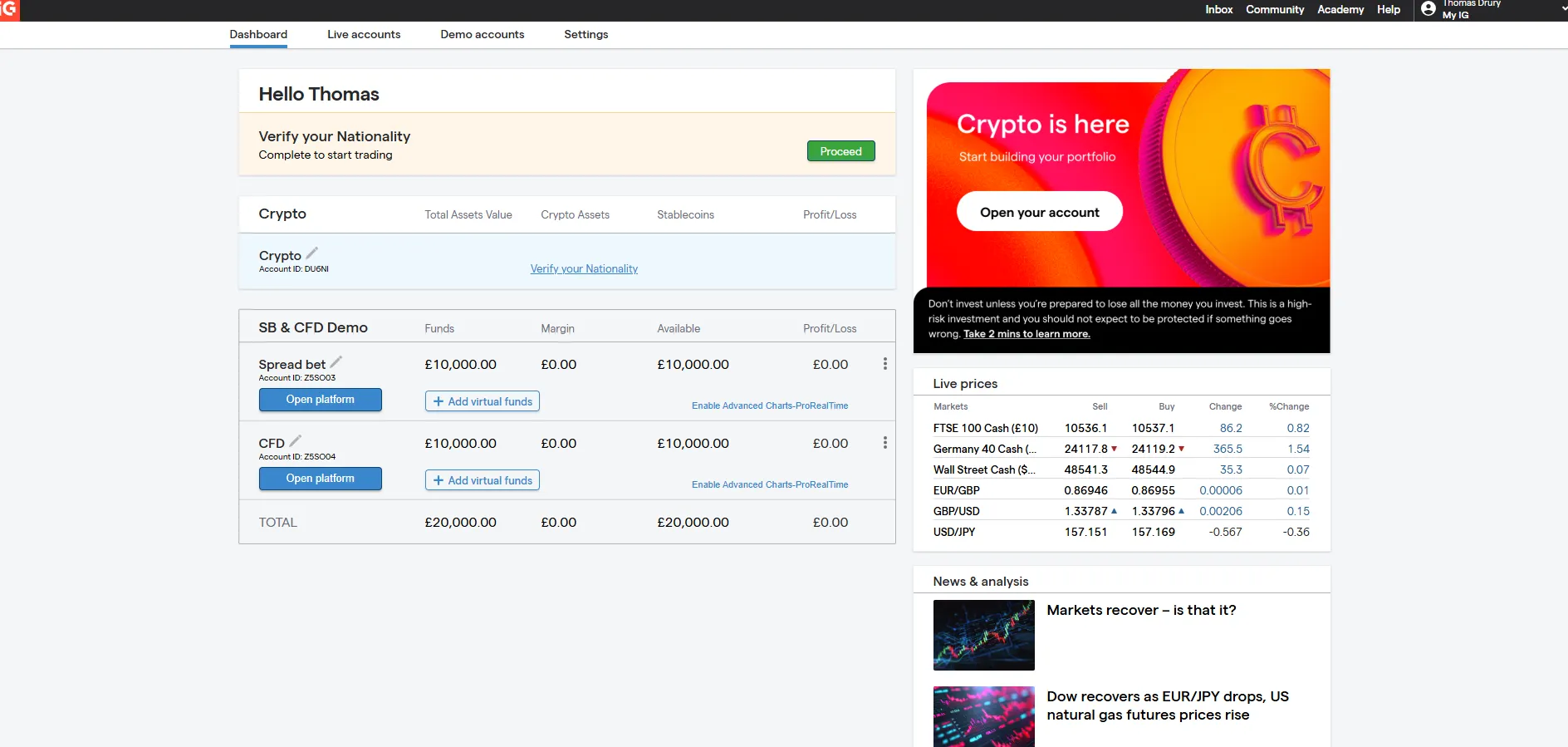
Who Regulates IG in Australia?
IG Australia Pty Ltd (ABN 93 096 585 410) is regulated by the Australian Securities and Investments Commission under AFSL 515106. ASIC is Australia's primary financial markets regulator and sits alongside the FCA, BaFin, and MAS as one of the world's most rigorous supervisory bodies. For Australian traders asking whether IG is safe, this licence is the starting point — and it checks out.
What Does ASIC Regulation Require from IG?
Under ASIC's regulatory framework, IG must segregate all client funds from operational capital, maintain minimum net tangible asset requirements, and comply with the Product Intervention Order that governs retail CFD trading. ASIC also mandates negative balance protection for retail clients, leverage caps across asset classes (30:1 on major forex, 20:1 on indices, 5:1 on shares, 2:1 on crypto), and standardised risk disclosures. These aren't voluntary standards — ASIC can suspend or revoke a licence for non-compliance.
Does IG Hold Licences Beyond Australia?
Yes. IG Group operates under licences from the FCA in the United Kingdom, BaFin in Germany, the CFTC in the United States, MAS in Singapore, and several other top-tier regulators. This multi-jurisdictional oversight means IG satisfies regulatory requirements across the world's most demanding financial markets — a level of scrutiny that smaller ASIC-only brokers simply don't face. For a deeper assessment of IG's full platform offering in Australia, see our complete IG review.
How Does IG Protect Your Money in Australia?
Fund protection at IG Australia operates across multiple layers: segregated trust accounts, negative balance protection, and the broader financial stability of a publicly listed parent company. Each layer addresses a different risk scenario, from operational failure to market volatility.
Segregated Trust Accounts at Tier-1 Banks
ASIC requires IG to hold all client deposits in segregated trust accounts completely separate from IG's own business funds. These accounts sit with tier-1 Australian banks, meaning your money is ring-fenced from IG's operational cash flow. If IG ran into financial difficulty, creditors could not access client trust accounts — the funds remain yours by law. This protection applies regardless of whether you trade CFDs or hold shares through IG's Share Trading Account.
No Compensation Scheme — What This Means for You
Australia does not have a government-backed compensation scheme for financial services clients. Unlike UK traders who receive FSCS protection up to £85,000 per person if their broker becomes insolvent, Australian clients have no equivalent safety net. This is the single most important structural difference between using IG in Australia versus the UK, and every Australian trader should understand it before depositing funds.
In practical terms, if IG Australia were to fail, your recovery would depend on the insolvency administration process and the pool of segregated client funds available — not a guaranteed government payout. The segregated trust account structure provides meaningful day-to-day protection, and IG's FTSE 250 status and 50-year operating history make outright insolvency a remote scenario. But remote is not impossible, and the absence of a compensation backstop is a genuine gap that applies to every ASIC-regulated broker, not just IG.
How Does IG Australia's Safety Compare to Other ASIC Brokers?
| Broker | AU Regulator | Listed Company | Compensation Scheme | Segregated Funds | Years Operating |
|---|---|---|---|---|---|
| IG Australia | ASIC | Yes (FTSE 250) | None | Yes | 50+ |
| Pepperstone | ASIC | No | None | Yes | 15+ |
| Capital.com AU | ASIC | No | None | Yes | 8+ |
| CMC Markets AU | ASIC | Yes (LSE) | None | Yes | 35+ |
No ASIC broker offers a compensation scheme. Where IG distinguishes itself is through its FTSE 250 listing (which demands public financial reporting and corporate governance standards) and its 50-year operational track record. Among ASIC-regulated options, Pepperstone's safety credentials are solid, but IG's public listing adds an extra dimension of financial transparency that privately held brokers cannot match.
Is IG Financially Stable?
Financial stability matters more in Australia than in markets with compensation schemes, because segregated fund protection is your primary safety layer. If the broker behind those accounts is financially weak, the protection is less reassuring. IG's financial position is strong by any reasonable measure.
What Does a FTSE 250 Listing Tell You?
IG Group Holdings plc trades on the London Stock Exchange under the ticker IGG and sits within the FTSE 250 index. This means IG publishes audited annual accounts, operates under the UK Corporate Governance Code, and faces continuous scrutiny from institutional investors, equity analysts, and multiple regulators. A privately held broker can't be evaluated to the same standard — the financial information simply isn't available. For Australian clients, this transparency is particularly valuable given the absence of a compensation scheme.
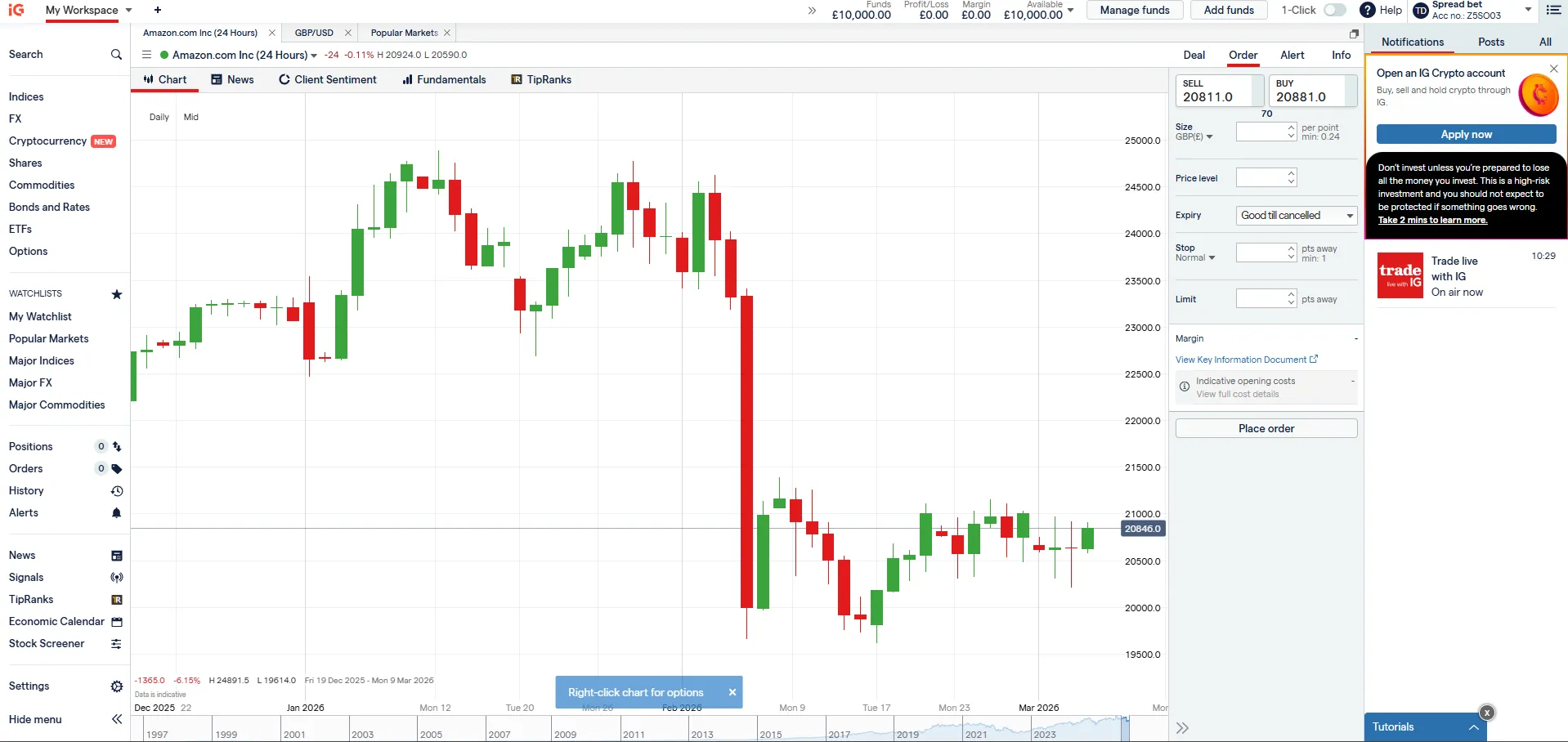
50 Years of Continuous Operation
IG was founded in 1974. It has operated continuously through the 1987 crash, the dot-com collapse, the 2008 global financial crisis, the 2020 pandemic volatility, and every regulatory shift in between. That half-century track record doesn't guarantee future safety, but it demonstrates a capacity to survive market environments that have destroyed hundreds of smaller brokers. For traders weighing up IG for active day trading, this operational resilience translates directly into platform reliability when markets are moving fast.
What Account Security Does IG Australia Provide?
Regulatory protection addresses broker-level risk. Account security addresses a different threat: unauthorised access to your individual account. IG invests in both, and the technical measures are consistent with what you'd expect from a major financial institution.
Two-Factor Authentication and Encryption
Every IG account supports two-factor authentication (2FA), requiring both your password and a time-sensitive verification code to log in. All data transmission uses bank-grade SSL encryption, and IG's infrastructure undergoes regular penetration testing and security audits. These aren't optional extras — 2FA is prompted at setup and IG actively encourages all clients to enable it.
During our testing of IG Australia, an attempt to log in from a new device triggered an immediate SMS verification challenge and an email notification to the registered address. The response was instant — no delay, no ambiguity about whether the login attempt was flagged. That kind of real-time alerting is exactly what you want from a broker holding your capital, and it matched the security response time of major Australian banking apps we've tested alongside IG.
Dispute Resolution for Australian Clients
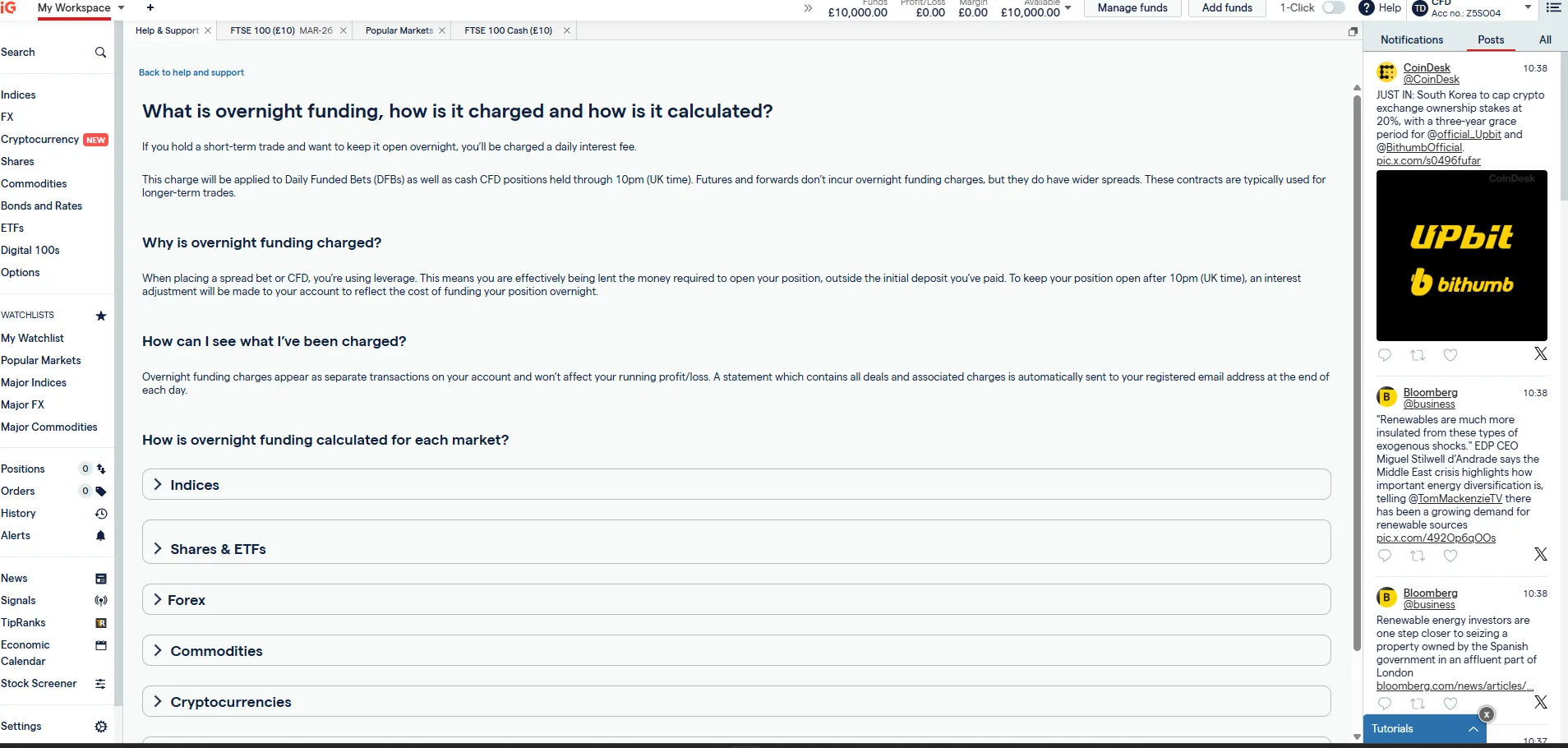
If a complaint arises, IG has an internal dispute resolution process as required by ASIC. If that process doesn't resolve the issue, Australian clients can escalate to the Australian Financial Complaints Authority (AFCA) — an independent external dispute resolution body. AFCA can make binding determinations that IG must comply with, providing a formal avenue of recourse that exists outside IG's own structures.
What Risks Should Australian Traders Understand?
IG as a broker is safe. Trading through IG carries risk. These are fundamentally different propositions, and conflating them leads to poor decision-making. Platform safety protects you from broker failure; it does nothing to protect you from market losses.
Trading Losses Are Not Covered by Any Protection
71% of retail client accounts lose money when trading CFDs with IG. That figure comes directly from IG's own risk disclosure, and it reflects the reality of leveraged trading across the industry. Segregated accounts protect your funds from broker insolvency — they don't insulate you from losses on positions that move against you. No ASIC broker, no matter how well-regulated, can eliminate market risk.
Leverage Amplifies Both Gains and Losses
ASIC's Product Intervention Order caps retail leverage at 30:1 on major forex pairs and lower on other asset classes. These caps exist because leverage magnifies losses just as effectively as it magnifies gains. A 3.3% adverse move at 30:1 leverage wipes out your entire position. Negative balance protection prevents your account going below zero, but it doesn't prevent you from losing everything in the account. If you're exploring IG's cryptocurrency CFDs, the 2:1 leverage cap reflects the extreme volatility of that asset class.
Safety Strengths and Limitations for Australian Clients
Pros and Cons of IG Australia's Safety
Pros
- ASIC-regulated under AFSL 515106 with additional oversight from FCA, BaFin, CFTC, and MAS globally
- FTSE 250 listed parent company with audited public accounts and 50+ years of continuous operation
- Client funds held in segregated trust accounts at tier-1 Australian banks
- Negative balance protection mandatory for all retail accounts under ASIC rules
- Two-factor authentication, SSL encryption, and real-time login alerts on new devices
Cons
- No government-backed compensation scheme — ASIC provides no equivalent to the UK's £85,000 FSCS guarantee
- 71% of retail accounts lose money trading CFDs — platform safety does not equal trading safety
- Leverage at 30:1 on major forex can destroy an account balance rapidly if mismanaged
- AFCA complaints process can be slow compared to direct resolution with IG
Final Verdict — Can Australian Traders Trust IG?
IG Australia is one of the safest brokers accessible to Australian traders. ASIC regulation under AFSL 515106, a FTSE 250 parent company, segregated trust accounts at tier-1 banks, mandatory negative balance protection, and a 50-year operating track record form a safety profile that very few ASIC-licensed competitors can match. CMC Markets comes closest on corporate transparency; Pepperstone and Capital.com are well-regulated but privately held.
The honest caveat: Australia's regulatory framework does not include a compensation scheme. If the worst happened, your recovery would depend on the insolvency process and the segregated fund pool — not a guaranteed government payout. That gap applies to every ASIC broker, and IG's financial strength makes it one of the lowest-risk options within that constraint. But it's a constraint every Australian trader should understand clearly.
If safety and regulatory depth are your priorities, IG earns its position at the top of the ASIC-regulated field.
CFDs are complex instruments and come with a high risk of losing money rapidly due to leverage. 71% of retail client accounts lose money when trading CFDs with this provider. You should consider whether you understand how CFDs work and whether you can afford to take the high risk of losing your money.
IG Australia Pty Ltd (ABN 93 096 585 410) holds Australian Financial Services Licence (AFSL) No. 515106.
FAQs
References
- ASIC Connect — AFSL 515106 Register Entry (IG Australia Pty Ltd)
- ASIC — AFS Licensing: Financial Requirements (RG 166)
- London Stock Exchange — IG Group Holdings plc (IGG)
- IG Group — Annual Report and Financial Statements
- Australian Financial Complaints Authority — How to Make a Complaint
- IG Australia — ASIC Regulation Information

67% of retail investor accounts lose money when trading CFDs with this provider.