What does buying a first home actually cost?
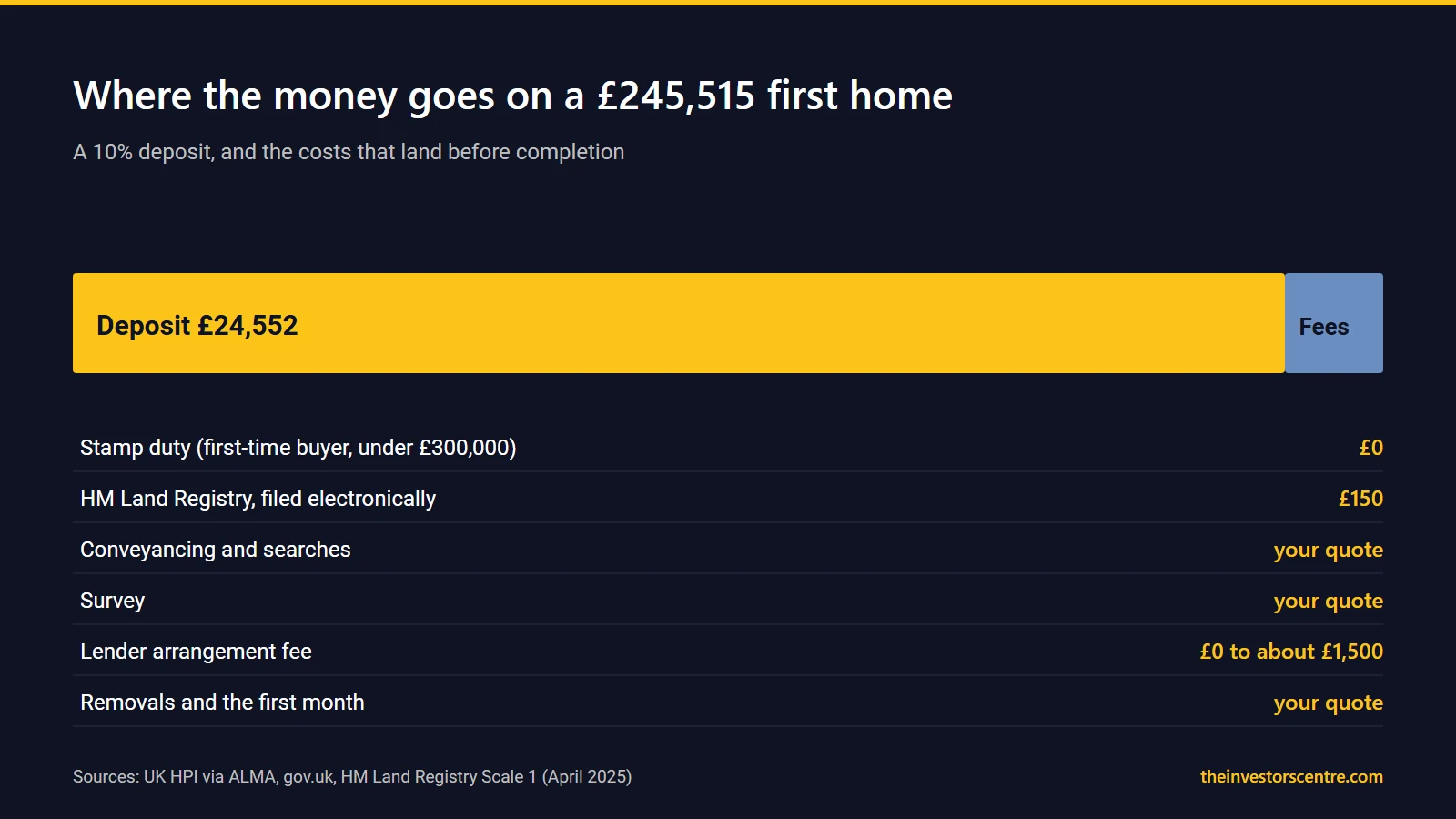
On the average English first home at £245,515, a 10 per cent deposit is £24,552 and the stamp duty is nothing, because first-time buyer relief runs to £300,000. What catches people out is the £2,000-odd of legal work, survey and lender fees that lands in the weeks before completion, when the deposit money is already committed.
How much deposit do you actually need?
Less than most people assume, and more than the adverts suggest. The median first-time buyer deposit in England was £36,500 in 2024-25, against a mean of £78,131, and 31 per cent of buyers had help from family or friends, according to the UK first-time buyer statistics published by A Little Mortgage Advice. The median is what people actually put down, not what lenders demand.
On the average English first home, 10 per cent is £24,552 and 5 per cent is £12,276. If you are starting from nothing, our guide to saving £10,000 in a year is the arithmetic on getting there. Five per cent deals are genuinely back: 8.4 per cent of UK mortgage lending in the second quarter of 2026 was above 90 per cent loan to value, the highest share since 2008.
What does a bigger deposit actually buy you?
A cheaper rate, and the jump between bands is worth real money.
| Deposit | Loan | Average 2 year fix, Aug 2026 | Monthly payment |
|---|---|---|---|
| 25% (£61,379) | £184,136 | 4.92% | £979 |
| 10% (£24,552) | £220,964 | 5.16% | £1,208 |
| 5% (£12,276) | £233,239 | 5.52% | £1,327 |
The gap between 5 and 10 per cent is £119 a month, or £2,865 across a two-year fix. If you are three or four months from the next band, that is the arithmetic that should decide whether you wait.
Will you pay stamp duty as a first-time buyer?
Probably not, unless you are buying in London. First-time buyer relief means no stamp duty up to £300,000, then 5 per cent on the portion from £300,001 to £500,000, and no relief at all above £500,000 (gov.uk). On the average English first home at £245,515, the bill is zero.
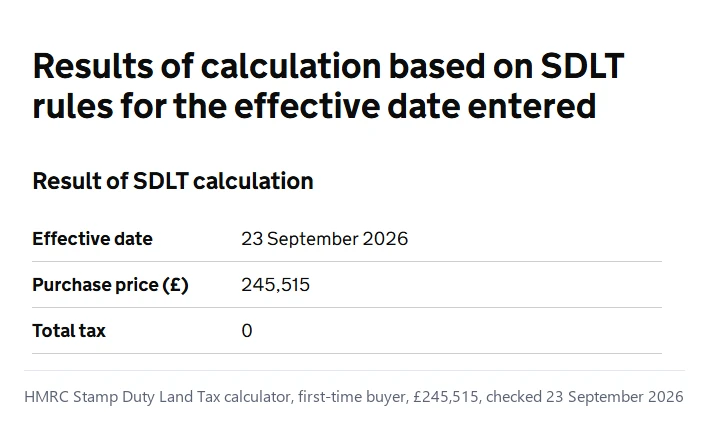
London is the exception, and it got worse in April 2025 when the nil-rate threshold dropped from £425,000 to £300,000. On the average London first-time buyer price of £466,851, the bill went from £2,093 to £8,343: £6,250 more, on A Little Mortgage Advice's calculation. In the South East, the average first home sits £75 above the £300,000 line, which costs all of £4.
| Portion of the price | First-time buyer | Everyone else |
|---|---|---|
| Up to £125,000 | 0% | 0% |
| £125,001 to £250,000 | 0% | 2% |
| £250,001 to £300,000 | 0% | 5% |
| £300,001 to £500,000 | 5% | 5% |
| Above £500,000 | No relief: standard rates apply to the whole price | 5% to 12% |
What about Scotland and Wales?
They run their own systems. Scotland's LBTT gives first-time buyers a £175,000 threshold with no price cap. Wales has no first-time buyer relief at all, and a £225,000 threshold for everyone.
What does the legal work cost?
Three separate things, usually on one invoice. The conveyancer's own fee, the searches they order from the council and the water company, and the registration fee that goes to HM Land Registry.
Only the last one is fixed and published: on a property between £200,001 and £500,000 it is £150 when your conveyancer files electronically, or £330 on paper (HM Land Registry Scale 1, updated April 2025). It appears on your completion statement as a disbursement rather than the solicitor's fee.
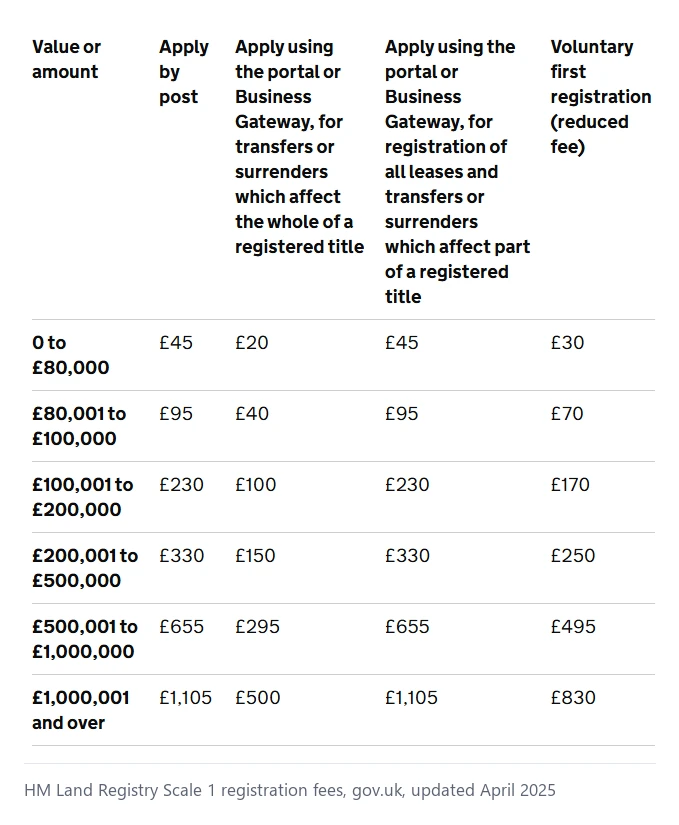
The other two move. Conveyancing is priced by the firm, and searches are priced by the council your house sits in, which is why the same purchase costs different amounts two streets apart. Get three quotes and compare the completion statement rather than the headline fee, because the cheap quote is usually the one with the disbursements hidden at the bottom.
Do you need a survey, and which one?
The lender's valuation is not a survey. It tells the lender the house is worth what it is lending against, and it tells you nothing about the roof.
There are three levels: a condition report, a homebuyer report, and a full building survey, rising in detail and price. A flat in a modern block and a Victorian terrace are not the same decision.
Most buyers of a modern, mortgageable house take the middle option. The argument for the full survey is not the report, it is the negotiating position: a documented defect is a reason to reopen the price, and a surveyor's estimate of the repair is the number you negotiate against.
What the lender charges, and what a broker charges
Lender fees are the ones worth arguing about, because the headline rate hides them. A product with an arrangement fee and a lower rate beats a fee-free product at a higher rate on a large loan, and loses on a small one. Adding the fee to the loan spreads it across the whole term and costs interest on it every year.
Brokers split into two camps: those paid only by the lender, and those who also charge you. Rates and fees both vary, so the honest test is what the whole package costs. For a published example, the Essex brokerage A Little Mortgage Advice charges £199 at decision in principle and £495 on offer for a standard residential case, which it publishes in its terms of business. If your case is straightforward, whole-of-market first-time buyer mortgage advice should pay for itself in the rate band it puts you in.
The costs nobody puts in the spreadsheet
Buildings insurance starts at exchange, not completion, because from that moment the building is your risk. Removals, and then the first month: the bits of furniture the old place did not need, the deposit you are waiting to get back from a landlord, and the standing charges on a house that is colder than the flat you left.
So what does it come to?
| Cost | Amount | Where the figure comes from |
|---|---|---|
| Deposit | £24,552 | 10% of the average English first-time buyer price (UK HPI, July 2026) |
| Stamp duty | £0 | First-time buyer relief to £300,000 (gov.uk) |
| Land Registry | £150 | Scale 1, electronic (HM Land Registry, April 2025) |
| Conveyancing and searches | Your quotes | Varies by firm and by council |
| Survey | Your quote | Depends on the level and the property |
| Lender arrangement fee | £0 to about £1,500 | Product dependent, quoted on the illustration |
| Broker fee | £0 to £694 | Published example above |
| Removals and first month | Your quotes | Distance, volume and timing |
The question an investing site has to ask
That deposit is the largest single lump of money most people will ever move, and putting it into a house is a decision about where capital sits, not just where you sleep.
Left invested at 5 per cent a year, £24,552 becomes about £31,335 over five years. That is arithmetic, not a forecast: markets do not deliver 5 per cent in tidy annual slices, and the same five years might hand you two bad ones at the start. Against that, you would be paying rent throughout, and a mortgage payment on a repayment loan is partly saving rather than spending.
There is no universal answer. There is an honest one for your numbers, and it usually turns on how long you plan to stay put. We argued both sides of it properly in rent vs buy, including the case for renting and investing the difference.
Questions first-time buyers ask
What upfront costs are there besides the deposit?
Legal work and searches, a survey if you get one, the Land Registry fee of £150 on a home in this price band, any lender arrangement fee, and moving. Insurance starts at exchange.
Can I add the fees to my mortgage?
Usually the lender's arrangement fee, yes. It then attracts interest for the life of the loan, so on a 30-year term a £999 fee costs considerably more than £999.
Do first-time buyers pay stamp duty in the UK?
Not in England or Northern Ireland below £300,000. Between £300,001 and £500,000 you pay 5 per cent on the portion above £300,000, and above £500,000 the relief disappears entirely.
How much are solicitor fees when buying a house?
The Land Registry element is fixed at £150 in this price band. The conveyancer's own fee and the searches vary by firm and by council, so get three quotes and compare the completion statement, not the headline.
Is a survey worth it on a modern house?
A valuation is not a survey, and a modern house can still have a failing flat roof. The level you need depends on the age and type of the property.
Sources
- gov.uk: Stamp Duty Land Tax residential rates and first-time buyer relief
- HM Land Registry: Registration Services fees, Scale 1, updated April 2025
- A Little Mortgage Advice: UK first-time buyer statistics (UK HPI, English Housing Survey, Bank of England and FCA MLAR)
- Bank of England, quoted household interest rates