
- Expertise:
- CFD Trading, Forex, Derivatives, Risk Management
- Credentials:
- Chartered ACII (2018) · Trading since 2012
- Tested:
- 40+ forex & CFD platforms with live accounts

- Expertise:
- Platform Testing, Cryptocurrency, Retail Investing
- Credentials:
- Active investor since 2013 · 11+ years experience
- Tested:
- 50+ platforms · 200+ guides authored
How We Test
Real accounts. Real money. Real trades. No demo accounts or press releases.
What we measure:
- Spreads vs advertised rates
- Execution speed and slippage
- Hidden fees (overnight, withdrawal, conversion)
- Actual withdrawal times
Scoring:
Fees (25%) · Platform (20%) · Assets (15%) · Mobile (15%) · Tools (10%) · Support (10%) · Regulation (5%)
Testing team:
Adam Woodhead (investing since 2013), Thomas Drury (Chartered ACII, 2018), Dom Farnell (investing since 2013) — 50+ platforms with funded accounts
Quarterly reviews · Corrections: [email protected]
Disclaimer
Not financial advice. Educational content only. We're not FCA authorised. Consult a qualified advisor before investing.
Capital at risk. Investments can fall. Past performance doesn't guarantee future results.
CFD warning. 67-84% of retail accounts lose money trading CFDs. High risk due to leverage.
Contact: [email protected]
Why do 24-hour share CFDs suit Australian traders so well?
Because they move the US trading day into Australian daylight. The US regular session runs roughly 11.30pm to 6am AEST for half the year and roughly 1.30am to 8am Sydney time for the other half, which has always left Australians trading the world's biggest stocks half-asleep or not at all. Pepperstone's 24-hour markets, more than 100 US share CFDs listed with a -24 suffix, quote continuously through the week, so when a US story breaks at midday in Sydney you can act at midday in Sydney. The price carries a wider off-session spread and revalues when New York opens; both trade-offs are covered below. But for a trader who wants to respond during their own day rather than sacrifice sleep, this is a structural advantage, and ASIC brokers are increasingly offering it; how Pepperstone's version compares is covered below.
 Top Rated
Trading CFDs and FX carries significant risk and is not suitable for everyone. You have no interest in the underlying asset.
What does the US session actually look like from Australia?
It looks like the middle of the night, and which part of the night depends on the calendar. New York and Sydney observe daylight saving in opposite halves of the year, so the gap swings between 14 and 16 hours, giving the Australian trader two versions of the problem.
While New York is on daylight saving
Through the southern winter, when the US is on daylight saving and Sydney is on standard time, the US regular session runs from roughly 11.30pm to 6am AEST. The open is just about reachable with discipline; the close happens while you sleep, and the earnings that land after the closing bell arrive around breakfast.
While Sydney is on daylight saving
In the southern summer the switch flips: New York returns to standard time, Sydney moves to daylight saving, and the session shifts to roughly 1.30am to 8am Sydney time. Now even the open is genuinely antisocial, and the whole session sits inside the sleeping night. Shoulder weeks each autumn and spring, when only one city has switched, put the gap at 15 hours, so check the current offset rather than trusting habit.
How does the 24-hour product change that day?
It removes the choice between trading tired and not trading at all. Pepperstone lists more than 100 US share CFDs in 24-hour versions, marked with a -24 suffix (Apple is AAPL.US-24), priced continuously from early Monday to the Friday close, at the same commission as the standard US markets, from US$0.02 per share converted to AUD at spot. How Pepperstone builds a tradeable price while the New York Stock Exchange is shut is the subject of my 24-hour share CFDs explainer; the short version is that the out-of-hours price is a real, dealable quote, at a wider spread, that revalues against the actual market at the next US open.
The midday news test
The clearest way to see the advantage is to follow one piece of news. A US company guides down, a regulator moves, a sector story breaks; because of the timezone gap, that news very often reaches Australians in the middle of their working day, hours before New York opens. Say the story lands at 12.30pm AEST. On a standard US share CFD you would wait roughly eleven hours to act. On the -24 market you can cut, hedge or enter at 12.31pm, paying the off-session spread for the privilege. The spread is the fare, the immediacy is the ticket, and whether the exchange is worth it depends on how much the news matters to your position.
Where does the advantage bite hardest?
Three situations, in rising order of how often they come up.
Earnings at breakfast instead of results at midnight
US companies report after the close or before the open by design, which is early morning or late evening AEST. On the 24-hour markets the reaction is tradeable as it happens rather than a story read a day later, the single strongest use of the product for anyone trading events.
Managing risk you already hold, in daylight
If you carry US exposure and something breaks, the -24 markets let you reduce or hedge immediately. Optionality over your own book is worth most exactly when markets are ugly, and having it during Australian daylight, awake and thinking clearly, is the underrated half of the advantage.
Simply running your trading inside your own day
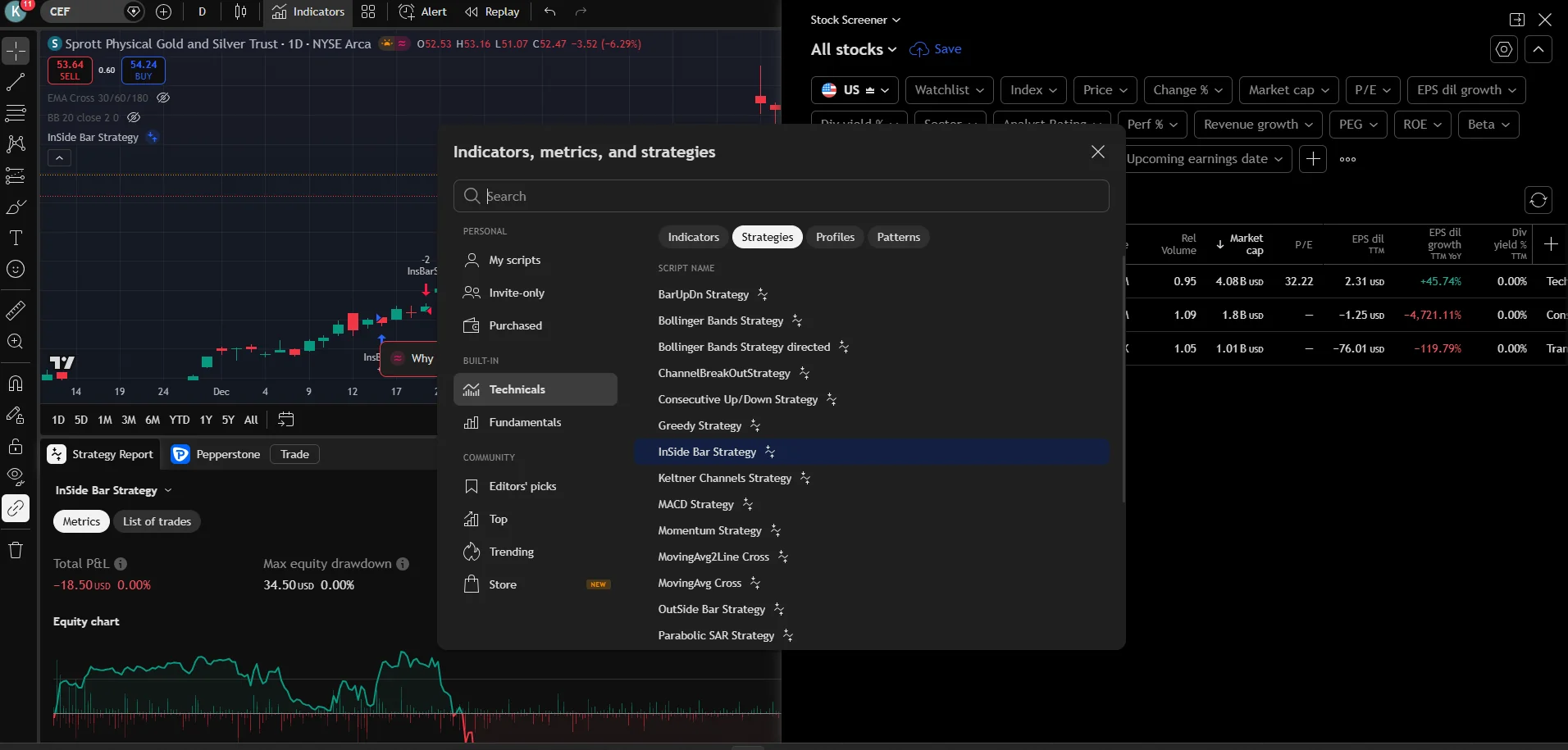
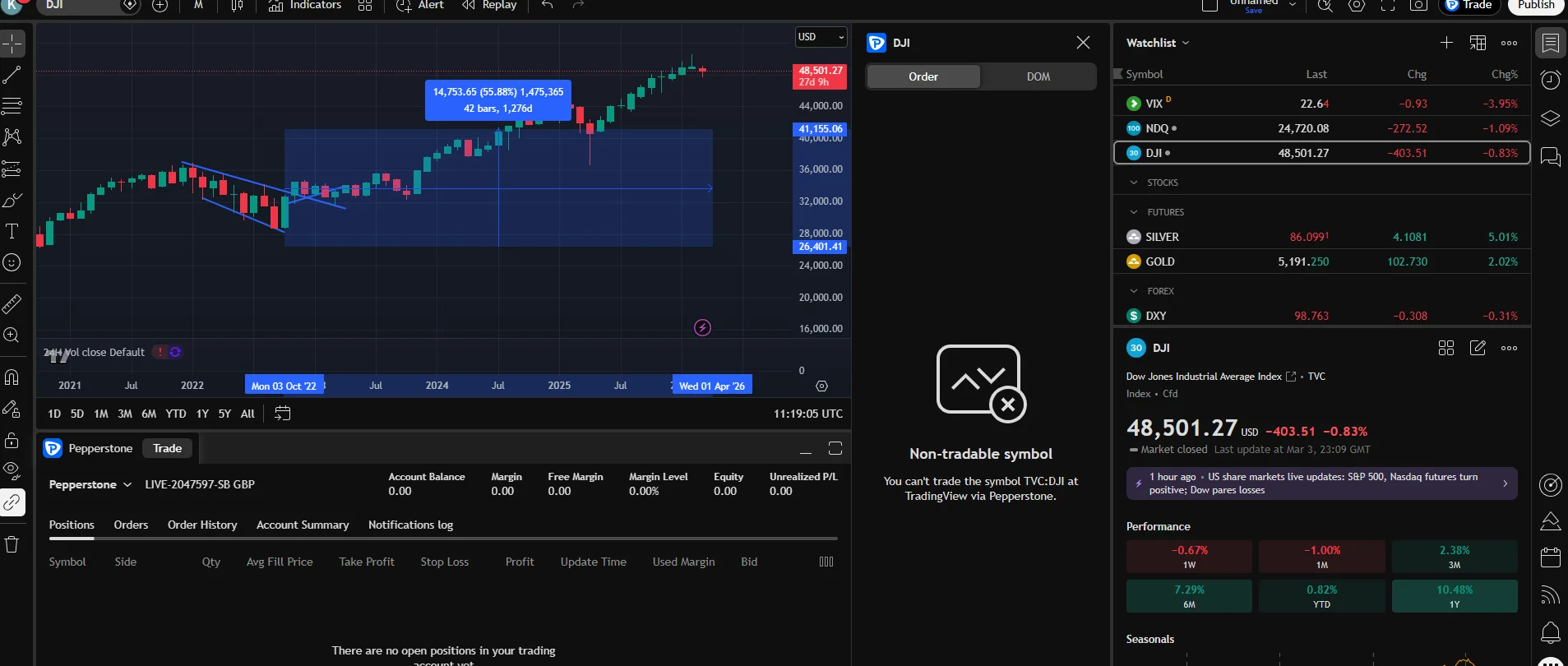
The least dramatic case is the most common. Watchlists, alerts and screeners run during hours you can actually respond to, on whichever platform you use: MT4, MT5, cTrader, TradingView and Pepperstone's own web and mobile platform all carry the -24 markets. A setup spotted at 2pm can be traded at 2pm, with a clear head rather than an alarm clock.
What are the honest caveats?
Four, and this page would be marketing rather than judgement without them.
The off-session spread is a genuine cost
Outside US cash hours there are fewer participants behind the quote, so the bid-ask gap widens, sometimes considerably on less liquid names. I document this in the mechanics explainer, including how the same trade costs more in spread at 2pm Sydney time than during the US session. The discipline: liquid names, limit orders in quiet stretches, no scalping of thin hours.
The reference price revalues, and gaps are yours
An off-hours price is Pepperstone's construction of where the market should be, and when New York opens the position revalues against where the market actually is. The companion piece on trading US shares from Australia carries the case that makes this concrete, the roughly 30% opening gap in Netflix on 20 April 2022 (a 35% fall by the close) that no ordinary stop could trade through, and why position size, not the stop order, is the real defence, since Pepperstone's stops fill at the next available price rather than a guaranteed level. Read it before sizing any overnight US position.
Financing and product structure
These are CFDs: contracts on the price under ASIC's 5:1 CFD leverage cap for retail clients on single shares, not ownership, with overnight financing on positions held past the daily close and dividends arriving as cash adjustments. The convenience of the clock does not change the running cost of holding.
The advantage is structural, not an edge
Trading at a civilised hour improves the conditions of your decisions; it does not make any individual trade a good one. A convenient bad idea is still a bad idea.
Is this actually rare among ASIC brokers?
Less rare than it was a year ago, and it is worth being straight about that. IG's Australian arm has offered extended-hours US share trading since December 2025 and CMC Markets expanded its 24/5 US range substantially in July 2026, so the clock advantage itself is spreading across the big ASIC brokers, and several quote far larger extended-hours share lists than Pepperstone's 100-plus -24 names. What distinguishes Pepperstone's version is the structure rather than exclusivity: a focused list of liquid US names inside a raw-spread CFD account, plus perpetual CFDs on selected instruments (SpaceX among them) that quote around the clock, weekends included. Compare ranges and costs against how you actually trade rather than assuming any one broker owns the clock. Pepperstone offers its range under Pepperstone Group Limited, AFSL 414530, regulated by ASIC, and broker product lists move quickly, so treat this competitive picture as dated to August 2026.
How was this guide put together?
By document work, dated: product facts checked against pepperstone.com/en-au and Pepperstone's published documentation on 3 August 2026, with the session arithmetic worked from the current New York and Sydney offsets. I am a UK-based trader and this is a research guide, not a live-tested Australian account. Where my platform experience genuinely transfers, execution behaviour on MT5 and TradingView through Pepperstone's UK entity, I say so and say why; the AU product set and pricing differ, which is why every figure here is document-checked rather than claimed from my own ticket.
The verdict: who is the timezone advantage really for?
For traders whose day cannot bend to New York's. If you can and will trade the US session live, do that: spreads are tightest where the liquidity is, and the 24-hour markets lose to the real thing on cost every time. For everyone else with a genuine view on US names, the -24 range converts an unworkable schedule into a workable one, at the price of wider off-session spreads and revaluation at the open, both knowable in advance. The trio of guides is built to be read together: the mechanics of how the 24-hour price works, the three-route comparison with the gap-risk case study, and this page for whether the product fits the life you lead.
Frequently Asked Questions
References
- Pepperstone: 24-hour US share trading
- Pepperstone: share CFD markets, commissions and execution
- Pepperstone: trading hours
Trading CFDs and FX carries significant risk and is not suitable for everyone. You have no interest in the underlying asset.