
- Expertise:
- CFD Trading, Forex, Derivatives, Risk Management
- Credentials:
- Chartered ACII (2018) · Trading since 2012
- Tested:
- 40+ forex & CFD platforms with live accounts

- Expertise:
- Broker Comparison, ISA Strategy, Portfolio Management
- Credentials:
- Active investor since 2013 · 11+ years experience
- Tested:
- 40+ brokers with funded accounts
How We Test
Real accounts. Real money. Real trades. No demo accounts or press releases.
What we measure:
- Spreads vs advertised rates
- Execution speed and slippage
- Hidden fees (overnight, withdrawal, conversion)
- Actual withdrawal times
Scoring:
Fees (25%) · Platform (20%) · Assets (15%) · Mobile (15%) · Tools (10%) · Support (10%) · Regulation (5%)
Testing team:
Adam Woodhead (investing since 2013), Thomas Drury (Chartered ACII, 2018), Dom Farnell (investing since 2013) — 50+ platforms with funded accounts
Quarterly reviews · Corrections: [email protected]
Disclaimer
Not financial advice. Educational content only. We're not FCA authorised. Consult a qualified advisor before investing.
Capital at risk. Investments can fall. Past performance doesn't guarantee future results.
CFD warning. 67-84% of retail accounts lose money trading CFDs. High risk due to leverage.
Contact: [email protected]
What are 24-hour share CFDs?
They are US share CFDs you can trade around the clock, five days a week, instead of only during Wall Street's session. Pepperstone runs more than 100 of them, including Apple, Amazon, Tesla, Microsoft and Nvidia, under symbols carrying a -24 suffix, with the same commission as its regular US share CFDs, from US$0.02 per share. For Australians the appeal is blunt: the US cash session runs through the middle of the night here, and 24-hour markets move US stock trading into your daytime. The trade-off is just as blunt: outside US hours there is less liquidity behind the price, so spreads run wider and prices can gap between sessions. Used knowingly, it is one of the most genuinely useful products an Australian stock trader can have, and this guide covers the mechanics, costs and cautions in full.
 Top Rated
Trading CFDs and FX carries significant risk and is not suitable for everyone. You have no interest in the underlying asset.
How does trading a stock around the clock actually work?
US exchanges open at 9.30am and close at 4pm New York time, and a normal share CFD simply mirrors those hours. The 24-hour product extends the market well beyond them.
The -24 markets
On Pepperstone the extended instruments are listed separately with a -24 suffix, so Apple appears as AAPL.US-24 alongside the standard AAPL.US. The -24 version prices continuously from early Monday to the end of Friday, platform time, covering pre-market, the US session, after-hours and the overnight stretch in one unbroken market. During Wall Street's hours the price tracks the exchange; outside them it reflects where the stock is trading across extended-hours venues and Pepperstone's pricing.
The hours, precisely
| Market | Hours (server time) |
|---|---|
| 24-hour US shares (-24) | Mon 03:00-23:59, Tue-Fri 00:01-23:59 (Fri close 23:55) |
| Regular US share CFDs | 16:31-22:59 (the US cash session, 9.30am-4pm New York) |
What it means from an Australian clock
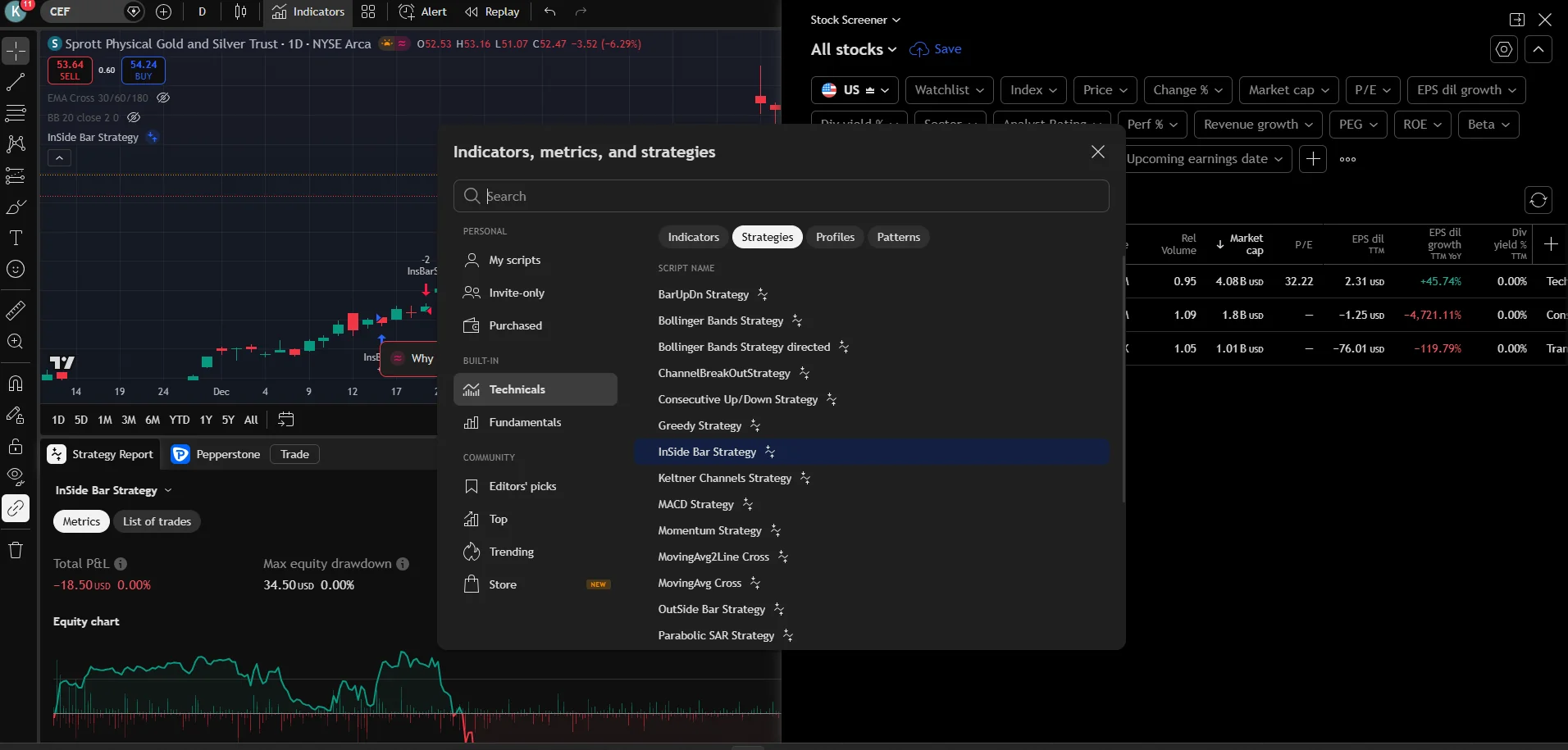
This is the part that sells itself. The US session runs roughly 11.30pm to 6am on the Australian east coast for much of the year, so most Australians have never traded a US stock live. The -24 markets put Apple and Nvidia on screen during the Australian business day: react to overnight earnings at breakfast, trade the story at lunch, manage the position before dinner. The product is available across TradingView, MT4, MT5, cTrader and Pepperstone's own platform, so it slots into whatever setup you already run.

What does it cost?
The pricing carries no premium for the extended hours. The real cost lives somewhere subtler.
Commission, leverage and execution
Commission runs from US$0.02 per share, the same rate as Pepperstone's regular US share CFDs, and ASIC's retail leverage cap on single-stock CFDs applies as always at 5:1, a 20% margin requirement. Execution runs on the same rails as the rest of the share offering, which Pepperstone quotes at 50 milliseconds and a 99.59% fill rate with no dealer intervention. Dividends arrive as cash adjustments, credited to longs and debited from shorts when a stock passes its ex-dividend date, with US withholding meaning the adjustment can differ from the headline dividend.
Overnight financing, with the numbers
Positions held past the daily close incur share-CFD financing: the closing price, times your size, times a 2.5% charge plus or minus the reference rate, divided by 360; longs pay the rate, shorts receive it.
A worked example
Hold US$10,000 of Apple exposure long overnight with the reference rate in the mid-fours and the nightly charge lands around two dollars, roughly US$60 a month. Trivial on a week's swing trade, decisive on a six-month hold. Put plainly, these are trading instruments rather than a substitute for owning shares long term.
The real cost is the spread, and it moves with the clock
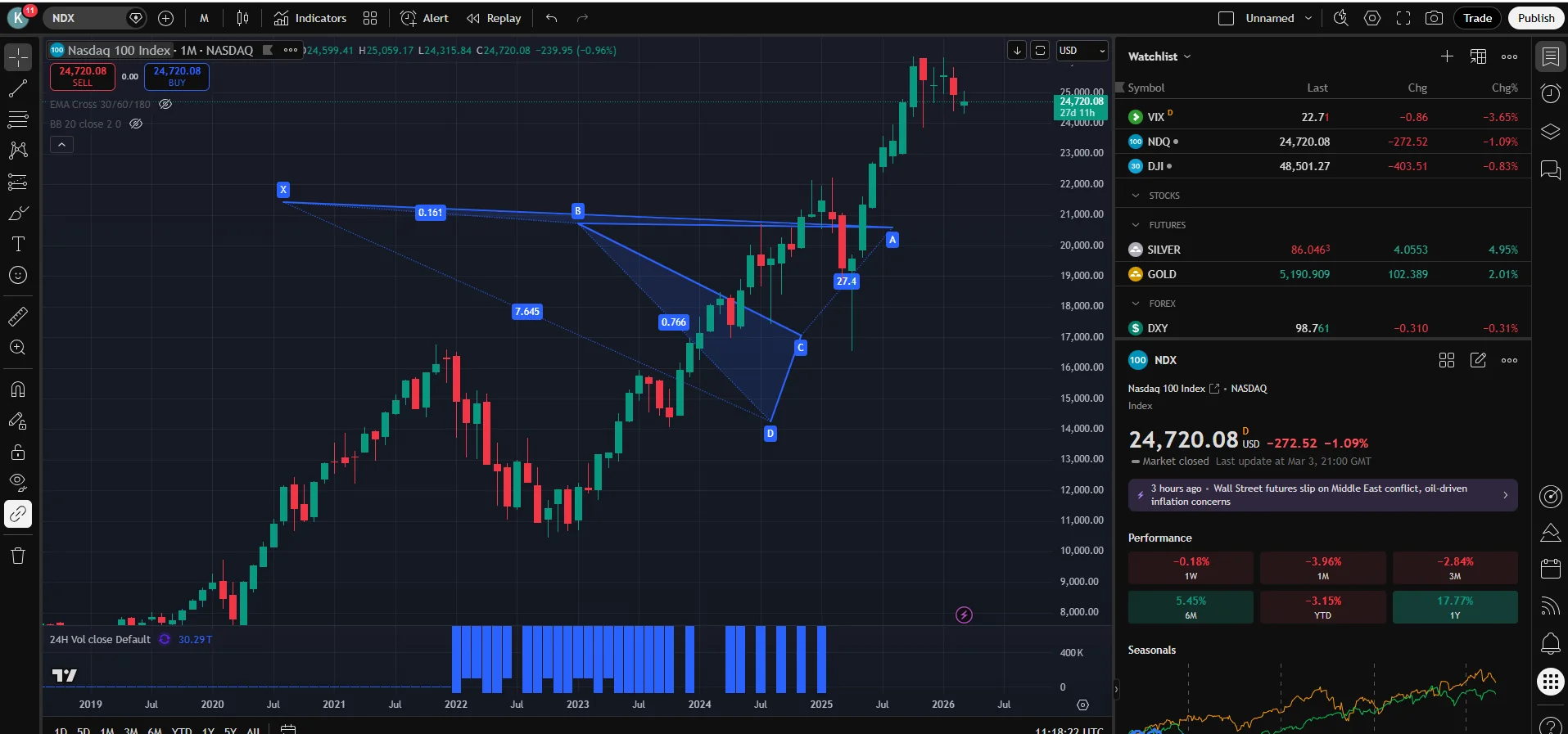
Pepperstone is upfront about this on the product page, and it deserves the same prominence here: outside US cash hours there are fewer participants behind the price, so the bid-ask gap widens, volatility around news can be sharper, and prices can gap between sessions. The same Apple trade costs more in spread at 2pm Sydney time than during the US session, sometimes considerably more on less liquid names. The discipline that follows: use limit orders rather than market orders in the quiet stretches, and treat the extended session as a tool for reacting to real events rather than a place to scalp thin liquidity.
When do 24-hour markets genuinely earn their keep?
Three situations come up again and again.
Earnings and news that break outside the session
US companies report after the close or before the open by design, precisely when normal share CFDs are shut. Nvidia's results land around 7am Sydney time; on a standard market you would wait most of a day to act, while on the -24 markets you can trade the reaction as it happens. For event-driven traders this alone justifies the product, and it is where the extended hours see their heaviest genuine use.
Managing risk you already hold
If you carry US exposure and something breaks overnight, a geopolitical shock, a sector story, a rogue headline, the extended market lets you cut or hedge immediately instead of watching a frozen position. Optionality over your own risk is worth most exactly when markets are ugly, and it is the least appreciated argument for having these markets available even if you rarely trade them.
Simply trading in your own timezone
The least dramatic case is the most common: Australians get to trade the world's most-watched stocks at humane hours, with charts, screeners and alerts running through the local day. Wider off-session spreads are the fee for that convenience, and position traders working on daily charts rather than minute charts tend to accept it without much complaint.
The verdict: should Australians use them?
If you trade US stocks from Australia at all, yes, with the liquidity caveat taken seriously. The product removes the single biggest obstacle, the clock, at no extra commission, on more than 100 of the names people actually trade, across every major platform, with execution stats to match the rest of the offering. Trade the liquid names, prefer limits in the quiet hours, respect the gaps and the financing meter, and the -24 markets turn the US session from a night shift into a normal part of an Australian trading day.
The bigger decision, whether to trade US names this way at all versus the overnight session or the ASX, is the subject of my companion piece on trading US shares from Australia, and per-trade costs sit alongside the rest in my Pepperstone pricing guide.
Frequently Asked Questions
References
- Pepperstone: 24-hour US share trading (markets, costs, risks)
- Pepperstone: trading hours
- Pepperstone: ASIC retail leverage limits
- Pepperstone: perpetual CFDs (market list and funding mechanics)
Trading CFDs and FX carries significant risk and is not suitable for everyone. You have no interest in the underlying asset.