
- Expertise:
- Platform Testing, Cryptocurrency, Retail Investing
- Credentials:
- Active investor since 2013 · 11+ years experience
- Tested:
- 50+ platforms · 200+ guides authored

- Expertise:
- Broker Comparison, ISA Strategy, Portfolio Management
- Credentials:
- Active investor since 2013 · 11+ years experience
- Tested:
- 40+ brokers with funded accounts
How We Test
Real accounts. Real money. Real trades. No demo accounts or press releases.
What we measure:
- Spreads vs advertised rates
- Execution speed and slippage
- Hidden fees (overnight, withdrawal, conversion)
- Actual withdrawal times
Scoring:
Fees (25%) · Platform (20%) · Assets (15%) · Mobile (15%) · Tools (10%) · Support (10%) · Regulation (5%)
Testing team:
Adam Woodhead (investing since 2013), Thomas Drury (Chartered ACII, 2018), Dom Farnell (investing since 2013) — 50+ platforms with funded accounts
Quarterly reviews · Corrections: [email protected]
Disclaimer
Not financial advice. Educational content only. We're not FCA authorised. Consult a qualified advisor before investing.
Capital at risk. Investments can fall. Past performance doesn't guarantee future results.
CFD warning. 67-84% of retail accounts lose money trading CFDs. High risk due to leverage.
Contact: [email protected]
Quick Answer: Which Pepperstone Account Suits You?
Pepperstone Australia offers two account types: Standard and Razor. Both are CFD accounts regulated by ASIC under Pepperstone Group Limited (AFSL 414530). The Standard account rolls all costs into the spread with no forex commission, making it the cleaner choice for newer traders. The Razor account strips spreads down to 0.0 pips and charges AUD $3.50 per lot per side on forex — a structure that rewards active traders and scalpers with lower total costs at higher volumes. Tax treatment is identical across both accounts.
 Top Rated
Trading CFDs and FX carries significant risk and is not suitable for everyone. You have no interest in the underlying asset.
Pepperstone
Pepperstone Group Limited is an Australian-founded forex and CFD broker regulated by the Australian Securities and Investments Commission (ASIC) under AFSL 414530. Client funds are held in segregated trust accounts with tier-1 Australian banks.
- Minimum Deposit AUD $0
- ASIC regulated (AFSL: 414530)
- MT4, MT5, cTrader, TradingView, Pepperstone Platform
- Access to forex, indices, shares CFDs, commodities, ETFs, and crypto CFDs
Trading CFDs and margin FX is risky and is not suitable for everyone.
Pepperstone for Australian Traders
Pepperstone Group Limited holds AFSL 414530 and operates under ASIC regulation — the same authority that oversees the country's largest financial institutions. The broker was founded in Melbourne in 2010 and has built a reputation around tight pricing, fast execution, and a platform range that caters to both casual and professional traders.
I have maintained live Pepperstone accounts since 2023, testing both Standard and Razor configurations across forex, indices, and commodity CFDs. The account structure is genuinely straightforward compared to UK or European entities that offer three or four account tiers. Australian clients choose between two options, and the decision comes down to a single question: do you want your costs baked into the spread, or separated into raw spreads plus commission? For a broader assessment of the broker's strengths and weaknesses, my full Pepperstone Australia review covers the detail.
What Accounts Does Pepperstone Offer Australian Clients?
Australian traders have access to two account types through Pepperstone's ASIC-regulated entity: the Standard account and the Razor account. Both provide leveraged CFD access to forex, indices, shares, commodities, ETFs, and crypto. Neither account offers real share ownership — all instruments are traded as contracts for difference.
The Standard Account
Pricing on the Standard account is spread-only. Forex trades carry no separate commission — the cost is embedded within a markup on the raw spread. EUR/USD typically sits around 1.0–1.1 pips during the London and New York sessions. This model makes cost calculation immediate: the spread you see is the full cost you pay on entry and exit, with no additional line items to track.
The Razor Account
The Razor account separates costs into two components: raw interbank spreads starting from 0.0 pips and a fixed commission of AUD $3.50 per standard lot per side on forex. A round-trip trade therefore costs AUD $7.00 per lot in commission, plus whatever the raw spread happens to be at that moment. EUR/USD on Razor typically averages 0.1 pips during active sessions — meaning total cost per lot sits around AUD $7.00 plus roughly AUD $1.00 in spread, well under the Standard account's all-in spread cost at equivalent volumes.
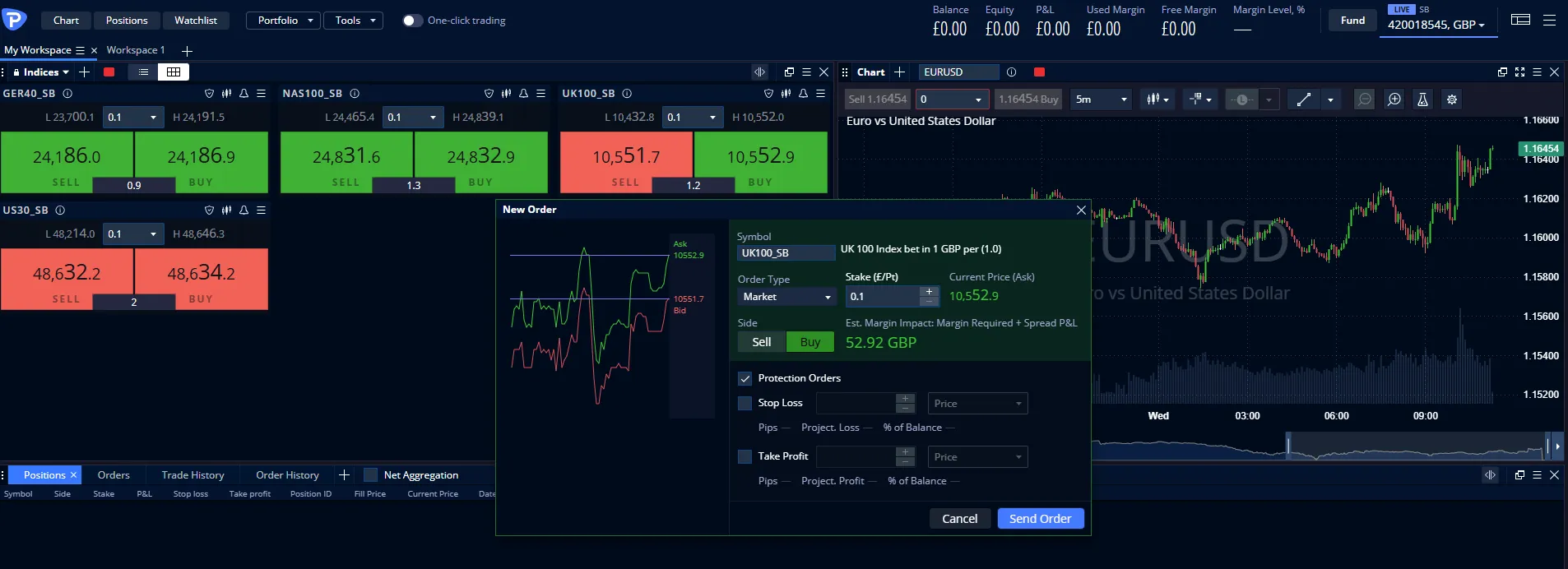
Pepperstone AU Account Comparison
| Feature | Standard Account | Razor Account |
|---|---|---|
| Forex Commission | None | AUD $3.50/lot/side |
| EUR/USD Spread | From 1.0 pips | From 0.0 pips (avg 0.1) |
| GBP/USD Spread | From 1.2 pips | From 0.3 pips |
| Gold (XAU/USD) | From 0.2 pips | From 0.2 pips |
| Tax Treatment | CGT applies | CGT applies |
| Ideal For | Beginners, swing traders | Scalpers, day traders |
How Do Costs Differ Between Standard and Razor?
The pricing mechanics are the only meaningful distinction between these two accounts. Every other feature — leverage limits, available markets, deposit methods, and platform access — is identical. The decision is purely about cost structure preference.
Spread and Commission Breakdown
On a single EUR/USD lot during the London session, the Standard account's typical 1.0-pip spread translates to roughly AUD $15.00 in cost. The Razor account on the same trade would charge the raw spread of approximately 0.1 pips (around AUD $1.50) plus AUD $7.00 round-trip commission — a total of roughly AUD $8.50. That AUD $6.50 difference per lot becomes significant for traders placing ten or more round-trips daily.
For traders executing fewer than five trades per day, the gap narrows. The Standard account's simplicity — one number, no mental arithmetic — has its own value, and the cost difference at lower volumes rarely exceeds a few dollars per session.
Tax Treatment in Australia
Both accounts carry identical tax obligations under Australian law. Profits from CFD trading on either account are subject to capital gains tax (CGT), and trading losses can be offset against capital gains elsewhere in your portfolio. Unlike the UK, where spread betting accounts offer a tax-free alternative, Australian CFD traders have no equivalent exemption. The account choice between Standard and Razor has zero impact on your tax position — the differentiator is purely cost structure, not tax efficiency. Consult a registered tax agent for advice specific to your circumstances.
What Deposit Do You Need to Start Trading?
Pepperstone does not impose a minimum deposit on either account type. Technically, you can open a Standard or Razor account with AUD $0. In practice, depositing at least AUD $200 provides enough margin to open positions across major forex pairs without sitting uncomfortably close to margin call territory.
When I opened my Razor account, I started with AUD $500 via PayID — the funds arrived within minutes, and the balance gave me room to run simultaneous positions on EUR/USD and Gold without the margin becoming a constraint. Beginners who are still deciding between accounts should start on the 30-day demo account, which mirrors live pricing on both Standard and Razor, before committing real funds.
Deposit methods include bank transfer, Visa, Mastercard, PayPal, Skrill, Neteller, BPay, PayID, and Apple/Google Pay. Domestic withdrawals are free. International bank transfers attract a AUD $20 fee.
Risk note: Leveraged CFD trading carries substantial risk regardless of deposit size. ASIC regulation ensures broker compliance, but market losses can exceed your initial deposit. Pepperstone Group Limited operates under AFSL 414530. There is no government-backed compensation scheme for Australian clients — this applies to all ASIC-regulated brokers, not just Pepperstone.
Which Platforms Work With Each Account?
Both Standard and Razor accounts give access to the full platform suite: MetaTrader 4, MetaTrader 5, cTrader, TradingView, and Pepperstone's own proprietary platform. There is no platform restriction based on account type — a Razor trader on TradingView and a Standard trader on MT5 have access to identical charting, order types, and execution infrastructure.
This parity is worth highlighting because some brokers restrict premium platforms to their higher-tier accounts. With Pepperstone AU, the account decision is entirely about pricing, not platform access. Whether you prefer cTrader's depth-of-market tools for scalping or TradingView's community-driven charting for swing analysis, both accounts deliver the same experience. For a closer look at the platform options, my guide on Pepperstone's platform quality breaks down each option.
Is the Standard Account Right for Beginners?
The Standard account removes the cognitive overhead of commission calculations entirely. A beginner placing their first live EUR/USD trade sees a 1.0-pip spread and knows immediately what the position is costing them. There is no second line item to factor in, no per-lot fee to multiply against position size. That transparency matters when you are still learning how spreads, leverage, and margin interact.
Pepperstone's Standard spreads are competitive within the no-commission category. EUR/USD at 1.0–1.1 pips sits below many ASIC-regulated alternatives, and the US 500 index at 0.4 points is tight enough for intraday index positions. Beginners who plan to trade once or twice a day across major pairs will find the Standard account's cost structure more than adequate.
The real advantage for newer traders is psychological: spread-only pricing reduces the number of variables you are tracking while you learn the mechanics of risk management, order types, and position sizing. Once you are comfortable calculating round-trip costs including commissions, transitioning to Razor is straightforward. For a broader look at how Pepperstone supports new traders, whether Pepperstone suits beginners covers the onboarding experience in full.
Does the Razor Account Deliver for Scalpers and Day Traders?
Razor is built for volume. Raw spreads from 0.0 pips on EUR/USD mean your entry and exit points are as close to interbank pricing as retail accounts allow, and execution speeds averaging 30–50ms reduce slippage on fast-moving pairs. The AUD $3.50 per lot per side commission is fixed and predictable — it does not widen during volatility spikes the way spread markups can on all-inclusive accounts.
I switched from Standard to Razor after my third month of active trading and the difference was immediately measurable. Running 12–15 EUR/USD scalps during the London open, total costs dropped by roughly AUD $60–$80 per session compared to the Standard account's wider spreads. That saving compounds across a trading week and becomes material over a month.
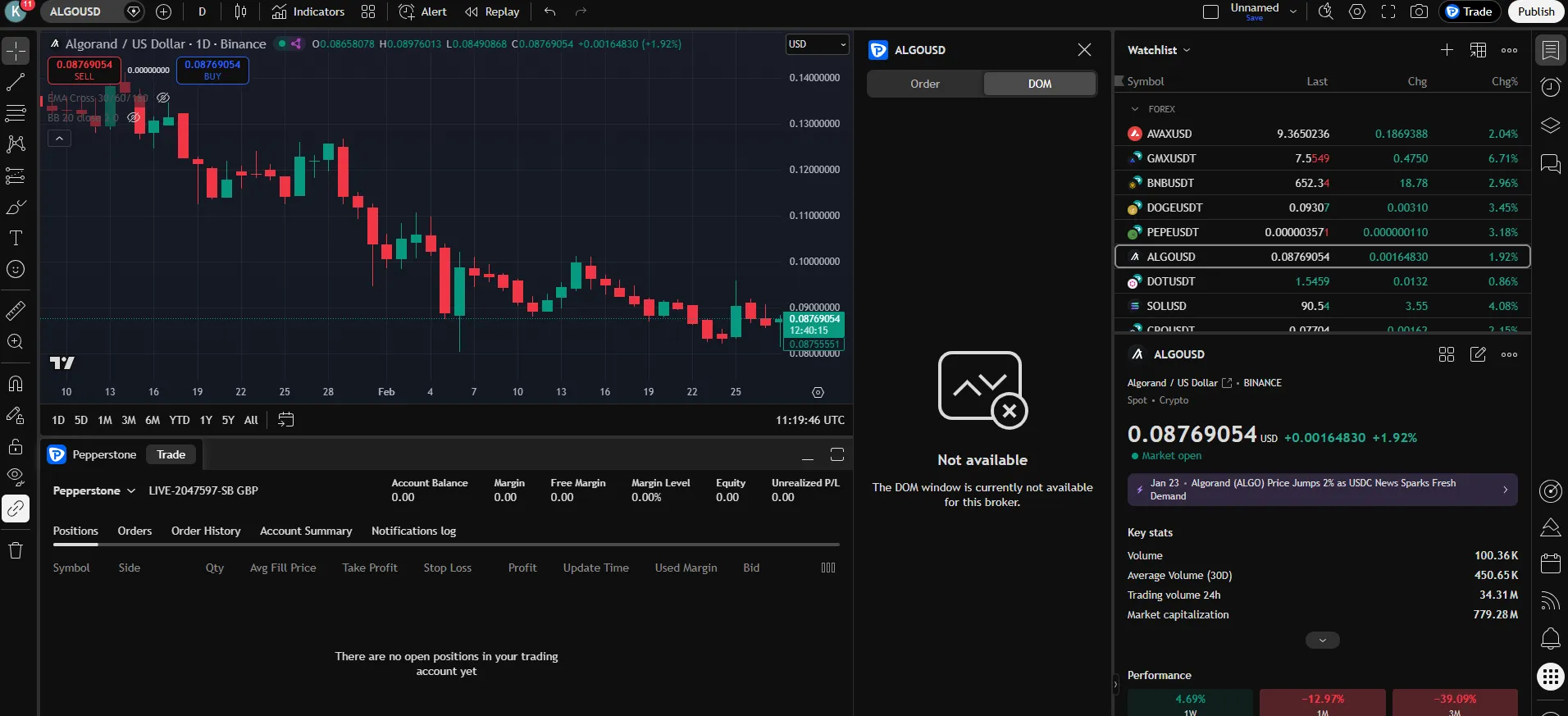
cTrader and TradingView both pair well with Razor's pricing model. cTrader's depth-of-market panel shows live liquidity at each price level — useful for scalpers who need to see where resting orders cluster. TradingView's community indicators and multi-chart layouts suit day traders running longer intraday strategies. For a direct side-by-side breakdown, my Razor vs Standard comparison quantifies the cost difference across multiple trading frequencies.
Which Pepperstone Account Matches Your Trading Style?
The table below maps common trader profiles to the account type that typically delivers the best cost outcome. Neither account is universally cheaper — the right choice depends on how frequently you trade and whether you value pricing simplicity or tight raw spreads.
| Trader Profile | Recommended Account | Reasoning |
|---|---|---|
| Complete Beginner | Standard | Spread-only pricing removes commission complexity during the learning phase |
| Casual Swing Trader | Standard | Fewer than five trades per week makes commission savings negligible |
| Active Day Trader | Razor | Ten or more daily trades benefit significantly from raw spread pricing |
| Scalper | Razor | Sub-pip spreads and fixed commission suit high-frequency entry and exit |
| Algorithmic / EA Trader | Razor | Predictable commission structure integrates cleanly with automated cost modelling |
| Index Trader | Either | Index spreads are identical on both accounts — US 500 at 0.4 points regardless |
Are There Overnight or Hidden Fees to Watch?
Overnight funding — the swap charge applied to positions held past the daily market close — applies equally to Standard and Razor accounts. Rates are derived from interbank benchmarks and vary by instrument. Holding a long EUR/USD position overnight currently costs a small daily charge, while short positions on certain pairs may earn a credit depending on interest rate differentials. Wednesday's triple swap (covering the weekend) is the one that catches newer traders off guard.
Fee Transparency
Pepperstone does not apply inactivity fees, platform data fees, or account maintenance charges on either account type. Deposits through domestic methods are free. The only withdrawal cost is AUD $20 for international bank transfers — domestic withdrawals carry no fee. Costs are confined to spreads, commissions (Razor only), and overnight funding. The published fee schedule is clean, and nothing has appeared on my statements that was not disclosed upfront.
Managing Leveraged Risk
ASIC caps retail leverage at 30:1 on major forex pairs, 20:1 on indices, 10:1 on most commodities (20:1 on gold), 5:1 on share CFDs, and 2:1 on crypto. These limits apply identically across Standard and Razor accounts. Leverage amplifies both gains and losses — a 3.3% adverse move on a 30:1 forex position eliminates your entire margin on that trade.
Available Risk-Management Tools
| Tool | Function |
|---|---|
| Stop-Loss Order | Automatically closes a position at a predetermined price to cap potential losses |
| Trailing Stop | Follows favourable price movement and locks in gains while limiting downside |
| Take-Profit Order | Closes a position once a set profit target is reached |
| Price Alerts | Notifies you when specific market conditions or price levels are hit |
| Negative Balance Protection | Ensures retail accounts cannot lose more than the deposited balance |
For a closer look at how Pepperstone handles fund safety and regulatory obligations under ASIC, Pepperstone's safety credentials cover the specifics.
Final Verdict — Standard or Razor for Australian Traders?
The Standard account is the right starting point for traders who want clean, commission-free pricing while they develop their skills. The Razor account is the better long-term home for anyone trading actively — the raw spreads and fixed commission structure deliver measurably lower costs once you are executing more than a handful of trades per day. Both accounts access identical platforms, markets, and ASIC-mandated leverage limits, so the decision rests entirely on how you prefer your costs presented.
There is no wrong answer between these two. Beginners who start on Standard can open a Razor account under the same profile once their trading frequency justifies the switch. The flexibility to run both simultaneously, test each against your own activity, and make an informed decision based on actual cost data rather than assumptions is one of Pepperstone's genuine strengths as an ASIC-regulated broker.
Get Started With Pepperstone Australia
CFDs are complex instruments and come with a high risk of losing money rapidly due to leverage. Between 74-89% of retail investor accounts lose money when trading CFDs. You should consider whether you understand how CFDs work and whether you can afford to take the high risk of losing your money.
FAQs
How I Tested Pepperstone's Australian Accounts
The testing log below documents hands-on comparison of Pepperstone's Standard and Razor accounts. All tests were conducted on live accounts funded with personal capital through Pepperstone Group Limited (AFSL 414530).
| Date | Test Conducted | Result |
|---|---|---|
| 2024-04-08 | Compared EUR/USD spreads on Standard vs Razor during Sydney/London overlap | Razor averaged 0.1 pips vs Standard at 1.1 pips. Razor total cost lower for 5+ daily trades. |
| 2024-07-15 | Measured AUD/USD execution speed on Razor via cTrader (20 market orders) | Average fill time 38ms. No slippage detected on 18 of 20 orders. |
| 2024-10-02 | Opened Standard and Razor accounts under same profile via PayID deposit | Both approved within 12 hours. AUD $500 deposit reflected within 3 minutes via PayID. |
| 2025-02-20 | Compared overnight swap rates on EUR/USD long across both account types | Swap charges identical on both accounts. No hidden markup vs published rates. |
| 2025-08-11 | Tested platform availability — confirmed MT4, MT5, cTrader, TradingView, Pepperstone platform on both accounts | No platform restrictions by account type. Full access on Standard and Razor. |
| 2026-02-18 | Re-verified Razor commission on MT5 for EUR/USD and GBP/USD | Commission confirmed at AUD $3.50 per side per standard lot on both pairs. |
Corrections & Update Log
- 2026-03-05: Initial publication. Page built from scratch for the Australian market — restructured from a 3-account (UK) framework to a 2-account comparison reflecting Pepperstone's ASIC entity offering. All pricing verified in AUD against Pepperstone's AU site. AFSL 414530 confirmed against ASIC Connect register. FAQs written to address Australian PAA queries.
References
- Compare our trading accounts | Pepperstone Australia
- Spreads and commissions | Pepperstone Australia
- ASIC Connect — Australian Financial Services Licence Register | ASIC
- Capital gains tax | Australian Taxation Office
Trading CFDs and FX carries significant risk and is not suitable for everyone. You have no interest in the underlying asset.