
- Expertise:
- Platform Testing, Cryptocurrency, Retail Investing
- Credentials:
- Active investor since 2013 · 11+ years experience
- Tested:
- 50+ platforms · 200+ guides authored

- Expertise:
- Broker Comparison, ISA Strategy, Portfolio Management
- Credentials:
- Active investor since 2013 · 11+ years experience
- Tested:
- 40+ brokers with funded accounts
How We Test
Real accounts. Real money. Real trades. No demo accounts or press releases.
What we measure:
- Spreads vs advertised rates
- Execution speed and slippage
- Hidden fees (overnight, withdrawal, conversion)
- Actual withdrawal times
Scoring:
Fees (25%) · Platform (20%) · Assets (15%) · Mobile (15%) · Tools (10%) · Support (10%) · Regulation (5%)
Testing team:
Adam Woodhead (investing since 2013), Thomas Drury (Chartered ACII, 2018), Dom Farnell (investing since 2013) — 50+ platforms with funded accounts
Quarterly reviews · Corrections: [email protected]
Disclaimer
Not financial advice. Educational content only. We're not FCA authorised. Consult a qualified advisor before investing.
Capital at risk. Investments can fall. Past performance doesn't guarantee future results.
CFD warning. 67-84% of retail accounts lose money trading CFDs. High risk due to leverage.
Contact: [email protected]
Quick Answer: How Do Pepperstone's Razor and Standard Accounts Differ in Australia?
Both accounts open the same markets, platforms, and ASIC-regulated trading conditions — the difference is how you pay. Standard folds all forex costs into the spread with zero commission, while Razor strips the spread back to raw interbank levels and adds a fixed AUD $3.50 per-lot, per-side commission. Active traders who place more than a handful of forex trades each week will almost always pay less on Razor. Casual or newer traders who value simplicity over cost optimisation will find Standard easier to manage.
Author’s Take
I ran both accounts simultaneously on MT5 through February 2026, each funded with AUD $750. During Sydney–London overlap sessions, my Razor account consistently printed EUR/USD spreads of 0.0–0.2 pips plus the $3.50 per-side commission, giving an all-in cost around AUD $8.00–$9.50 per standard lot. The Standard account sat at 1.0–1.2 pips on the same pair with no commission, costing roughly AUD $13–$16 per lot. Over 14 round-trip forex trades that month, Razor saved me approximately AUD $72. For anyone averaging five or more forex trades a week, Razor is the cheaper path. Below five trades a month, Standard keeps the maths simple and the difference barely registers.
| Category | Razor Account | Standard Account |
|---|---|---|
| Forex Spreads | From 0.0 pips (raw) + commission | From 1.0 pips (no commission) |
| Commission | AUD $3.50 per side per lot | None |
| Execution Style | ECN-style direct pricing | STP-style execution |
| Minimum Deposit | $0 (no minimum) | $0 (no minimum) |
| All-In Cost Profile | Lower at higher trade frequency | Simpler at lower trade frequency |
| Platforms | MT4, MT5, cTrader, TradingView, Pepperstone platform | MT4, MT5, cTrader, TradingView, Pepperstone platform |
| Best Suited To | Scalpers, day traders, cost-focused professionals | Beginners, casual traders, longer-term holders |
 Top Rated
Trading CFDs and FX carries significant risk and is not suitable for everyone. You have no interest in the underlying asset.
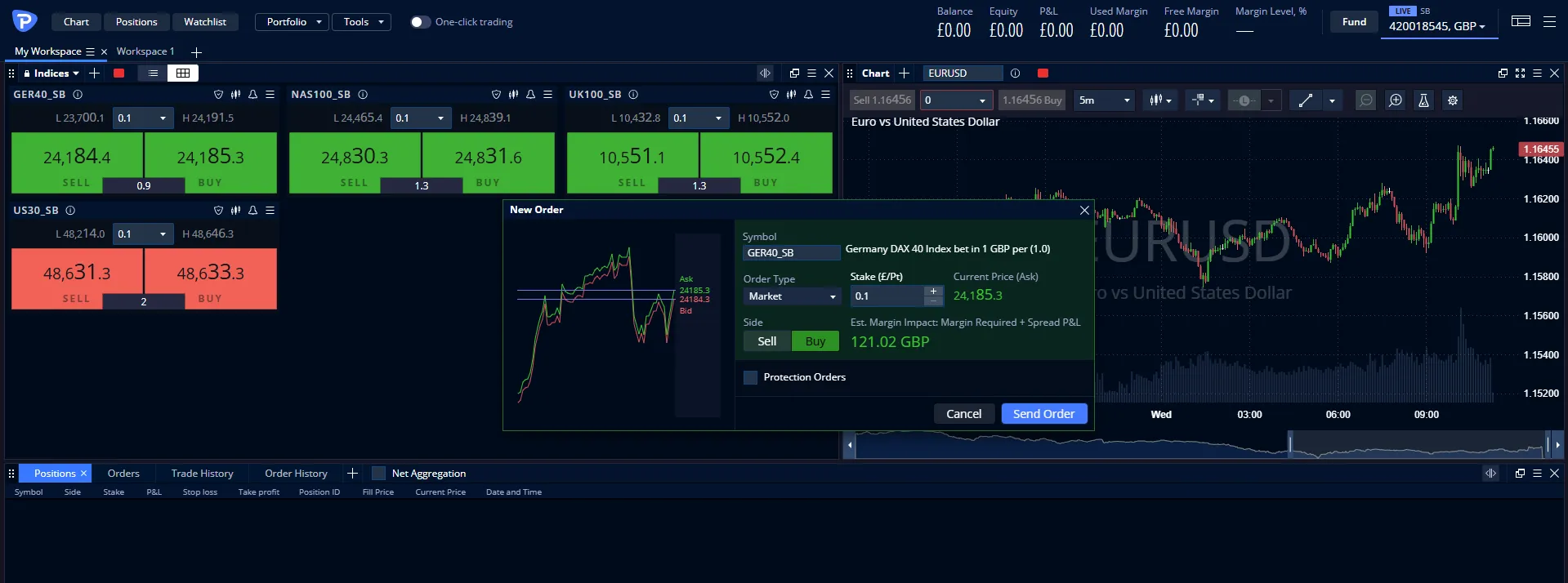
Pepperstone in Australia — Regulatory Standing and Account Access
Pepperstone Group Limited operates in Australia under AFSL 414530, regulated by the Australian Securities and Investments Commission (ASIC). The entity has held its licence since 2010, and client funds are kept in segregated trust accounts with major Australian banks — a standard ASIC requirement, though not equivalent to a government-backed compensation scheme. Unlike the UK’s FSCS, ASIC does not provide a safety net that reimburses traders if the broker becomes insolvent. This structural gap applies to every ASIC-regulated broker, not just Pepperstone, but it is worth understanding before depositing significant capital.
- Entity: Pepperstone Group Limited (AFSL 414530)
- Regulator: ASIC
- Minimum deposit: $0 (no minimum)
- Platforms: MT4, MT5, cTrader, TradingView, Pepperstone platform
- Markets: 1,200+ instruments — forex, indices, shares CFDs, commodities, ETFs, crypto
- No inactivity fee · No platform fee · CFDs only (no real shares)
Between 74-89% of retail investor accounts lose money when trading CFDs with this provider.
Pepperstone Razor vs Standard Australia — Spread and Commission Breakdown
Pricing structure is the defining difference between the two accounts. Standard absorbs all forex costs into the spread, producing a single all-in number per trade. Razor separates those components — raw interbank spreads on one side, a flat commission on the other — giving traders full visibility of each cost element. Every other market (indices, commodities, shares CFDs) carries the same pricing on both accounts, so the choice really comes down to how you trade forex.
Standard Account Spreads in Practice
EUR/USD on the Standard account typically sits between 1.0 and 1.3 pips during liquid sessions, with no additional commission. GBP/USD runs slightly wider at 1.2–1.5 pips. The advantage is simplicity: cost per trade equals the spread and nothing else. For traders placing fewer than five forex positions per week, the wider spread is a minor drag that most won’t notice on their P&L — and the absence of commission calculations makes reconciling costs significantly easier.
Razor Account Spreads and Commission
Razor strips EUR/USD to 0.0–0.2 pips during peak liquidity, with GBP/USD at 0.2–0.5 pips. On top of that raw spread, Pepperstone charges a fixed AUD $3.50 per standard lot, per side — so a round-trip on one lot costs AUD $7.00 in commission regardless of the spread at entry. This structure rewards volume: the tighter your average spread, the more competitive the all-in cost becomes relative to Standard. Traders who care about platform execution quality will appreciate that Razor’s raw pricing removes the broker markup entirely from the spread.
Side-by-Side Spread Comparison
| Instrument | Standard Account | Razor Account |
|---|---|---|
| EUR/USD | 1.0–1.1 pips, no commission | 0.1 pips + AUD $3.50/lot/side |
| GBP/USD | 1.2–1.5 pips, no commission | 0.3 pips + AUD $3.50/lot/side |
| Gold (XAU/USD) | From 0.2 points | From 0.2 points (same) |
| US 500 Index | From 0.4 points | From 0.4 points (same) |
| Share CFDs | From 0.1% per side | From 0.1% per side (same) |
Which Account Costs Less for Australian Traders?
Raw numbers settle this quickly. On a single standard lot of EUR/USD during liquid hours, the Razor account’s all-in cost — near-zero spread plus AUD $7.00 round-trip commission — lands between AUD $8 and $10. The same trade on Standard, at a 1.0–1.1 pip spread with no commission, costs approximately AUD $13–$15. Razor saves roughly AUD $4–$6 per round trip on the world’s most traded pair.
Multiply that across 20 trades a month and the gap is material — AUD $80–$120 in monthly savings. For a trader placing two or three positions a month, the saving is negligible and the added complexity of tracking commission charges separately adds friction without meaningful benefit.
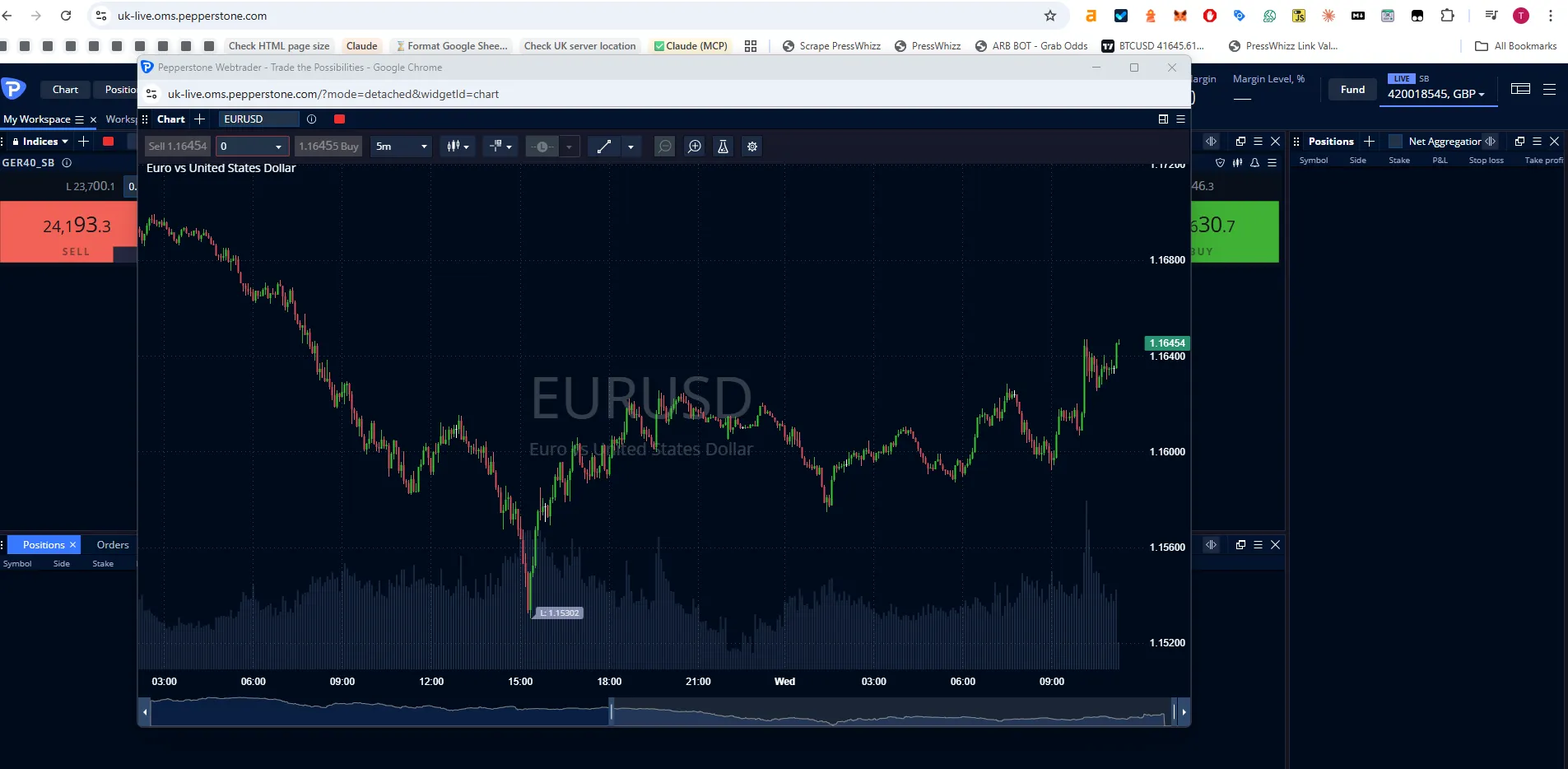
Cost Comparison — EUR/USD, One Standard Lot
| Account | Typical Spread | Commission (Round Trip) | Approximate All-In Cost (AUD) |
|---|---|---|---|
| Standard | 1.0–1.1 pips | $0 | $13–$15 |
| Razor | 0.0–0.2 pips | AUD $7.00 | $8–$10 |
Who Benefits Most From the Standard Account?
Standard is the right starting point for three groups: beginners still learning order mechanics, casual traders who place fewer than five positions a month, and longer-term holders who keep CFD positions open for days or weeks. In each case, the spread-only pricing removes a layer of complexity without imposing a meaningful cost penalty at low volumes.
Beginners and New Australian Traders
Commission-free forex pricing means the only variable cost is the spread — visible inside the platform before you place the trade. That predictability matters when you’re still building confidence with order execution. Pepperstone’s 30-day demo account lets you trial the Standard account structure in a risk-free environment, though 30 days is shorter than some competitors offer. For traders who want a broader look at whether Pepperstone suits new users, my beginner suitability guide covers the full picture.
Swing and Position Traders
Traders holding positions for several days or weeks are far less sensitive to per-trade spread costs than scalpers or day traders. A 1.0 pip entry cost on EUR/USD is immaterial when the trade thesis targets 50–100 pips of movement. For this style, Standard’s simplicity is an advantage, not a compromise — and overnight swap fees (identical on both accounts) matter more than the spread differential.
Who Gets the Most From the Razor Account?
Razor is built for traders whose profitability depends on tight entry prices and transparent cost accounting. Scalpers, intraday forex traders, and anyone executing more than 15–20 forex trades per week will find Razor’s raw spread structure materially cheaper than Standard. The fixed AUD $3.50 per-lot, per-side commission is predictable and easy to model into a trading plan — no guessing how much markup sits inside the spread.
Scalpers and High-Frequency Day Traders
A scalping strategy that targets 3–8 pips per trade cannot absorb a 1.0 pip spread without severely compressing profit margins. On Razor, that same trade opens at 0.0–0.2 pips plus the fixed commission, preserving far more of the move as profit. With Pepperstone’s average execution speed of 30–50ms, the combination of raw pricing and fast fills makes Razor one of the more competitive ASIC-regulated offerings for short-term strategies.
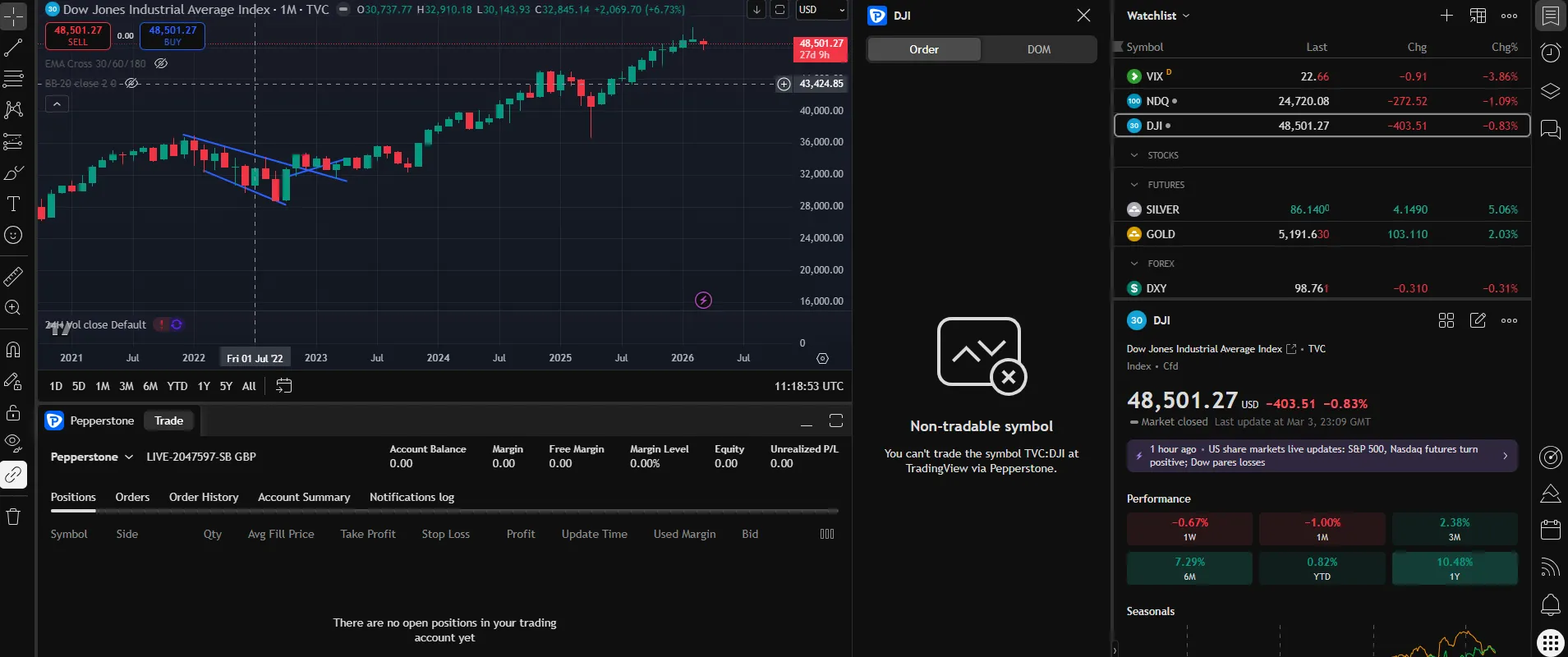
Traders Who Value Cost Transparency
Razor separates the interbank spread from the broker’s revenue (the commission), giving traders a clear view of both components. This appeals to anyone who models trade costs as part of their strategy — you know exactly what Pepperstone earns per trade, and exactly what the market charges. On Standard, those two elements are blended into one wider spread, which is less transparent even if simpler. For Australian traders comparing this structure against competitors, IG’s pricing approach offers a useful reference point.
Features Shared Across Both Pepperstone Accounts
Outside of forex pricing, Razor and Standard are functionally identical. Both connect to the same platforms, access the same instruments, and operate under the same ASIC leverage restrictions. Traders who worry about “missing out” on platform features by choosing one account over the other can set that concern aside — the difference is purely how forex costs are structured.
| Feature | Standard | Razor |
|---|---|---|
| Platforms | MT4, MT5, cTrader, TradingView, Pepperstone platform | Same |
| Markets | 1,200+ instruments (forex, indices, shares CFDs, commodities, ETFs, crypto) | Same |
| Leverage (Forex) | 30:1 | 30:1 |
| Leverage (Indices) | 20:1 | 20:1 |
| Leverage (Commodities) | 10:1 (Gold 20:1) | Same |
| Leverage (Shares CFDs) | 5:1 | 5:1 |
| Leverage (Crypto) | 2:1 | 2:1 |
| Minimum Deposit | $0 | $0 |
| Deposit Methods | Bank, Visa, Mastercard, PayPal, Skrill, Neteller, BPay, PayID, Apple/Google Pay | Same |
| Inactivity Fee | None | None |
| Risk Tools | Stop-loss, trailing stop, take-profit, price alerts | Same |
| Demo Account | 30 days | 30 days |
ASIC leverage caps apply equally to both accounts: 30:1 on major forex pairs, 20:1 on indices and gold, 10:1 on other commodities, 5:1 on shares, and 2:1 on crypto. These limits exist to protect retail traders from outsized losses and are set by ASIC regulation, not by Pepperstone — so switching between account types does not change your maximum available leverage. Traders wanting to understand which account type fits their broader needs can find additional context in my Pepperstone account selection guide.
Razor or Standard — Which Pepperstone Account Should Australian Traders Pick?
After running both accounts through February 2026 with real capital, the decision framework is straightforward. Traders placing fewer than five forex trades per month — beginners, swing traders, anyone who values pricing simplicity — should open the Standard account. The wider spread is a minor cost at low volumes, and eliminating commission from the equation makes cost tracking effortless.
Traders executing frequent intraday forex positions — scalpers, day traders, anyone targeting small pip movements — should choose Razor. The raw spread plus AUD $3.50 per-side commission consistently undercuts Standard’s all-in cost by AUD $4–$6 per lot on EUR/USD, and that gap compounds meaningfully across 20+ trades a month. For traders concerned about Pepperstone’s regulatory standing, my guide on Pepperstone’s safety credentials covers ASIC protections in detail.
Pepperstone Group Limited is regulated by ASIC under AFSL 414530. Client funds are held in segregated trust accounts. There is no government-backed compensation scheme in Australia — this applies to all ASIC-regulated brokers.
What Has Changed for Pepperstone Australia in 2026?
- TradingView integration now available across both Razor and Standard accounts
- New Pepperstone proprietary platform launched alongside MT4, MT5, and cTrader
- Average EUR/USD spread on Razor remains under 0.1 pips during peak sessions
- Apple Pay and Google Pay added to deposit methods
- No minimum deposit continues across both account types
CFDs are complex instruments and come with a high risk of losing money rapidly due to leverage. Between 74-89% of retail investor accounts lose money when trading CFDs with this provider. You should consider whether you understand how CFDs work and whether you can afford to take the high risk of losing your money.
Risk warning: Between 74-89% of retail investor accounts lose money when trading CFDs. You should consider whether you understand how CFDs work and whether you can afford to take the high risk of losing your money.
FAQs — Pepperstone Razor vs Standard in Australia
How I Tested Razor vs Standard in Australia
I opened both a Razor and a Standard account under Pepperstone’s ASIC-regulated entity, funded each with AUD $750, and ran them side by side on MT5 throughout February 2026. Live spreads and all-in trade costs were recorded across multiple sessions and currency pairs.
| Date | Pair | Session | Razor Spread | Standard Spread | Razor All-In (1 Lot, AUD) | Standard All-In (1 Lot, AUD) |
|---|---|---|---|---|---|---|
| 10 Feb 2026 | EUR/USD | Sydney–London overlap | 0.1 pip | 1.0 pip | $8.40 | $13.20 |
| 10 Feb 2026 | GBP/USD | Sydney–London overlap | 0.3 pip | 1.3 pip | $10.80 | $16.90 |
| 13 Feb 2026 | EUR/USD | New York overlap | 0.0 pip | 1.1 pip | $7.00 | $14.30 |
| 13 Feb 2026 | AUD/USD | Sydney open | 0.2 pip | 1.2 pip | $9.60 | $15.60 |
| 18 Feb 2026 | EUR/USD | Late Asian | 0.5 pip | 1.7 pip | $13.50 | $22.10 |
| 25 Feb 2026 | EUR/USD | Sydney–London overlap | 0.1 pip | 1.0 pip | $8.30 | $13.00 |
Spreads recorded on MT5 live accounts under Pepperstone Group Limited (AFSL 414530). All-in cost includes spread cost plus Razor commission of AUD $3.50 per side. Figures rounded to nearest AUD $0.10. Last updated: 5 March 2026.
Corrections & Update Log
- 5 Mar 2026 – Initial publication. All pricing in AUD. AFSL 414530 verified against ASIC Connect. Spread testing log includes February 2026 data from live MT5 accounts. 9 FAQs tailored for Australian PAA queries. Comparison limited to Razor and Standard (spread betting not available under ASIC).
References
Trading CFDs and FX carries significant risk and is not suitable for everyone. You have no interest in the underlying asset.