
- Expertise:
- Platform Testing, Cryptocurrency, Retail Investing
- Credentials:
- Active investor since 2013 · 11+ years experience
- Tested:
- 50+ platforms · 200+ guides authored

- Expertise:
- Broker Comparison, ISA Strategy, Portfolio Management
- Credentials:
- Active investor since 2013 · 11+ years experience
- Tested:
- 40+ brokers with funded accounts
How We Test
Real accounts. Real money. Real trades. No demo accounts or press releases.
What we measure:
- Spreads vs advertised rates
- Execution speed and slippage
- Hidden fees (overnight, withdrawal, conversion)
- Actual withdrawal times
Scoring:
Fees (25%) · Platform (20%) · Assets (15%) · Mobile (15%) · Tools (10%) · Support (10%) · Regulation (5%)
Testing team:
Adam Woodhead (investing since 2013), Thomas Drury (Chartered ACII, 2018), Dom Farnell (investing since 2013) — 50+ platforms with funded accounts
Quarterly reviews · Corrections: [email protected]
Disclaimer
Not financial advice. Educational content only. We're not FCA authorised. Consult a qualified advisor before investing.
Capital at risk. Investments can fall. Past performance doesn't guarantee future results.
CFD warning. 67-84% of retail accounts lose money trading CFDs. High risk due to leverage.
Contact: [email protected]
Quick Answer: How Do You Trade Commodities in Australia?
To trade commodities from Australia, open an account with an ASIC-regulated CFD broker like eToro, Pepperstone, or Interactive Brokers, complete identity verification, deposit AUD via PayID or bank transfer, select a commodity (gold, oil, wheat), and place your buy or sell order. The signup process takes around 15 minutes with ID verification. CFDs are complex instruments and come with a high risk of losing money rapidly due to leverage—between 74-89% of retail investor accounts lose money when trading CFDs.
 Top Rated
Trading CFDs and FX carries significant risk and is not suitable for everyone. You have no interest in the underlying asset.
What Are Commodities?
Commodities are raw materials and natural resources that are traded on global exchanges. Gold, crude oil, natural gas, wheat, coffee, and copper are all classified as commodities. These assets form the foundation of the global economy because they're used to produce energy, food, and manufactured goods.
Commodity prices are determined by supply and demand on regulated exchanges. Unlike company shares, commodities are fungible—one ounce of gold is identical to another ounce of the same purity, making standardised trading possible.
What's the Difference Between Hard and Soft Commodities?
Commodities are divided into two main categories: hard and soft. Hard commodities are mined or extracted from the earth—gold, silver, crude oil, natural gas, and copper fall into this group. Prices are influenced by mining output, geopolitical tensions, and currency movements.
Soft commodities are agricultural products that are grown or reared. Wheat, coffee, sugar, cotton, and livestock are examples. These markets are heavily affected by weather patterns, seasonal harvest cycles, and global trade policies.
How Does Commodity Trading Work in Australia?
Commodity trading in Australia is primarily conducted through CFDs (contracts for difference). CFDs are derivative products that allow traders to speculate on price movements without owning the physical asset. No barrels of oil or tonnes of wheat change hands—profits and losses are settled in cash.
Positions can be opened in either direction. A long position profits when prices rise, while a short position profits when prices fall. Leverage is applied to most commodity CFDs, meaning a $500 deposit might control $10,000 worth of gold exposure.
What Makes CFDs Different From Futures?
CFDs and futures are both derivative products, but they work differently. CFDs have no fixed expiry date and can be held indefinitely (subject to overnight fees). Contract sizes are flexible, making them accessible to retail traders with smaller accounts.
Futures contracts expire on set dates and have standardised lot sizes. They're traded on exchanges like the ASX 24 and are better suited to institutional traders and commercial hedgers who need precise contract specifications.
What Factors Influence Commodity Prices?
Commodity prices are driven by a combination of supply, demand, and macroeconomic factors. Understanding these drivers helps traders anticipate price movements and manage risk more effectively.
| Factor | Impact | Example |
|---|---|---|
| Supply disruptions | Prices spike when supply is restricted | OPEC production cuts lifted oil 15% in late 2023 |
| Economic growth | Demand rises during expansion | China's construction boom pushed copper above $4.50/lb |
| USD strength | Commodities priced in USD fall when the dollar rises | Gold dropped 8% during the 2022 dollar rally |
| Weather events | Agricultural commodities swing on harvest conditions | Brazilian frost pushed coffee to 10-year highs in 2021 |
| Geopolitical events | Safe-haven flows boost gold and oil | Gold reached $2,135 during 2024 Middle East tensions |
What Are the Steps to Trade Commodities in Australia?
The commodity trading process in Australia involves five steps. Most traders complete the entire process in under 15 minutes, assuming ID documents are ready for verification.
Step 1 — Choose an ASIC-Regulated Broker
Broker selection is the most important decision for Australian commodity traders. ASIC-regulated brokers are required to hold client funds in segregated accounts, provide negative balance protection, and cap leverage at prescribed levels. These protections don't exist with offshore unregulated platforms.
Every licensed broker has an AFSL (Australian Financial Services Licence) number that can be verified on ASIC's public register. If you're new to leveraged products, our guide to CFD brokers in Australia explains what to look for.
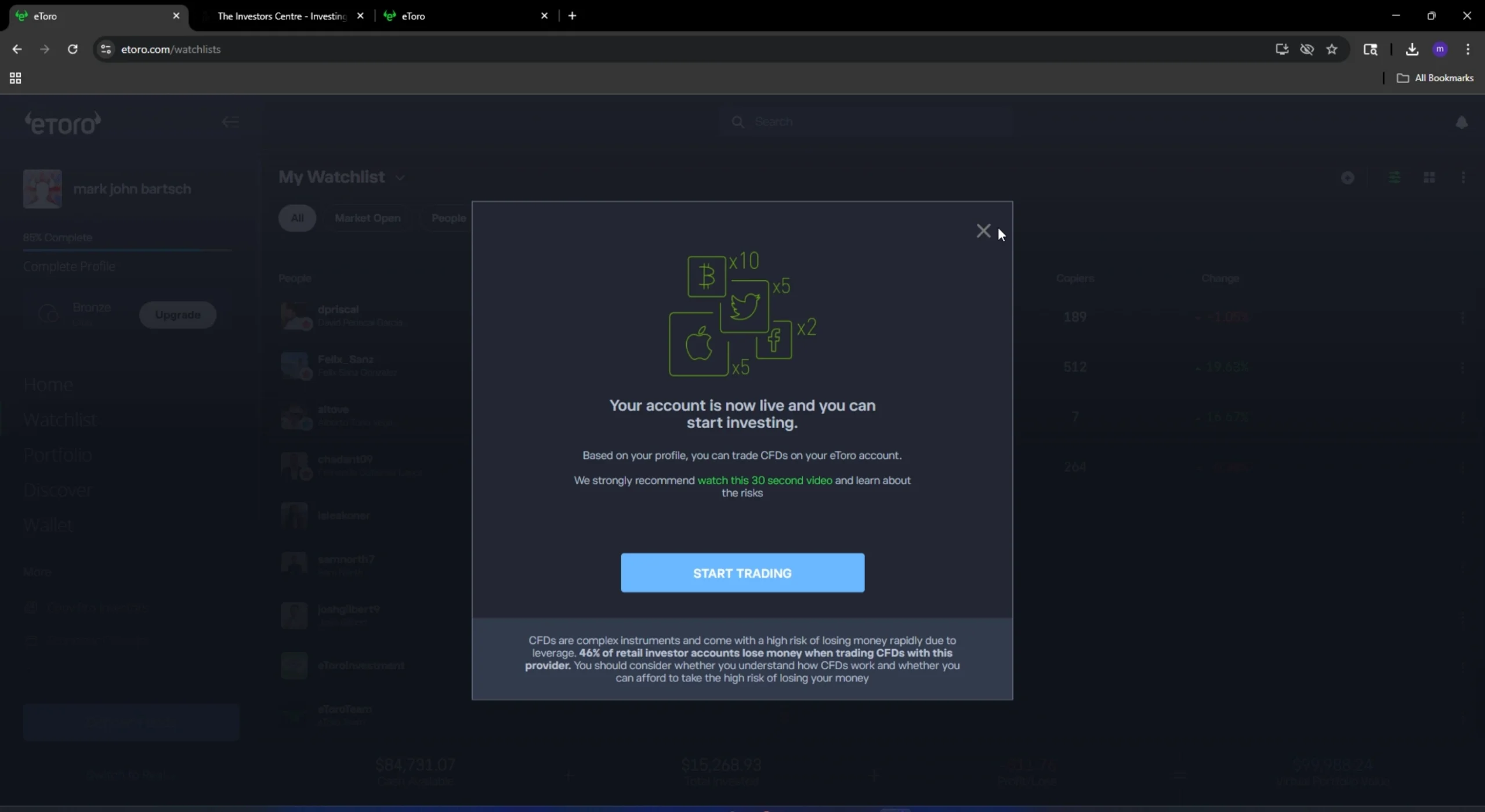
Step 2 — Open and Verify Your Account
Account registration is completed online through the broker's website or app. An email address and password are required to create the account. Identity verification is mandatory under Australian anti-money laundering laws and typically requires a passport or driver's licence plus proof of address.
Most brokers use automated verification systems that approve accounts within minutes. Manual review may be required if documents are unclear or additional information is needed.
Step 3 — Deposit AUD
Funds are deposited into the trading account using Australian payment methods. PayID and Osko transfers are processed instantly with no fees at most brokers. Bank transfers take 1-2 business days but are also free.
| Method | Speed | Fee |
|---|---|---|
| PayID/Osko | Instant | Free |
| Bank transfer | 1-2 business days | Free |
| Debit card | Instant | 1.5% - 3% |
| Credit card | Instant | 2% - 3.5% |
Step 4 — Select a Commodity
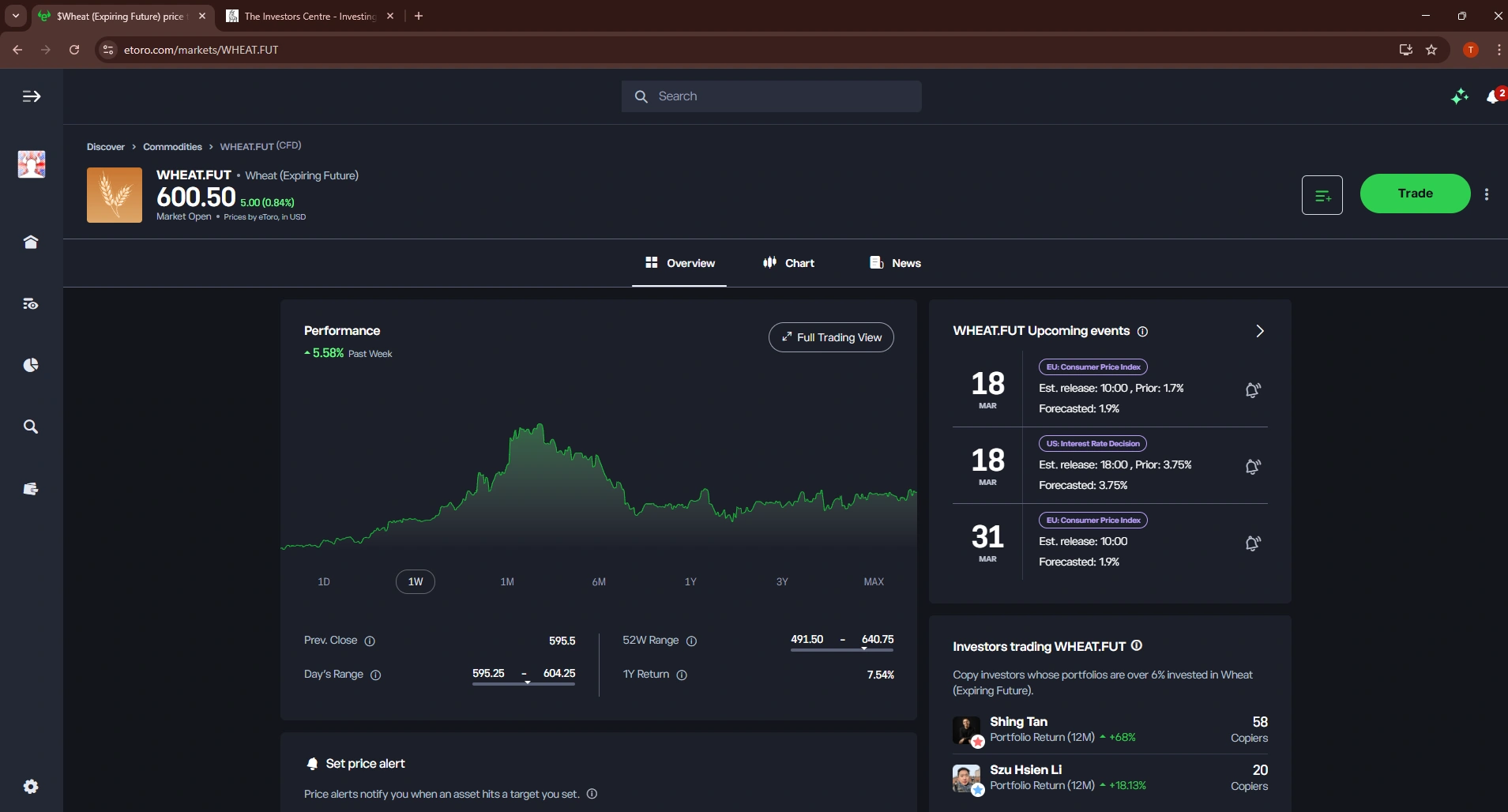
The broker's platform lists available commodities by category. Gold and crude oil are found under metals and energy sections respectively. Agricultural commodities like wheat and coffee are grouped separately. Search functions help locate specific assets quickly.
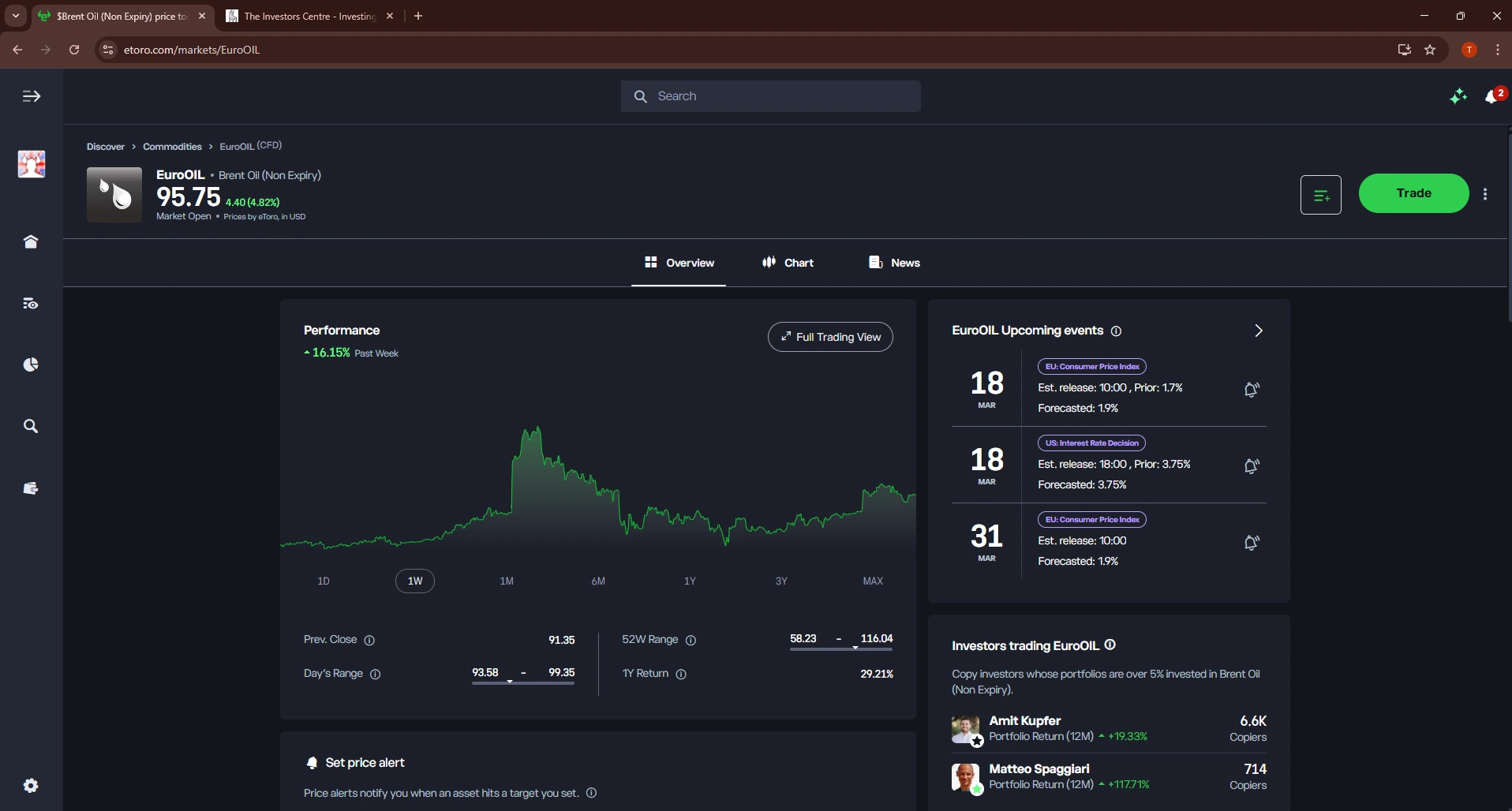
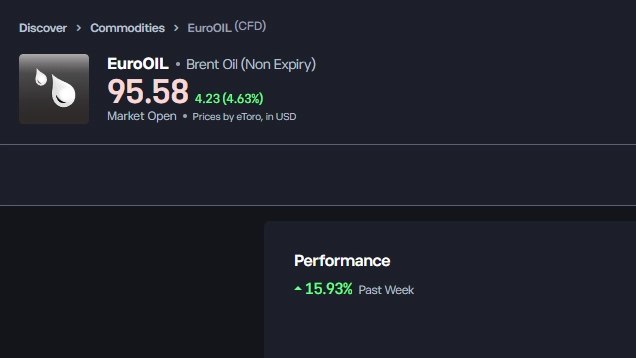
Each commodity displays current bid and ask prices plus daily price movement. The spread between buy and sell prices represents the broker's fee. Contract specifications show leverage ratios, minimum trade sizes, and overnight financing rates.
Step 5 — Place Your Trade
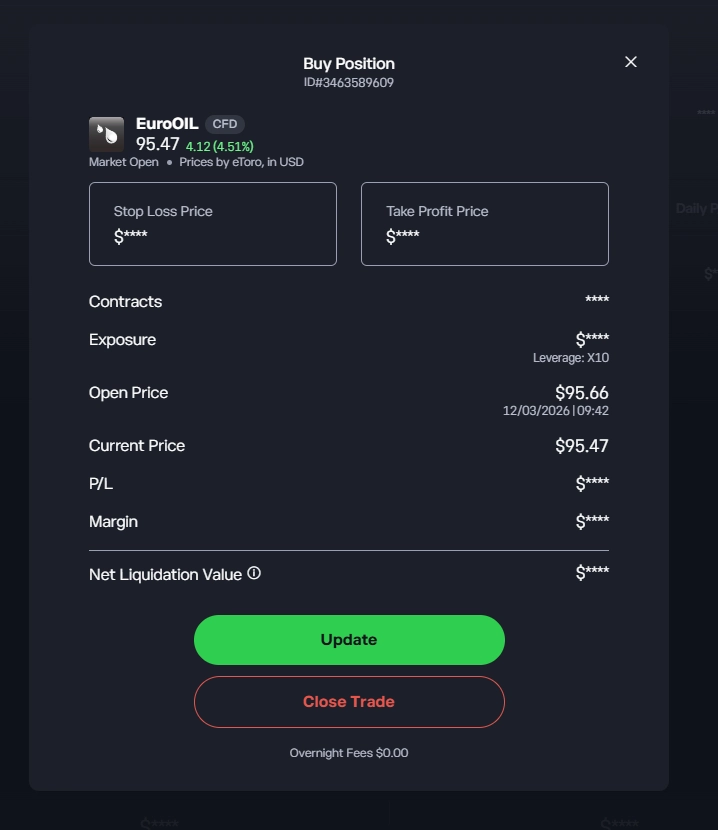
Orders are placed through the trading platform's order entry screen. A buy order opens a long position that profits from rising prices. A sell order opens a short position that profits from falling prices. Position size is entered in lots, units, or dollar value depending on the broker.
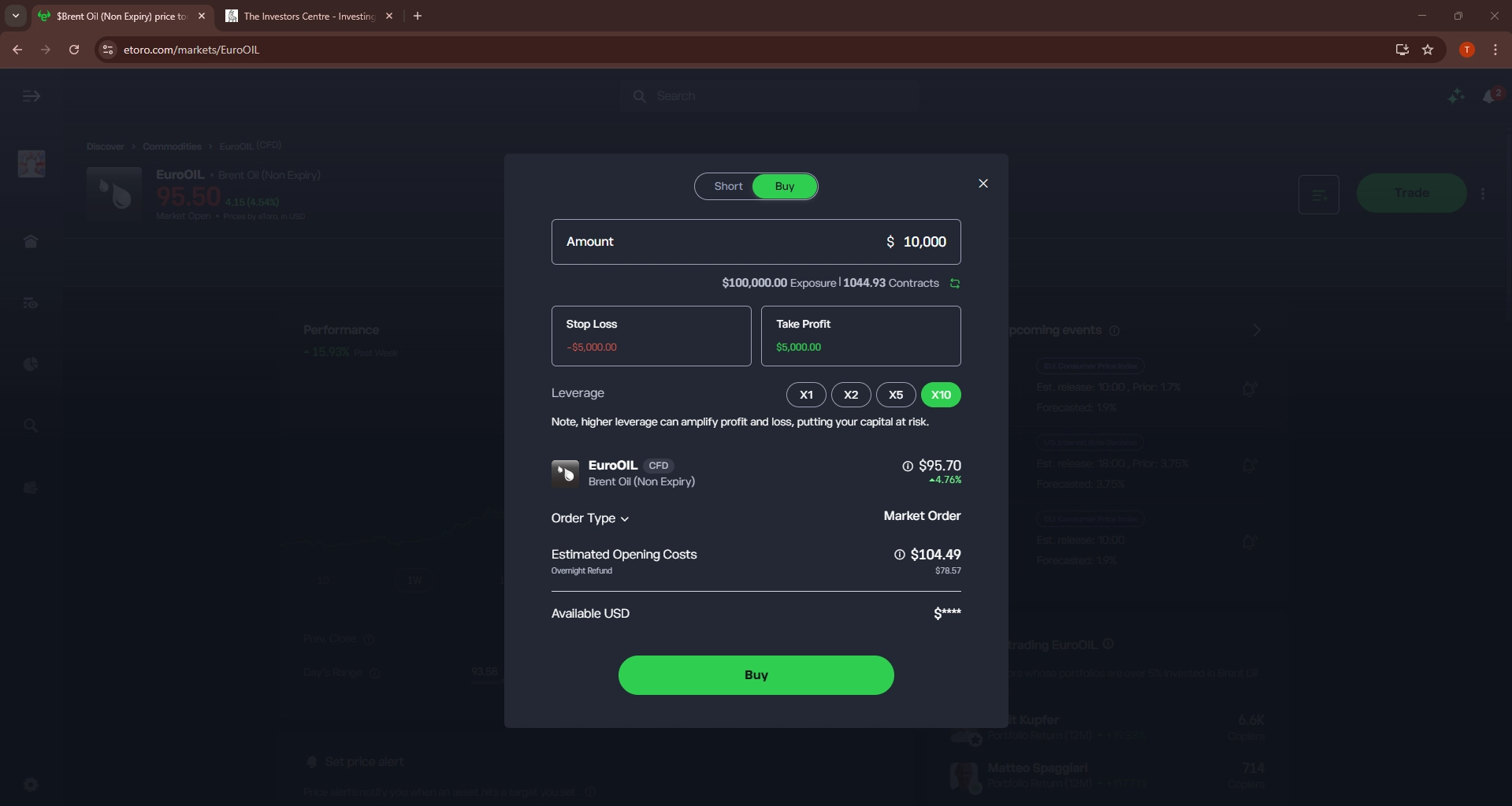
Market orders execute immediately at current prices. Limit orders only execute when the commodity reaches a specified price. Stop-loss orders automatically close positions at predetermined loss levels to limit downside risk.
What Fees Are Charged When Trading Commodities?
Commodity trading fees in Australia consist of three main components. These costs reduce overall profitability and should be factored into every trading decision.
Spread: The spread is the difference between the buy and sell price. On gold, spreads range from 10 pips with low-cost brokers to 45+ pips with beginner platforms. Tighter spreads mean lower costs per trade.
Overnight financing: Leveraged positions held past market close incur daily financing charges. These fees are typically calculated as a percentage of the position value and can add up over longer holding periods.
Commission: Some brokers charge a per-trade commission on top of the spread. Others incorporate all costs into a wider spread with no separate commission. The total cost should be compared rather than individual components.
What Are the Pros and Cons of Trading Commodities?
Commodity trading offers distinct advantages but carries significant risks. Both sides should be understood before committing capital to these markets.
| Pros | Cons |
|---|---|
| Portfolio diversification from traditional shares | High volatility with 5-10% daily swings possible |
| Inflation hedge through gold and oil exposure | Leverage magnifies losses as well as gains |
| Ability to profit from falling prices via short selling | Overnight financing fees accumulate over time |
| Markets trade nearly 24 hours on weekdays | Complex price drivers require ongoing research |
| Low capital requirements starting from $50-200 | No dividend income unlike shareholdings |
Is Commodity Trading Safe in Australia?
Commodity trading through ASIC-regulated brokers is legal and supervised, but the products themselves carry inherent risk. The majority of retail traders lose money—exact percentages are disclosed on every regulated broker's website as required by law.
How Are Commodity Brokers Regulated in Australia?
ASIC (Australian Securities and Investments Commission) regulates all CFD providers operating in Australia. Licensed brokers must comply with strict requirements including segregated client funds, negative balance protection, and leverage caps of 20:1 for gold and 10:1 for other commodities.
Product intervention orders introduced in 2021 banned binary options and restricted CFD leverage for retail clients. These measures were designed to reduce losses among inexperienced traders. Broker AFSL numbers can be verified on ASIC's MoneySmart register.
Do You Pay Tax on Commodity Trading in Australia?
Commodity trading profits are taxable in Australia. The ATO classifies gains as either capital gains or business income depending on the trader's circumstances and trading patterns.
Capital gains tax applies to traders who buy and sell occasionally for investment purposes. Gains are taxed at the individual's marginal tax rate. A 50% CGT discount is available for positions held longer than 12 months.
Business income treatment applies to frequent traders who operate in a business-like manner. Profits are added to assessable income, and losses can be offset against other income sources. The ATO considers factors like trading frequency, sophistication, and business intent.
Records of all trades should be maintained including dates, prices, fees, and outcomes. Further guidance is available on the ATO website.
Which Australian Brokers Let You Trade Commodities?
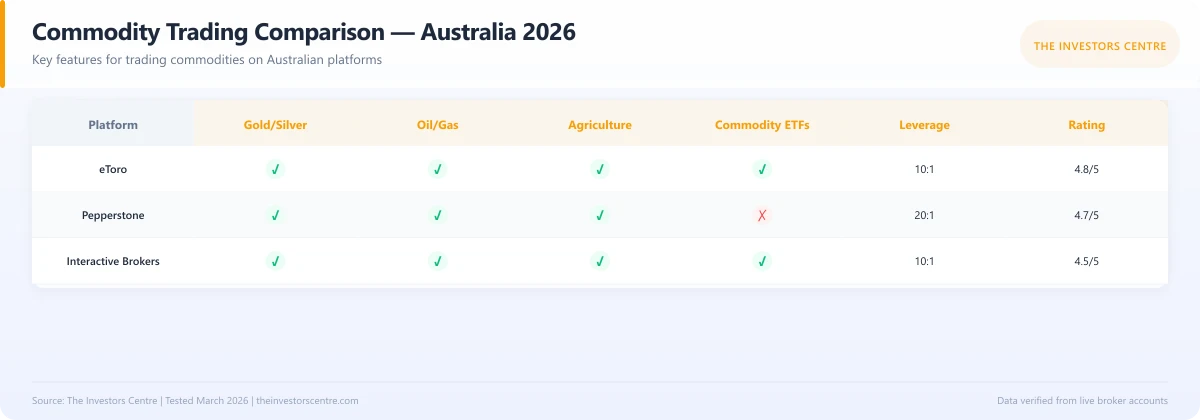
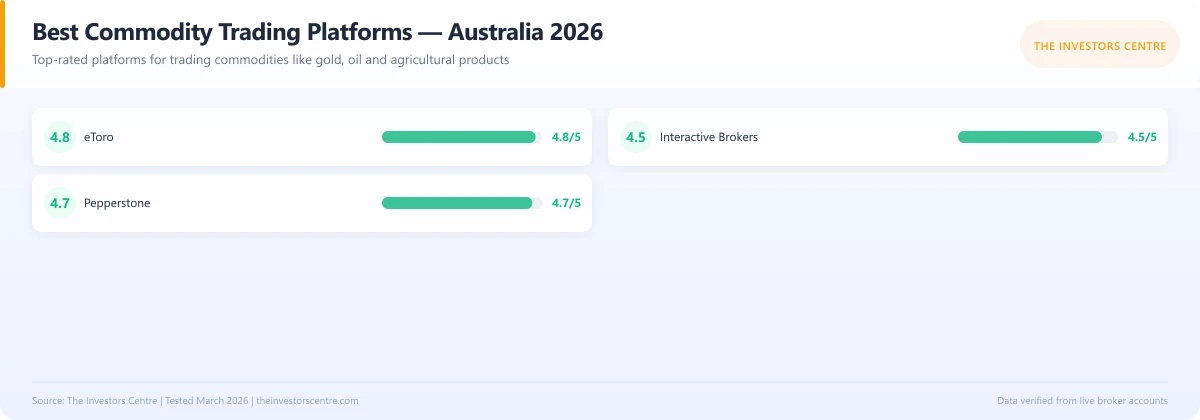
Three ASIC-regulated brokers dominate commodity trading in Australia. Each offers different platform features, fee structures, and target audiences. All three provide negative balance protection and segregated client funds as required by Australian regulations.
Here Are the Top 3 Best Commodity Trading Platforms in Australia
1. eToro — Best for Beginners
2. Pepperstone — Best for Low Spreads
3. Interactive Brokers — Best for Advanced Traders
1. eToro — Best for Beginners
Pros
- User-friendly platform perfect for commodity trading newcomers
- Social trading features allow copying experienced traders
- $50 minimum deposit with no ongoing account fees
- Comprehensive educational resources on commodity markets
Cons
- Wider spreads compared to specialist platforms
- Platform complexity may overwhelm absolute beginners
What Are eToro's Commodity Trading Fees?
eToro charges spreads on commodity CFDs with no separate commission. Gold spreads start from 45 pips, while crude oil spreads begin at 5 pips. These are wider than specialist platforms but remain competitive for beginner-focused brokers.
Overnight financing applies to positions held past 5pm New York time. Rates vary by commodity and are calculated daily based on the underlying interbank rate plus eToro's margin. Weekend holding fees cover Saturday and Sunday in a single charge applied on Friday.
What Commodities Can You Trade on eToro?
eToro offers CFDs on major commodities including gold, silver, crude oil, natural gas, and copper. Agricultural markets are not currently available on the platform, limiting exposure to metals and energy only.
Commodity positions can be combined with stocks, forex, and crypto in the same account. The CopyTrader feature allows users to automatically replicate the commodity trades of experienced investors who specialise in these markets.
How Safe Is eToro for Australian Traders?
eToro Australia operates under AFSL 491139 issued by ASIC. Client funds are held in segregated accounts with tier-1 Australian banks, separate from eToro's operational capital. Negative balance protection prevents losses exceeding the account balance.
The platform complies with ASIC's product intervention orders, capping leverage at 20:1 for gold and 10:1 for other commodities. Two-factor authentication and withdrawal verification processes protect account security.
Who Is eToro Best For?
eToro suits beginners who want an intuitive platform with educational support and social trading features. The $50 minimum deposit makes it accessible to traders starting with limited capital. CopyTrader functionality helps inexperienced users learn from successful commodity traders.
Those seeking the tightest spreads or advanced charting tools may prefer specialist platforms. eToro works best for traders prioritising ease of use over cost optimisation.
CFDs are complex instruments with a high risk of losing money rapidly due to leverage. 51% of retail CFD accounts lose money when trading CFD's with this provider. You should consider whether you understand how CFDs work and whether you can afford to take the high risk of losing your money.
2. Pepperstone — Best for Low Spreads
Pros
- Tight spreads from 10 pips on gold and 2.5 pips on crude oil
- No minimum deposit requirement for Australian accounts
- MetaTrader 4, MetaTrader 5, and cTrader platform options
- Fast execution speeds with minimal slippage
Cons
- Platform choice may confuse newcomers
- Limited educational content compared to beginner-focused brokers
What Are Pepperstone's Commodity Trading Fees?
Pepperstone offers two account types for commodity trading. Standard accounts have slightly wider spreads with no commission. Razor accounts feature raw spreads plus a $7 AUD commission per lot traded, typically resulting in lower overall costs for active traders.
Gold spreads on Razor accounts start from 10 pips, while crude oil begins at 2.5 pips. Overnight swap rates are competitive and clearly displayed on the platform before placing trades. No hidden fees or withdrawal charges apply to Australian accounts.
What Commodities Can You Trade on Pepperstone?
Pepperstone provides CFD access to metals (gold, silver, platinum, palladium), energy (WTI crude, Brent crude, natural gas), and agricultural commodities (wheat, corn, soybeans, coffee, sugar, cocoa). This comprehensive range covers all major commodity sectors.
Multiple platforms allow traders to choose their preferred interface. MetaTrader 4 and 5 offer familiar functionality for experienced users, while cTrader provides advanced order types and depth of market data. All commodities are available on every platform.
How Safe Is Pepperstone for Australian Traders?
Pepperstone holds AFSL 414530 and operates under full ASIC regulation. Client funds are segregated in accounts with National Australia Bank and are protected up to $250,000 under the Financial Claims Scheme. Negative balance protection is standard on all retail accounts.
The broker has operated since 2010 with no major regulatory issues. Independent audits confirm compliance with capital adequacy requirements. Two-factor authentication and biometric login options secure account access.
Who Is Pepperstone Best For?
Pepperstone suits active traders who prioritise execution speed and tight spreads over simplified platforms. The Razor account model appeals to frequent traders who want to minimise costs per trade. No minimum deposit removes barriers for traders testing strategies with smaller amounts.
Platform variety makes Pepperstone ideal for traders who have used MetaTrader or cTrader previously. Absolute beginners may find the platform choice overwhelming and could benefit from starting with a more guided broker before moving to Pepperstone.
CFDs are complex instruments with a high risk of losing money rapidly due to leverage. 81.7% of retail CFD accounts lose money when trading CFD's with this provider. You should consider whether you understand how CFDs work and whether you can afford to take the high risk of losing your money.
3. Interactive Brokers — Best for Advanced Traders
Pros
- Real futures contracts available, not just CFDs
- Lowest margin rates for Australian traders
- Access to global commodity exchanges (CME, ICE, LME)
- Advanced analytics and research tools included
Cons
- Steep learning curve for platform navigation
- Complex fee structure requires detailed research
What Are Interactive Brokers' Commodity Fees?
Interactive Brokers uses tiered pricing based on monthly volume. Commodity futures commissions start from USD $0.85 per contract for low-volume traders and decrease to USD $0.25 for high-volume accounts. CFD spreads are competitive with specialist platforms.
Margin rates are among the lowest available to retail traders, starting from 1.83% for balances over USD $100,000. Data fees apply for real-time market data from commodity exchanges, though delayed data is free. The pricing structure favours active traders who can offset per-trade costs through volume discounts.
What Commodities Can You Trade on Interactive Brokers?
Interactive Brokers provides access to exchange-traded futures on CME (gold, crude oil, corn, wheat), ICE (Brent crude, coffee, sugar), LME (copper, aluminium), and ASX 24 (wheat, barley). CFDs are also available for traders who prefer no expiry dates.
The platform supports both Australian dollar and US dollar margin accounts. Futures contracts offer precise exposure with standardised lot sizes, making them suitable for hedging and institutional-style trading strategies. Options on commodity futures are available for advanced traders.
How Safe Is Interactive Brokers for Australian Traders?
Interactive Brokers Australia holds AFSL 453554 and operates as a subsidiary of Interactive Brokers LLC, a NASDAQ-listed company (ticker: IBKR). Client assets exceed USD $400 billion globally. Australian client funds are segregated and held with major Australian banks.
The broker maintains excess regulatory capital and publishes financial statements quarterly. Negative balance protection applies to retail accounts under ASIC regulations. Security features include two-factor authentication, secure key card options, and IP address whitelisting.
Who Is Interactive Brokers Best For?
Interactive Brokers suits experienced traders who understand futures contracts and want access to global commodity exchanges. The platform appeals to traders with larger accounts who can benefit from tiered pricing and low margin rates. Prior trading experience is assumed.
Beginners may find the platform overwhelming and should consider simpler brokers first. Active traders, institutional accounts, and those requiring futures for hedging strategies will appreciate Interactive Brokers' comprehensive offering and professional-grade tools.
CFDs are complex instruments with a high risk of losing money rapidly due to leverage. 62.5% of retail CFD accounts lose money when trading CFD's with this provider. You should consider whether you understand how CFDs work and whether you can afford to take the high risk of losing your money.
Final Thoughts
Commodity trading provides Australian investors with exposure to gold, oil, and agricultural markets without requiring substantial capital. CFDs make these markets accessible, but leverage amplifies both profits and losses significantly.
ASIC-regulated brokers should always be used to ensure client fund protection and negative balance guarantees. Demo accounts are recommended for practising strategies before risking real money. For precious metals strategies, see our guide to trading gold in Australia. Active traders may also find our day trading platforms comparison useful.
FAQs
References
- Australian Securities and Investments Commission. "CFD product intervention order." March 2021.
- Australian Taxation Office. "Investments and assets." 2026.
- Chicago Mercantile Exchange Group. "Introduction to Commodities." 2026.
- U.S. Energy Information Administration. "Weekly Petroleum Status Report." January 2026.
- ASIC MoneySmart. "Check if a financial services firm is licensed."
Trading CFDs and FX carries significant risk and is not suitable for everyone. You have no interest in the underlying asset.