
- Expertise:
- CFD Trading, Forex, Derivatives, Risk Management
- Credentials:
- Chartered ACII (2018) · Trading since 2012
- Tested:
- 40+ forex & CFD platforms with live accounts

- Expertise:
- Broker Comparison, ISA Strategy, Portfolio Management
- Credentials:
- Active investor since 2013 · 11+ years experience
- Tested:
- 40+ brokers with funded accounts
How We Test
Real accounts. Real money. Real trades. No demo accounts or press releases.
What we measure:
- Spreads vs advertised rates
- Execution speed and slippage
- Hidden fees (overnight, withdrawal, conversion)
- Actual withdrawal times
Scoring:
Fees (25%) · Platform (20%) · Assets (15%) · Mobile (15%) · Tools (10%) · Support (10%) · Regulation (5%)
Testing team:
Adam Woodhead (investing since 2013), Thomas Drury (Chartered ACII, 2018), Dom Farnell (investing since 2013) — 50+ platforms with funded accounts
Quarterly reviews · Corrections: [email protected]
Disclaimer
Not financial advice. Educational content only. We're not FCA authorised. Consult a qualified advisor before investing.
Capital at risk. Investments can fall. Past performance doesn't guarantee future results.
CFD warning. 67-84% of retail accounts lose money trading CFDs. High risk due to leverage.
Contact: [email protected]
Pepperstone Crypto or Independent Reserve: which should Australians use?
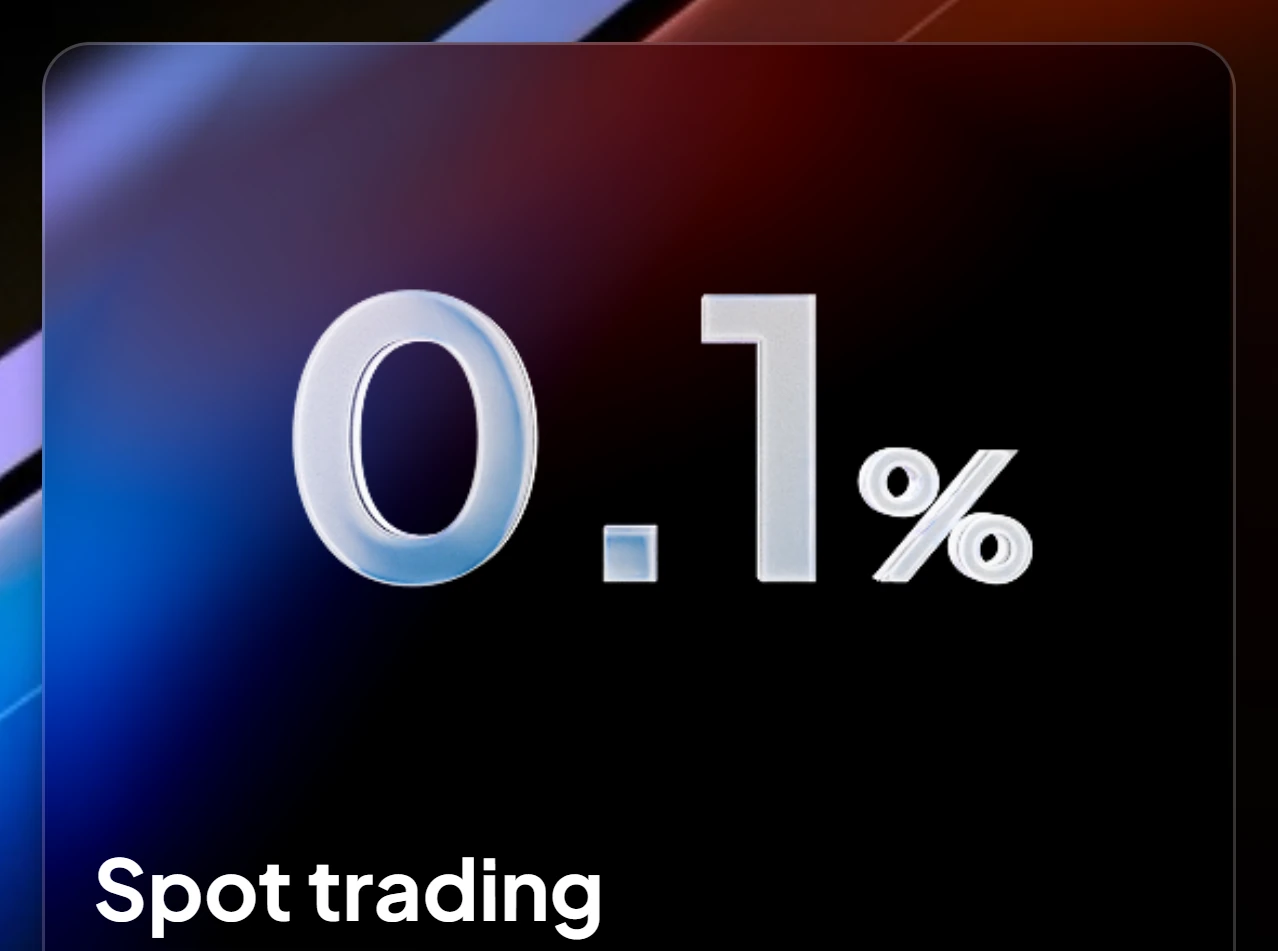
It depends on how much you trade, and the flip point sits far higher than most readers expect. Pepperstone Crypto (pcrypto.com) charges a flat 0.1% on every trade at every size; Independent Reserve starts at 0.50% and steps down through volume tiers that only reach 0.10% once your 30-day turnover hits A$5 million. Below that line, and that is nearly every retail trader in the country, the flat rate wins the published-fee comparison outright. What Independent Reserve brings instead is thirteen years of operating history, insured-custody marketing, SMSF and institutional services, an OTC desk for block trades, and rates that keep falling past the flat 0.1% at serious volume. The fee table and the trust argument point at different customers, in other words, and the rest of this page works out which one is you. Both are AUSTRAC-registered digital currency exchanges; crypto is highly volatile at either.
 Spot Crypto Exchange
Digital Assets are highly volatile. You may lose some or all of your investment. Please ensure you understand and accept the risks.
Who exactly are you dealing with?
Two Australian venues, one regulatory category, two very different builds. The structural difference matters more than any single fee, so it comes first.
Independent Reserve has been here since 2013
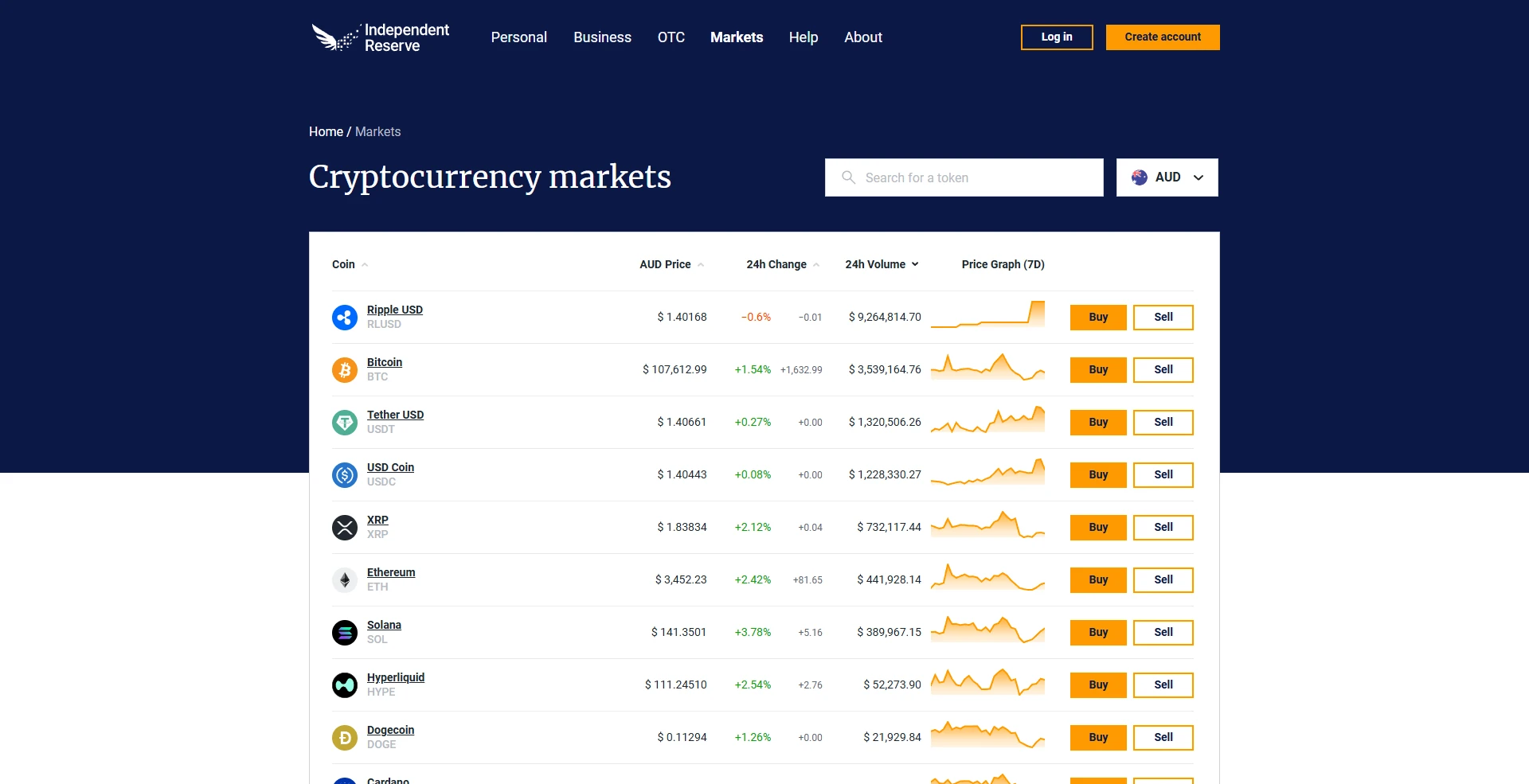
Independent Reserve has been helping Australians buy crypto since 2013, which makes it one of the longest-running exchanges in the country, and it holds AUSTRAC registration as a digital currency exchange (DCE-100461150-001). It is an order-book exchange: your orders match against other participants, with maker and taker fees on top of whatever the market spread happens to be. The positioning is trust-led, "Australia's trusted crypto exchange" in its own words, with an explicit pitch to SMSFs, institutions and high-net-worth clients, including an OTC desk for large orders. Longevity is the one card Pepperstone Crypto cannot play. A platform launched in 2026 has no thirteen-year record, whatever else it does well.
Pepperstone Crypto arrived in 2026 with a 2010 parent
pcrypto.com is operated by Pepperstone Digital Pty Limited (ACN 683 263 836), AUSTRAC-registered under number 100889269, and is explicitly not an Australian Financial Services Licence holder. Neither venue holds an AFSL for spot crypto; spot crypto in Australia sits under AUSTRAC's digital currency exchange regime rather than the AFSL one. Structurally it is a dealer rather than an order book: trades execute between you and Pepperstone Crypto as principal, at a price shown to you before you confirm. Its youth is offset by its parentage, a Melbourne-founded group that has run a regulated brokerage since 2010. The full product walk-through lives in my Pepperstone Crypto review; per house practice I print no coin counts for either venue, because the lists move too fast for any article to stay right.
What does the same trade cost at each venue?
Here is the heart of the piece: a flat rate against a ladder. Price two trades, one small, one large, and watch what the structure does.
What a A$1,000 buy costs at each venue
At Pepperstone Crypto, 0.1% is A$1.00. At Independent Reserve's entry tier, 0.50% is A$5.00. Five times the fee. Spreads sit on top at both venues, pcrypto's shown in the trade preview before you confirm, Independent Reserve's set by its order book at that moment, but on the published fee line the flat rate wins this size by a street.
At A$50,000 the maths changes
The gap does not close; it widens in dollars. pcrypto charges A$50. Independent Reserve charges A$250 at the entry tier, and even once that trade lifts your rolling 30-day volume past A$50,000, the next tier is 0.48%, or A$240 per A$50,000 traded. The tiers are recalculated every four hours on trailing 30-day AUD volume, so what they reward is sustained turnover; one big day helps for a month at most.
So where is the flip?
At A$5 million of 30-day volume, where Independent Reserve's rate reaches 0.10% and the two venues finally price alike. Past it, the ladder keeps going where the flat rate cannot: 0.05% at A$50 million, 0.02% at A$200 million, and an OTC desk quoting block trades off-book entirely. At retail size, though, the ladder never catches the flat rate.
| 30-day AUD volume | Independent Reserve | Pepperstone Crypto |
|---|---|---|
| Up to A$50,000 | 0.50% | 0.1% flat, all sizes |
| A$50,000+ | 0.48%, easing to 0.38% past A$500,000 | 0.1% |
| A$1 million+ | 0.32%, then 0.22% from A$2 million | 0.1% |
| A$5 million+ | 0.10%, the parity point | 0.1% |
| A$50 million and beyond | 0.05%, reaching 0.02% at A$200 million | Still 0.1%: this is where the flat rate loses |
For how the flat rate fares against the retail incumbents rather than the institutional ladder, see my Pepperstone Crypto vs CoinSpot and Swyftx comparison.
How do custody and withdrawals compare?
Both venues are custodial, both let you leave, and both make security claims that no reader should mistake for guarantees.
Independent Reserve states that an insured, enterprise-grade Qualified Custodian holds the vast majority of client digital assets in cold storage, and points to ISO 27001 certification and a record of zero security breaches of its infrastructure or customer data. The insurance line is its marketing centrepiece, and fairly so, though the insurer and coverage limits are not published on the homepage. Pepperstone Crypto carries ISO 27001 certification of its own and publishes less custody detail than Independent Reserve does, with the group's sixteen-year regulated brokerage history standing behind the operation. On-chain withdrawals to your own wallet work at both venues, at network cost, and that shared exit matters more than anything either firm says about itself: coins on any exchange are a claim on its custody until you move them to keys you hold, and neither venue's assets are covered by the Financial Claims Scheme.
Which has the better AUD rails?
A$1.50 is the entire difference on the everyday route. Both venues take free AUD bank deposits, though only pcrypto advertises instant arrival via PayID; Independent Reserve's fee page lists standard bank transfers, and its instant NPP rail appears on the withdrawal side. Standard EFT withdrawals are free at both. Independent Reserve charges A$1.50 for an instant PayID withdrawal where pcrypto's AUD withdrawals are simply free, and its optional funding routes carry percentage fees, 1% on Australian cards and PayPal, 3.5% on international cards. A large account will never notice. Anyone sweeping profits out weekly will.
Independent Reserve counters on breadth: it supports AUD, NZD, USD and SGD, with SWIFT withdrawals available for USD (US$25) and NZD (NZ$29). pcrypto is AUD-only, built entirely around Australian rails, so anyone who needs to fund or withdraw in another currency has only one candidate on this page.
Who should use which?
Split it by size and holding style. The regular AUD buyer, anyone accumulating majors a few hundred or a few thousand dollars at a time, gets a fivefold fee advantage and free withdrawals at Pepperstone Crypto, plus a sideline in tokenised stocks that Independent Reserve has no answer to. Pepperstone Crypto is also running a giveaway until 1 December 2026, entry via A$500 of total trades on a verified account for the chance to win a Porsche 911, terms on pcrypto.com. The SMSF trustee, the institution and the block trader lean the other way: Independent Reserve's thirteen-year record, insured-custody positioning, multi-fiat support, OTC desk and sub-0.1% rates at eight-figure volume are exactly the furniture that clientele needs, and a 2026-launched dealer is a harder sell to an auditor than a 2013 exchange. If you sit between the two, price your own typical month against the table above; the crossover is at A$5 million of 30-day volume, and you know which side of it you live on.

Frequently Asked Questions
References
- Pepperstone Crypto: fee schedule (flat 0.1%, AUD funding) (checked 1 September 2026)
- Pepperstone Crypto: entity, AUSTRAC registration and custody statements (checked 1 September 2026)
- Pepperstone Crypto: Porsche 911 giveaway terms (checked 1 September 2026; promotion ends 1 December 2026)
- Independent Reserve: trading fee tiers and funding costs (checked 1 September 2026)
- Independent Reserve: history, AUSTRAC registration, custody and SMSF positioning (checked 1 September 2026)
- The Investors Centre: Pepperstone Crypto vs CoinSpot and Swyftx
Digital Assets are highly volatile. You may lose some or all of your investment. Please ensure you understand and accept the risks.