How long does a house deposit take to save?
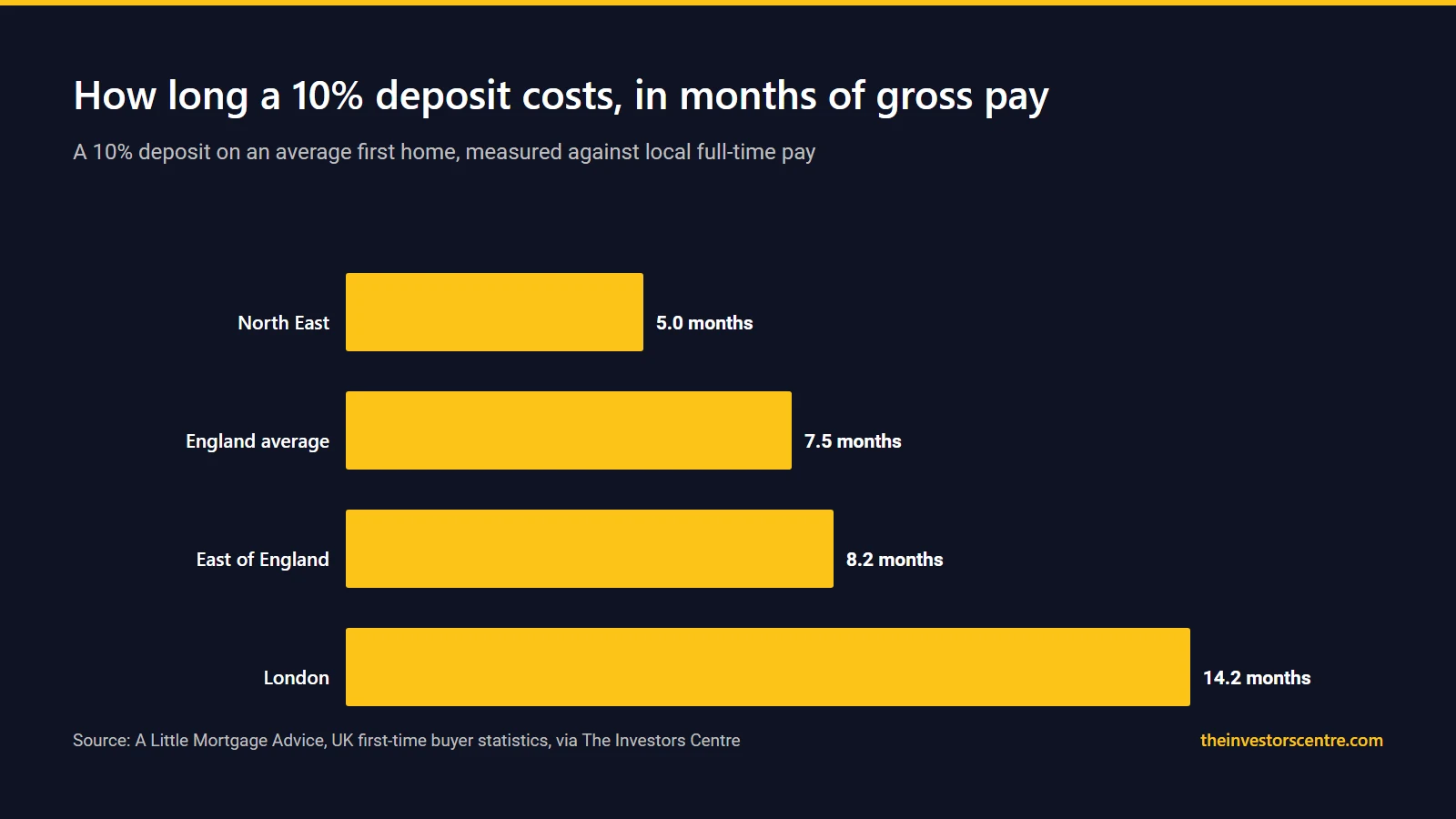
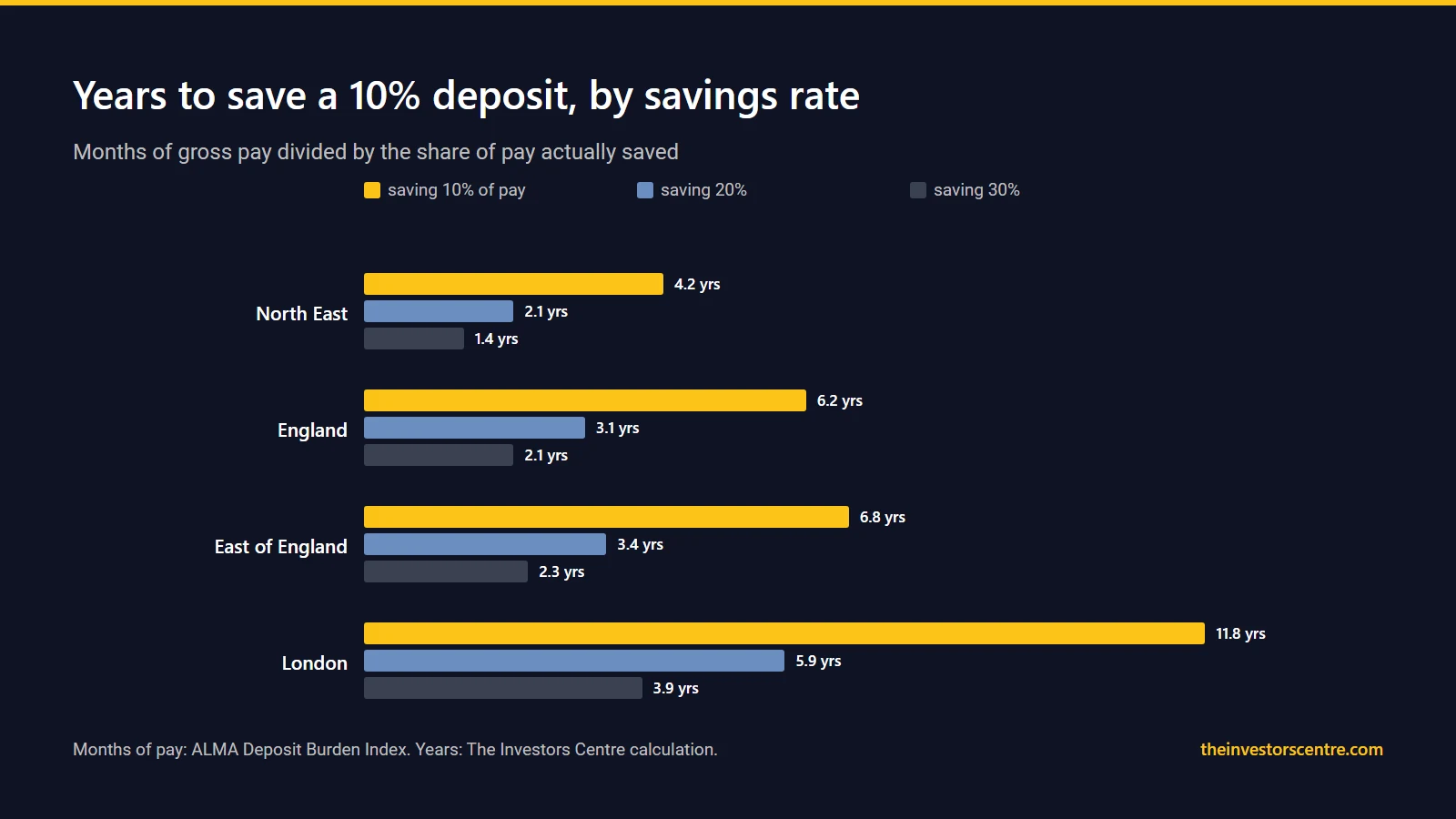
A 10 per cent deposit on an average first home costs 7.5 months of gross pay in England, from 5.0 months in the North East to 14.2 in London. Nobody saves every penny they earn, so at a fifth of gross pay that is 3.1 years in England and 5.9 years in London.
What is the Deposit Burden Index?
House price to earnings ratios describe a whole market. They do not describe the hurdle a first-time buyer actually faces, which is cash: the deposit, plus any tax due on day one. The Deposit Burden Index, built by the Essex brokerage A Little Mortgage Advice from UK HPI, ONS and HMRC data, measures that hurdle in months of local gross pay, which makes regions comparable.
How long does a deposit take, region by region?
The months-of-pay figures are A Little Mortgage Advice's. The years are ours: months of gross pay, divided by the share of gross pay you actually save. For what those shares look like against real UK salaries, see our breakdown of what it takes to be a top 1% earner.
| Where | Months of gross pay | Saving 10% | Saving 20% | Saving 30% |
|---|---|---|---|---|
| North East | 5.0 | 4.2 years | 2.1 years | 1.4 years |
| England average | 7.5 | 6.2 years | 3.1 years | 2.1 years |
| East of England | 8.2 | 6.8 years | 3.4 years | 2.3 years |
| London | 14.2 | 11.8 years | 5.9 years | 3.9 years |
Saving 20 per cent of gross pay is not a gentle target. It is the level at which a first home in London takes the better part of six years, which is roughly the gap between the average first-time buyer age of 34 and the 32 it was five years ago.
Why does London break the pattern?
Two reasons, and the second one is newer. The average London first-time buyer price is £466,851, so the deposit is simply larger. Then stamp duty arrives: on that price the bill is £8,343, against £2,093 before the April 2025 threshold change, an extra £6,250 on A Little Mortgage Advice's calculation. A London buyer needs £55,028 up front at the average price.
That is 2.8 times the North East figure in months of pay, even though London earnings are about a third higher.
Does a 5 per cent deposit halve the wait?
Outside London, close to it. Halving the deposit cuts the East of England figure from 8.2 months of gross pay to 4.1. In London it only falls from 14.2 to 8.2, because the stamp duty bill does not halve with the deposit.
The banks have made this a real option again: 8.4 per cent of UK mortgage lending in the second quarter of 2026 was above 90 per cent loan to value, the highest share since 2008. It costs you, though. On the average English first home, moving from a 10 per cent deposit to 5 per cent takes the monthly payment from £1,208 to £1,327 at August 2026 average rates, which is £2,865 over a two-year fix.
Where should the money sit while you save?
This is where an investing site has to be careful. A deposit has a date attached to it, and the shorter the horizon, the less sense volatility makes: a 20 per cent drawdown three months before you exchange is not a paper loss, it is a house you do not buy.
Our own rule of thumb, and it is a rule of thumb rather than advice: under two years, the deposit is not investment money. Three to five years is the genuinely awkward middle, where the answer depends less on expected returns than on whether you could stomach delaying the purchase by a year if the timing went against you. Beyond five years, the argument changes, and we set out both sides of it in rent vs buy.
What if the wait looks impossible?
Three things move the number, and only one of them is saving harder. If it is the saving rate you want to attack, start with how to save £10,000 in a year. The band you are aiming for is one: 5 per cent changes the timeline far more than an extra £50 a month. Where you buy is another, because these regional gaps are bigger than any savings plan. The third is what a lender will actually accept, which is rarely what the internet says, and is worth a conversation with a first-time buyer mortgage broker before you commit to another two years of saving.
Questions people ask about saving a deposit
How long does it take to save a house deposit in the UK?
On the Deposit Burden Index, a 10 per cent deposit is 7.5 months of gross pay in England. Saving a fifth of gross pay, that is about 3.1 years, and 5.9 years in London.
How much is a house deposit in London?
The average London first-time buyer price is £466,851, and a buyer needs £55,028 up front once stamp duty is included.
Is a 5 per cent deposit a good idea?
It shortens the wait significantly outside London, and costs about £119 a month more on an average English first home at current average rates. Whether that trade is worth it depends on what rent you are paying in the meantime.
Has stamp duty made saving harder?
In London, materially: the April 2025 threshold change added £6,250 to the bill on an average London first home. In most English regions the average first home is still below the £300,000 threshold.
Sources
- A Little Mortgage Advice: UK first-time buyer statistics and the Deposit Burden Index (UK HPI, ONS, HMRC)
- English Housing Survey 2024-25
- Bank of England and FCA MLAR
- gov.uk: Stamp Duty Land Tax