
- Expertise:
- Platform Testing, Cryptocurrency, Retail Investing
- Credentials:
- Active investor since 2013 · 11+ years experience
- Tested:
- 50+ platforms · 200+ guides authored

- Expertise:
- CFD Trading, Forex, Derivatives, Risk Management
- Credentials:
- Chartered ACII (2018) · Trading since 2012
- Tested:
- 40+ forex & CFD platforms with live accounts
How We Test
Real accounts. Real money. Real trades. No demo accounts or press releases.
What we measure:
- Spreads vs advertised rates
- Execution speed and slippage
- Hidden fees (overnight, withdrawal, conversion)
- Actual withdrawal times
Scoring:
Fees (25%) · Platform (20%) · Assets (15%) · Mobile (15%) · Tools (10%) · Support (10%) · Regulation (5%)
Testing team:
Adam Woodhead (investing since 2013), Thomas Drury (Chartered ACII, 2018), Dom Farnell (investing since 2013) — 50+ platforms with funded accounts
Quarterly reviews · Corrections: [email protected]
Disclaimer
Not financial advice. Educational content only. We're not FCA authorised. Consult a qualified advisor before investing.
Capital at risk. Investments can fall. Past performance doesn't guarantee future results.
CFD warning. 67-84% of retail accounts lose money trading CFDs. High risk due to leverage.
Contact: [email protected]
What Is the Best Investment App in Ireland?
IG is our #1 pick for 2026, offering commission-free trading on over 11,000 stocks and ETFs, a low 0.15% FX fee, and more than 50 years of operating history behind its highly rated app. eToro remains the top choice for beginners and social trading, while Interactive Brokers suits advanced traders requiring global market access.

72% of retail CFD accounts lose money.
51% of retail CFD accounts lose money.

62.5% of retail CFD accounts lose money
Trading and investing involve risk. Capital at Risk

Trading and investing involve risk. Capital at Risk
Trading and investing involve risk. Capital at Risk

Trading and investing involve risk. Capital at Risk
How Do the Best Investment Apps in Ireland Compare?
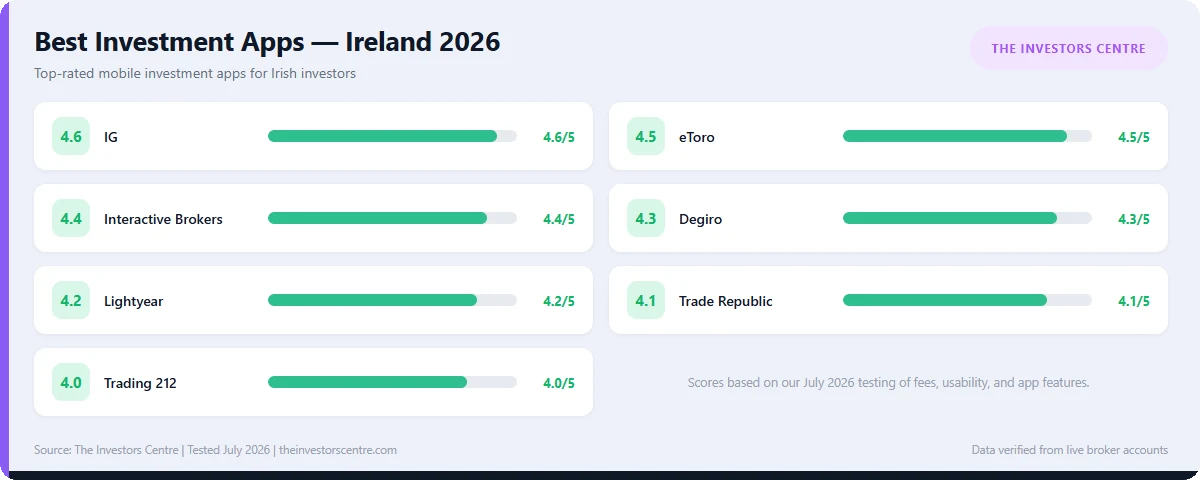
Choosing between investment apps requires comparing trading fees, available assets, and interest rates on uninvested cash. The table below provides a quick overview of Ireland's top seven investment apps, helping you identify which platform matches your investment goals before exploring each in detail.
| # | Provider | Trading Fee | Assets | EUR Interest | Key Features | Rating |
|---|---|---|---|---|---|---|
| 1 | IG | €0 | Stocks, ETFs | Varies | 11,000+ stocks and ETFs, 0.15% FX fee, BaFin regulated | 4.9/5 |
| 2 | eToro | €0 | Stocks, ETFs, Crypto | 3.55% (USD) | Copy trading, 3,000+ stocks, CySEC regulated | 4.8/5 |
| 3 | Interactive Brokers | From €0.35 | Stocks, ETFs, Options | 1.35% | Global markets, TWS platform, low commissions | 4.7/5 |
| 4 | DEGIRO | €1 + €1 | Stocks, ETFs, Bonds | 0% | Low-cost ETFs, 50+ exchanges, EU regulated | 4.6/5 |
| 5 | Lightyear | €1 / 0.1% | Stocks, ETFs | 1.91% | Cash interest, UK/EU stocks, simple interface | 4.5/5 |
| 6 | Trade Republic | €1 | Stocks, ETFs, Crypto | 2.5% | Savings plans, 2.5% interest, BaFin regulated | 4.5/5 |
| 7 | Trading 212 | €0 | Stocks, ETFs | Varies | Fractional shares, free trades, practice account | 4.4/5 |
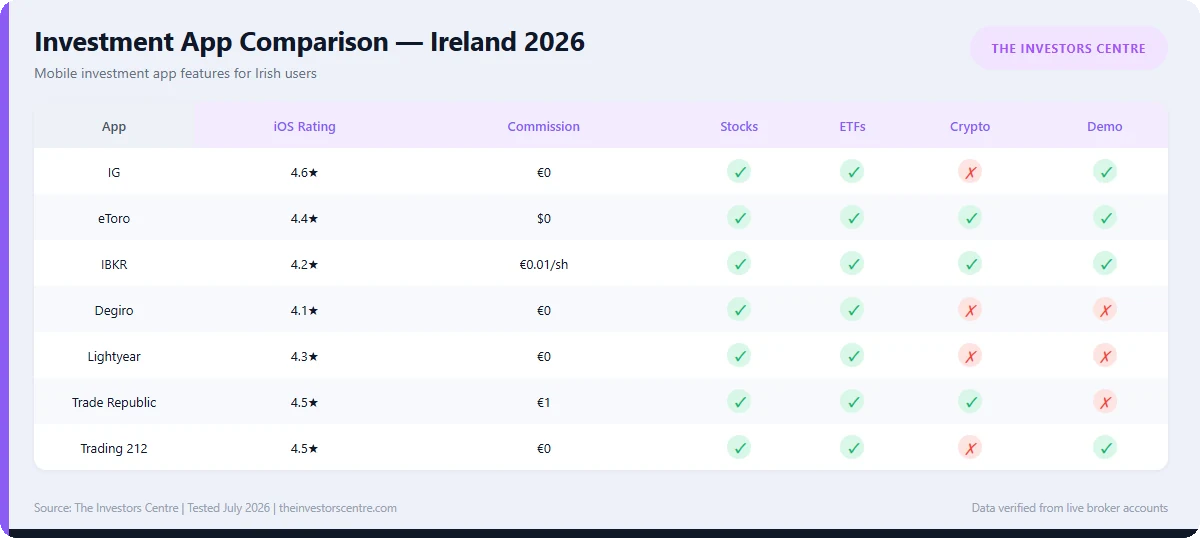
Here Are The Top 7 Best Investment Apps in Ireland:
1. IG — Best Overall Investment App
2. eToro — Best for Beginners and Social Trading
3. Interactive Brokers — Best for Advanced Investors
4. DEGIRO — Best for Low-Cost ETF Investing
5. Lightyear — Best for Interest on Uninvested Cash
6. Trade Republic — Best for Savings Plans
7. Trading 212 — Best for Commission-Free Trading
IG — Best Overall Investment App
Best Overall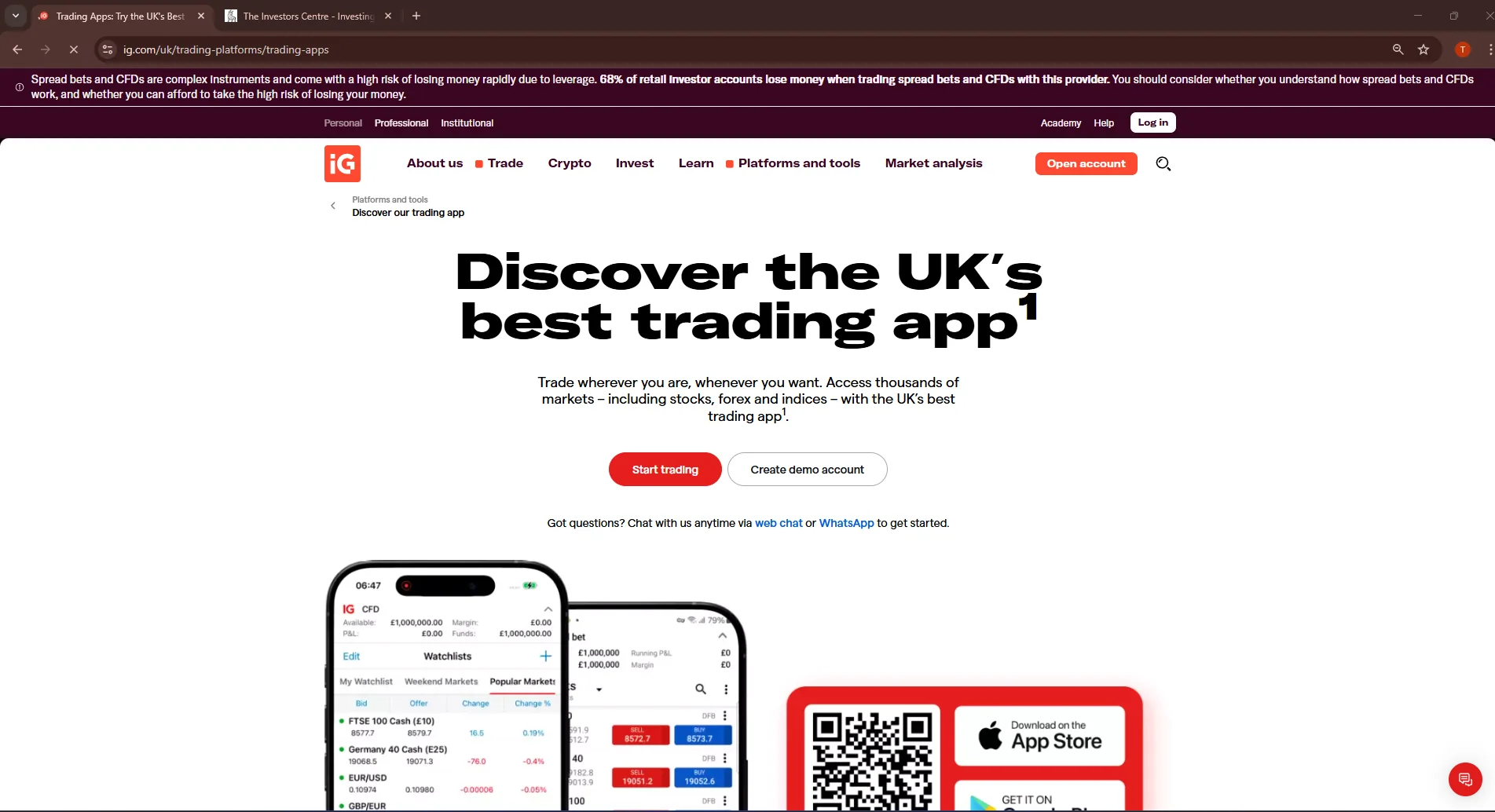
Pros
- Commission-free trading on 11,000+ stocks and ETFs
- Low 0.15% FX fee on currency conversion
- 24/5 trading on the most popular US stocks
- Interest paid on uninvested cash balances
Cons
- Investment offering is newer to Ireland than established rivals
- Breadth of features can feel complex for complete beginners
What Are IG's Trading Costs?
IG charges €0 commission on all stock and ETF trades for Irish investors, with no platform fees, custody charges, or account maintenance costs. Currency conversion is charged at 0.15%, one of the lowest FX fees available in the Irish market and dramatically cheaper than the 0.5-1.5% charged by several rivals.
The combination of zero commission and a 0.15% FX fee makes IG the joint most competitively priced investment app in Ireland. On a €1,000 purchase of US stocks, total conversion costs come to just €1.50, and IG also pays interest on uninvested cash, further reducing the total cost of ownership.
What Can You Trade on IG?
IG provides access to more than 11,000 stocks and ETFs across global markets, including US, UK, and European exchanges. Irish investors can trade the most popular US stocks 24 hours a day, five days a week — a rare feature that allows you to react to news outside regular market hours.
Experienced traders can also access leveraged products including CFDs, options, and turbo warrants through the same account infrastructure. These carry significantly higher risk and suit active traders rather than long-term investors, but the breadth means the app grows with you as your experience develops.
How Good Is IG's Mobile App?
IG's mobile app is highly rated on both the App Store and Google Play, with a clean interface covering watchlists, price alerts, charting, and fast order execution. Account opening is fully digital and typically completed within minutes. The IG Academy education hub is built into the app, offering free structured courses for every experience level.
The app mirrors IG's polished web platform, so you can move between mobile and desktop without losing functionality. The sheer breadth of features takes a little getting used to, but everyday investing — funding, searching, and buying — is straightforward.
How Is IG Regulated for Irish Investors?
Irish clients are served by IG Europe GmbH, which is regulated by Germany's Federal Financial Supervisory Authority (BaFin) and passports its services into Ireland under MiFID II. Client funds and assets are held in segregated accounts, separate from IG's own money, in line with EU client asset rules.
IG Group was founded in 1974, is listed on the London Stock Exchange as a FTSE 250 company, and is regulated by multiple top-tier authorities globally including the FCA and BaFin. This 50-year operating history and public listing provide a level of institutional stability few investment apps can match.
eToro — Best for Beginners and Social Trading
Social Trading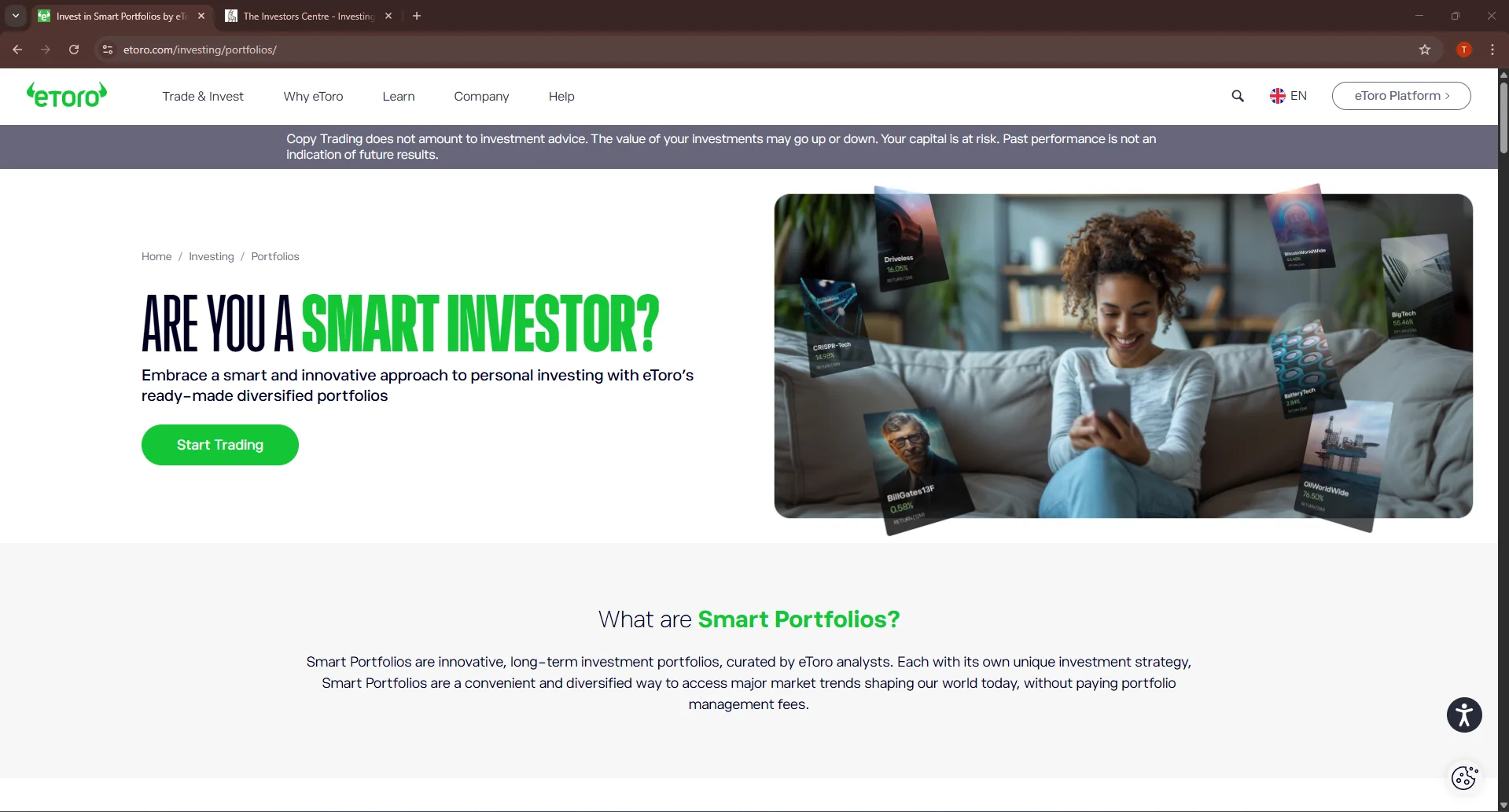
Pros
- Commission-free trading on stocks and ETFs
- Copy trading lets beginners follow experienced investors
- CySEC regulated with EU passporting to Ireland
- Over 3,000 stocks across 17 global exchanges
Cons
- $5 withdrawal fee on all withdrawals
- USD base currency means FX conversion costs of 0.5%
What Are eToro's Trading Costs?
eToro charges €0 commission on stock and ETF trades, making it one of the most cost-effective platforms for Irish investors. However, the platform operates in USD as its base currency, so Irish investors pay a 0.5% FX conversion fee when depositing EUR or withdrawing back to EUR. On a €1,000 deposit, this equates to €5 in conversion costs.
Withdrawals incur a flat $5 fee regardless of amount, which can be significant for smaller withdrawals. The minimum withdrawal is $30. There's no inactivity fee for the first year, but accounts inactive for 12 months are charged $10 monthly.
What Assets Can You Trade on eToro?
eToro provides access to over 3,000 stocks across 17 global exchanges, including Irish stocks on Euronext Dublin, US stocks on NYSE and NASDAQ, and major European exchanges. The platform offers 260+ ETFs covering major indices, sectors, and themes. All stock and ETF trades are commission-free.
Beyond traditional investments, eToro offers 80+ cryptocurrencies and contracts for difference (CFDs) on commodities, currencies, and indices. Irish investors should note that CFDs carry significant risk and are subject to different tax treatment than actual shares.
How Does eToro's Copy Trading Work?
eToro's CopyTrader feature allows you to automatically replicate the trades of experienced investors. You can browse investor profiles showing their track record, risk score, and trading strategy. Once you allocate funds to copy a trader (minimum $200 per copied trader), your account mirrors their future trades proportionally.
The social feed displays trading activity across the platform, letting you see what assets are trending and why investors are buying or selling. You maintain full control and can stop copying at any time. This feature is particularly valuable for beginners wanting to learn by observing successful strategies while actually investing.
How Is eToro Regulated for Irish Investors?
eToro (Europe) Ltd is regulated by the Cyprus Securities and Exchange Commission (CySEC) under license number 109/10. Through EU passporting rules, eToro can legally serve Irish clients while maintaining CySEC as its primary regulator. This provides full MiFID II protections, including segregated client funds and participation in Cyprus's Investor Compensation Fund.
Irish investors are covered up to €20,000 under the Cyprus scheme, which offers comparable protection to Ireland's Investor Compensation Scheme. eToro has operated since 2007 and serves over 30 million users globally, demonstrating long-term stability in the investment platform sector.
Interactive Brokers — Best for Advanced Investors
Pro Pick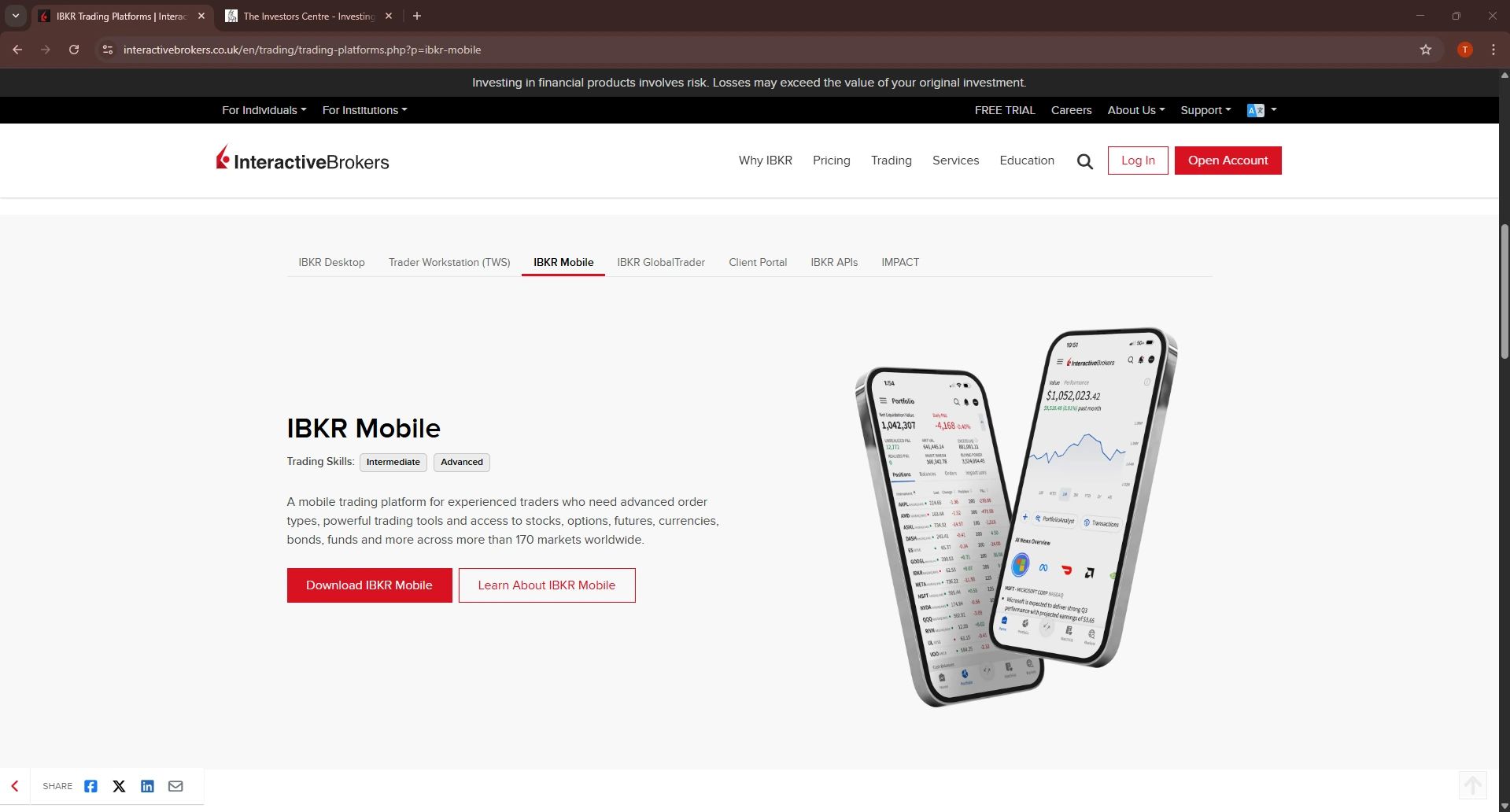
Pros
- Access to 150 markets across 33 countries
- Ultra-low commissions from EUR 0.35 per trade
- Professional-grade Trader Workstation platform
- 1.35% interest on EUR balances
Cons
- Complex interface overwhelming for beginners
- EUR 10 monthly fee if assets under EUR 100,000 (waived for under 26s)
What Are Interactive Brokers' Trading Costs?
Interactive Brokers offers two pricing structures: Fixed and Tiered. For Irish investors, Fixed pricing charges €0.35 minimum per stock trade with maximums based on trade value. US stocks cost $0.005 per share with a $1 minimum and 1% maximum. Tiered pricing offers lower rates for high-volume traders but adds exchange fees.
Accounts under €100,000 pay €10 monthly (€120 annually). This fee is waived for investors under 26 years old and for accounts maintaining at least €100,000 in assets. Interactive Brokers pays 1.35% interest on EUR balances, which can offset the monthly fee for investors holding significant cash reserves.
What Markets Can You Access?
Interactive Brokers provides access to 150 markets across 33 countries, including all major European exchanges, US markets, Asian markets, and emerging markets. Irish investors can trade Euronext Dublin stocks directly alongside NYSE, NASDAQ, LSE, and virtually any other major exchange.
Beyond stocks, the platform offers thousands of ETFs, bonds, futures, options, forex, and cryptocurrencies. This global reach is unmatched by consumer-focused platforms and allows sophisticated portfolio diversification across geographies and asset classes unavailable elsewhere.
Which Trading Platforms Are Available?
Trader Workstation (TWS) is Interactive Brokers' flagship platform, offering institutional-grade charting, algorithmic trading, advanced order types, and real-time portfolio analytics. TWS requires a learning curve but provides unparalleled customization and functionality for active traders.
For less experienced users, Client Portal offers a simplified web interface, while the mobile app provides essential trading functionality on-the-go. All platforms share the same account, allowing you to switch between interfaces depending on your current needs and trading complexity.
How Safe Is Interactive Brokers?
Interactive Brokers Group is publicly traded on NASDAQ (IBKR) and holds over $10 billion in equity capital. The company is regulated by multiple authorities including the SEC, FINRA, FCA, and Central Bank of Ireland. Client accounts are protected by segregated funds and participate in SIPC insurance ($500,000 per account) plus Lloyd's of London excess coverage.
Founded in 1978, Interactive Brokers has operated through multiple market cycles and maintains one of the strongest financial positions in the brokerage industry. The platform's institutional heritage means security infrastructure and risk management exceed standards typical of consumer investment apps.
DEGIRO — Best for Low-Cost ETF Investing
Best Value
Pros
- EUR 1 commission + EUR 1 handling on most trades
- 200+ ETFs available commission-free monthly
- Access to 50+ exchanges across Europe and US
- Regulated by BaFin and AFM for investor protection
Cons
- No interest paid on uninvested cash
- Basic charting and research tools
How Much Does DEGIRO Cost?
DEGIRO's fee structure is straightforward: €1 commission plus €1 handling fee per transaction for most European stocks and ETFs. This €2 total cost is significantly lower than percentage-based fees charged by competitors. US stocks incur €0.50 plus $0.004 per share. There are no custody fees, no minimum deposit, and no inactivity charges.
Currency conversion uses FX rates with a 0.25% spread, reasonable compared to alternatives. The flat-fee model particularly benefits investors making regular contributions regardless of amount—a €100 monthly investment costs the same €2 as a €10,000 trade.
Which ETFs Are Commission-Free?
DEGIRO offers commission-free trading on over 200 core ETFs once per calendar month per ETF. This selection includes major providers like iShares, Vanguard, and Xtrackers, covering global equity indices, bonds, and sectors. Irish investors building long-term portfolios can rebalance monthly without incurring trading costs.
The €1 handling fee still applies to free ETF trades, so each monthly purchase costs €1 total rather than €2. Subsequent trades of the same ETF within the same month incur the standard €1 commission plus €1 handling. This structure is ideal for regular investing schedules aligned to monthly contributions.
What Markets Does DEGIRO Cover?
DEGIRO provides access to 50+ exchanges across Europe, North America, and Asia. Irish investors can trade on Euronext Dublin, London Stock Exchange, all major European exchanges, NYSE, NASDAQ, and exchanges in Canada, Hong Kong, Japan, and Australia. This geographical breadth allows genuine global diversification.
The platform offers thousands of stocks, ETFs, bonds, and investment funds. Options and futures are available for more experienced investors. Unlike retail-focused apps, DEGIRO's institutional heritage means less popular markets and securities are generally accessible if they trade on supported exchanges.
How Is DEGIRO Regulated?
DEGIRO is regulated by both BaFin (Germany's Federal Financial Supervisory Authority) and AFM (Netherlands Authority for the Financial Markets). As part of the flatexDEGIRO group, client assets are held in segregated accounts with dedicated custodians separate from the company's operational funds.
Irish clients are protected under the EU Investor Compensation Scheme framework. While DEGIRO focuses on delivering low costs rather than additional protection layers, the dual regulatory oversight and segregated asset structure provide the standard safety expected from European investment platforms.
Lightyear — Best for Interest on Uninvested Cash
Best Interest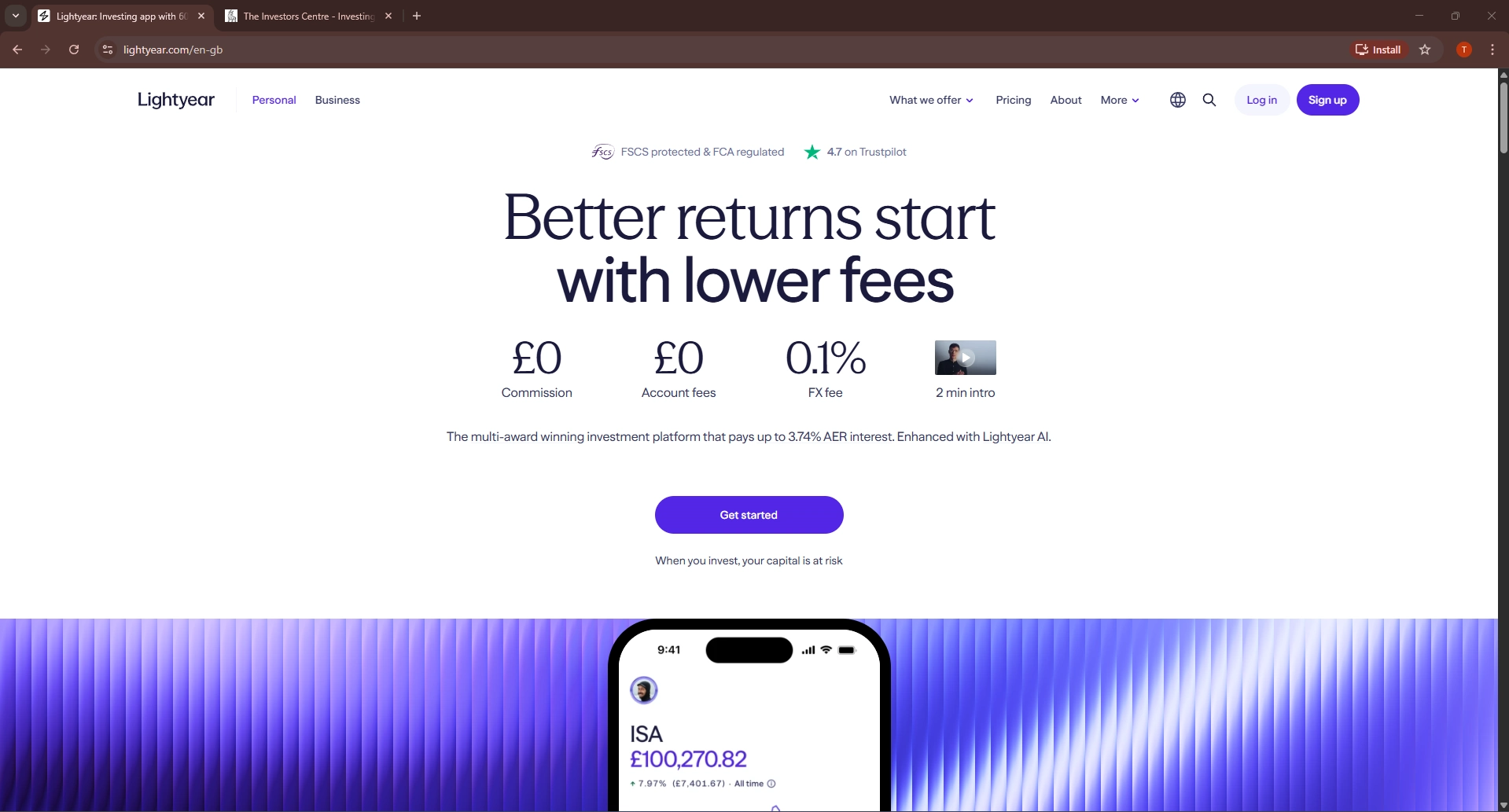
Pros
- 1.91% interest paid on uninvested EUR balances
- Flexible fee structure: EUR 1 flat or 0.1% of trade value
- Access to UK and European stocks and ETFs
- Clean, modern interface designed for simplicity
Cons
- Limited to European and UK markets (no US stocks)
- Smaller selection compared to global brokers
How Does Lightyear's Cash Interest Work?
Lightyear pays 1.91% annual interest on uninvested EUR balances, calculated daily and paid monthly. This rate significantly exceeds typical bank savings accounts and means cash waiting for investment opportunities generates meaningful returns. Interest applies automatically to any EUR not invested in stocks or ETFs.
For investors maintaining emergency funds or waiting for buying opportunities, this feature effectively reduces total cost of ownership. A €5,000 cash position generates approximately €95 annually, offsetting trading costs. The interest rate adjusts with market conditions but has remained competitive since launch.
What Are Lightyear's Trading Costs?
Lightyear charges either €1 flat fee or 0.1% of trade value, whichever is lower. This dual structure benefits both small and large trades—a €1,000 trade costs €1, while a €100,000 trade costs €100 (0.1%). Fractional shares are supported, allowing precise portfolio allocation.
There are no custody fees, no minimum balance requirements, and no inactivity charges. Currency conversion for UK stocks uses mid-market rates with minimal spread. Deposits and withdrawals via SEPA are free, with funds typically arriving within hours.
Which Markets Can You Access on Lightyear?
Lightyear provides access to thousands of stocks and ETFs listed on London Stock Exchange and major European exchanges including Euronext (Paris, Amsterdam, Dublin). Notable absences are US markets—you cannot directly trade NYSE or NASDAQ stocks. However, many European-listed ETFs provide exposure to US equities.
This European focus suits investors comfortable building diversified portfolios through ETFs rather than individual US stocks. The selection includes all major European companies, UK stocks, and comprehensive ETF coverage of global markets, sectors, and themes.
How Easy Is Account Opening?
Lightyear's mobile-first design makes account opening straightforward. Download the app, provide personal details, verify identity by uploading ID, and answer suitability questions about investment experience. The process typically completes within 24 hours, with some users approved instantly.
The platform is regulated by the Estonian Financial Supervision and Resolution Authority and operates under EU MiFID II framework. Irish clients receive standard EU investor protections including segregated client assets and participation in the Estonian Investor Protection Scheme up to €20,000.
Trade Republic — Best for Savings Plans
Best Automation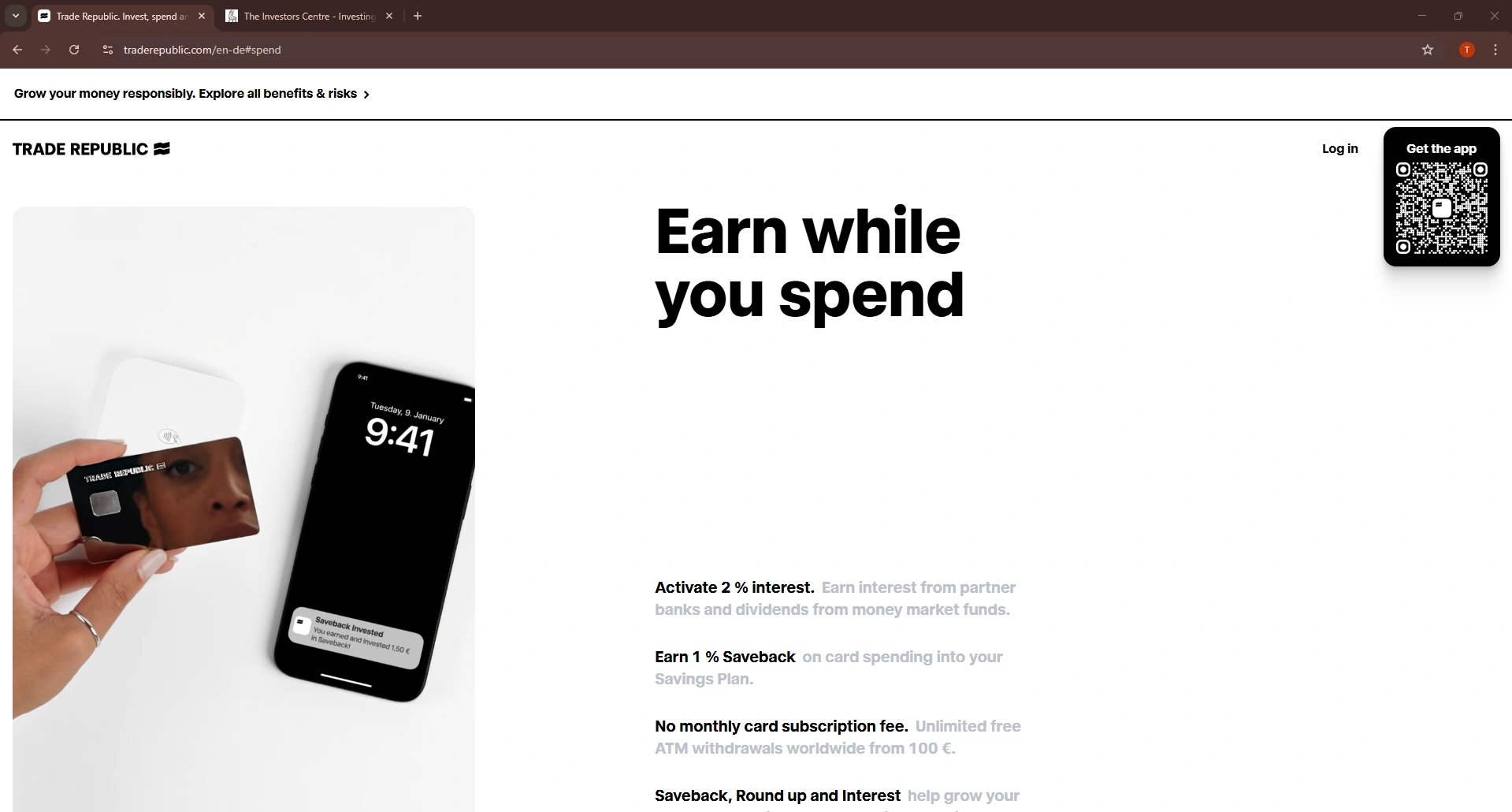
Pros
- Automated savings plans for stocks, ETFs, and crypto
- 2.5% interest on uninvested EUR balances
- EUR 1 flat fee per trade regardless of amount
- BaFin regulated with German investor protection
Cons
- Limited to major European and US stocks
- Smaller ETF selection than dedicated ETF platforms
How Do Trade Republic's Savings Plans Work?
Trade Republic allows automated recurring investments in stocks, ETFs, and cryptocurrencies starting from €1. Set up monthly, bi-weekly, or weekly purchases, and the platform automatically executes trades without manual intervention. This dollar-cost averaging approach smooths out market volatility by spreading purchases over time.
Savings plans incur the same €1 flat fee per execution. A €100 monthly plan costs €1 per month regardless of how many different assets you're accumulating. Fractional shares ensure your full contribution gets invested—€100 buys exactly €99 worth after the €1 fee, with no cash left uninvested.
What Interest Does Trade Republic Pay?
Trade Republic pays 2.5% annual interest on uninvested EUR cash balances, calculated daily and credited monthly. This rate currently exceeds most traditional savings accounts and many competing investment platforms. Interest applies automatically without minimum balance requirements or special account types.
The 2.5% rate makes Trade Republic attractive for investors maintaining cash buffers alongside investments. On a €10,000 cash position, you'd earn approximately €250 annually, significantly offsetting trading costs and providing meaningful returns while funds wait for investment opportunities.
What Do Trades Cost on Trade Republic?
Trade Republic charges a flat €1 fee per trade for stocks, ETFs, and cryptocurrencies. This simple pricing structure means a €50 investment and a €50,000 investment both cost €1. There are no custody fees, no minimum balance requirements, and no inactivity charges.
Currency conversion for US stocks uses competitive FX rates. Deposits and withdrawals via SEPA are free. The mobile-first platform design keeps overhead low, allowing Trade Republic to maintain these competitive fees while still generating sustainable revenue from payment-for-order-flow arrangements.
How Is Trade Republic Regulated?
Trade Republic Bank GmbH holds a full German banking license and is regulated by BaFin (Federal Financial Supervisory Authority). This provides German-standard oversight and consumer protection, generally considered among Europe's most stringent. Client assets are segregated and held with custodian banks separate from Trade Republic's operational funds.
Irish investors are protected by Germany's investor compensation scheme, which covers deposits up to €100,000 and securities separately. Trade Republic has operated since 2019, growing rapidly to serve millions of European customers while maintaining regulatory compliance and financial stability.
Trading 212 — Best for Commission-Free Trading
Zero Commission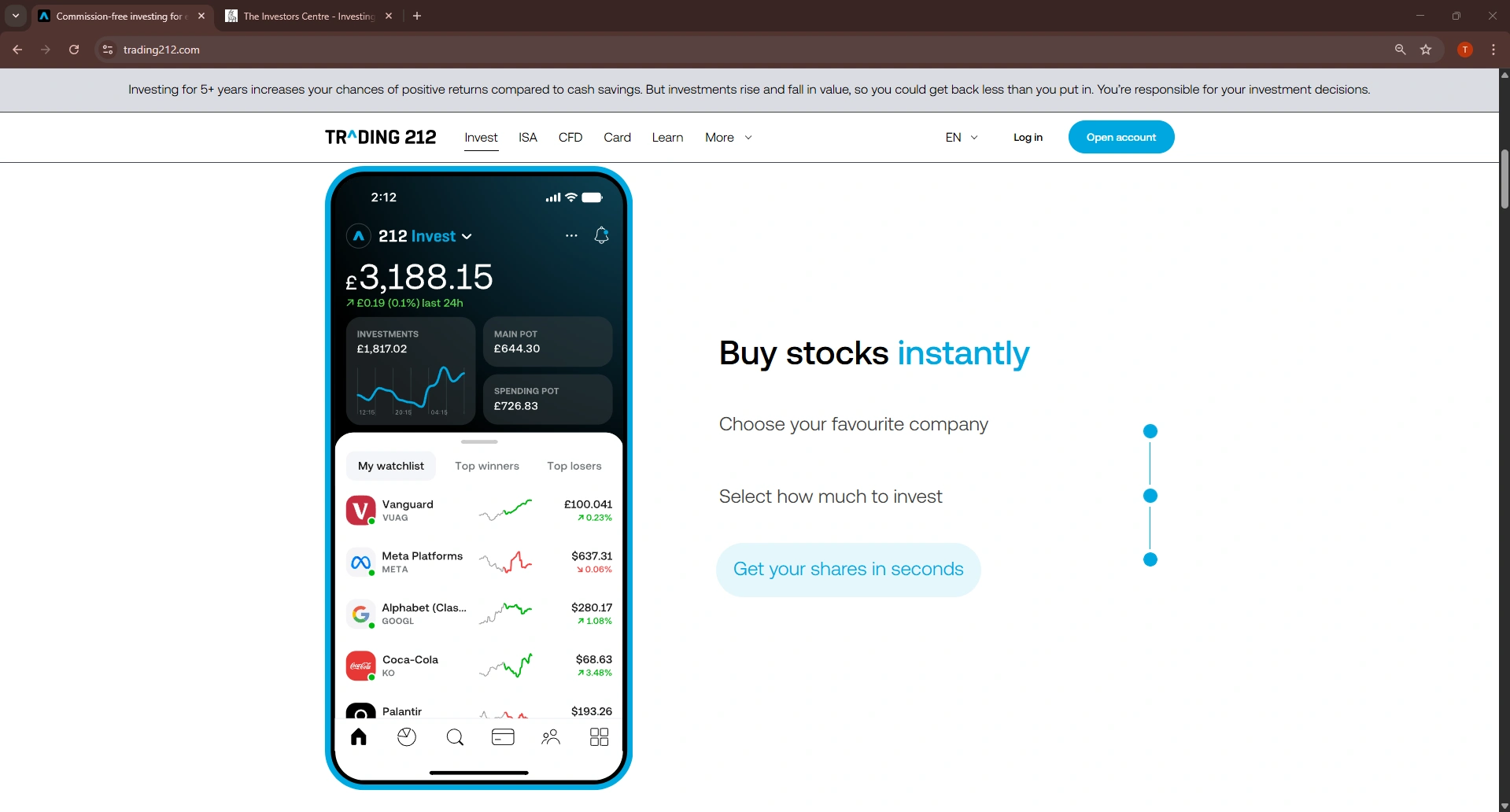
Pros
- Completely commission-free stock and ETF trading
- Practice account with EUR 50,000 virtual money
- Fractional shares from as little as EUR 1
- Pies feature for automated portfolio rebalancing
Cons
- Cash interest rates vary and are typically lower than competitors
- Limited advanced charting and technical analysis tools
How Does Commission-Free Trading Work?
Trading 212 charges €0 commission on all stock and ETF trades. Unlike platforms charging €1+ per trade, you pay nothing regardless of trade size or frequency. This makes Trading 212 particularly valuable for investors making frequent small trades or building positions gradually through regular contributions.
The platform generates revenue through payment-for-order-flow arrangements and interest on client cash balances rather than direct commissions. FX conversion costs around 0.15% when buying non-EUR stocks, lower than many competitors. There are no custody fees, minimum balance requirements, or inactivity charges.
What Is the Practice Account?
Trading 212's practice account provides €50,000 in virtual money to learn trading without financial risk. The practice environment mirrors real market conditions with actual live prices, so you experience realistic trading scenarios. Switch between practice and real money modes instantly within the same app.
This feature is invaluable for beginners wanting to understand how markets work, test investment strategies, or familiarize themselves with the platform before committing real capital. The practice account remains available even after opening a real money account, letting you test new strategies indefinitely.
How Do Pies Work?
Trading 212's pies feature lets you create custom portfolios with specific allocation percentages. For example, build a pie with 40% US stocks, 30% European stocks, 20% bonds, and 10% commodities. When you add funds, Trading 212 automatically distributes them according to your percentages, buying fractional shares to maintain target allocations.
Pies automatically rebalance as markets move, ensuring your portfolio stays aligned with your strategy. You can copy pre-built pies from other users or create your own. This feature essentially provides robo-advisor functionality without management fees, ideal for hands-off investing with precise control over asset selection.
What Can You Trade on Trading 212?
Trading 212 provides access to over 10,000 stocks and ETFs across major global markets including US, UK, European, and emerging markets. Irish investors can trade Euronext Dublin stocks, FTSE 100 companies, S&P 500 stocks, and international securities. All trades are commission-free regardless of market or security type.
Fractional shares mean you can invest in expensive stocks like Amazon or Alphabet with as little as €1. The platform focuses on long-term investing rather than short-term trading, so options, futures, and forex are not available. For straightforward stock and ETF investing, the selection is comprehensive.
What Should Irish Investors Know About Investment App Regulation?
Understanding how investment apps are regulated helps protect your money and ensures you're dealing with legitimate platforms. Ireland's regulatory framework combines domestic oversight with EU-wide protections, creating multiple layers of security for investors.
How Are Investment Apps Regulated in Ireland?
Investment apps operating in Ireland must either hold direct authorisation from the Central Bank of Ireland or operate under EU passporting rules. MiFID II (Markets in Financial Instruments Directive) sets the regulatory framework across Europe, ensuring consistent investor protections regardless of where a platform is headquartered. As of 2025, Ireland has 90 MiFID-authorised investment firms, according to the Central Bank of Ireland's register.
Platforms like Interactive Brokers Ireland hold direct Central Bank of Ireland authorisation, while others like IG (BaFin-regulated), eToro (CySEC-regulated), and DEGIRO (BaFin/AFM-regulated) operate through EU passporting. Both routes provide legitimate regulatory coverage, with passported firms subject to their home regulator's oversight while adhering to Irish consumer protection rules.
Before opening any investment account, verify the platform appears on the Central Bank's register of authorised firms or holds valid EU authorisation.
What Protection Do Irish Investors Have?
Ireland's Investor Compensation Scheme protects eligible investors if an authorised investment firm fails and cannot return client assets. The scheme covers 90% of your loss up to a maximum of €20,000 per person per firm. This protection applies only when a firm becomes insolvent—it does not cover losses from poor investment performance or market downturns.
The Investor Compensation Company DAC administers the scheme, funded by levies on member firms. Claims must be submitted within five months of the compensation payment date being announced. Private individuals qualify for protection, while institutional investors and company directors of failed firms are excluded.
Additionally, MiFID II requires firms to segregate client assets from company funds, meaning your investments should be protected even if the platform faces financial difficulties. Most platforms also hold additional private insurance beyond the statutory minimum.
How Are Investment Returns Taxed in Ireland?
Irish investors face one of Europe's more complex tax regimes for investments, with different rates and rules applying depending on what you invest in. Understanding these distinctions is essential for calculating your actual returns and meeting Revenue obligations.
What Is the Capital Gains Tax Rate on Investments?
Capital Gains Tax (CGT) applies when you sell shares, ETFs, or other investments for a profit. The standard CGT rate in Ireland is 33%, payable on gains above the annual exemption of €1,270 per person. Married couples each receive this exemption separately, allowing €2,540 in combined tax-free gains annually.
CGT operates on a self-assessment basis—investment apps do not automatically deduct or report this tax for you. You must calculate gains, file returns through Revenue's ROS or myAccount system, and pay any tax due. For disposals between January and November, payment is due by December 15th of the same year. December disposals must be paid by January 31st.
Importantly, capital losses on shares can offset gains, reducing your tax liability. This flexibility is a significant advantage of direct share investing compared to funds.
What Is the Deemed Disposal Rule for ETFs?
Irish and EU-domiciled ETFs face different tax treatment than direct shares, subject to exit tax rather than CGT. The exit tax rate is 38% from January 2026 (reduced from 41%), higher than the 33% CGT on shares. More significantly, the deemed disposal rule requires you to calculate and pay tax every eight years even if you haven't sold your ETF.
Under deemed disposal, Revenue treats your ETF as if sold on the eighth anniversary of purchase, triggering a tax liability on any paper gains. This erodes the compounding benefits that make ETFs attractive for long-term investing. Unlike CGT, you cannot offset ETF losses against gains—each holding is taxed independently.
Investment apps do not handle exit tax or deemed disposal calculations for you. Irish investors must self-assess using Revenue's guidelines, tracking purchase dates and values for every ETF holding. While a 2024 Funds Review recommended abolishing deemed disposal, the rule remains in place as of 2026. Irish investors considering ETFs should factor this tax drag into expected returns when comparing with direct share portfolios.
How Do You Choose the Right Investment App?
Selecting an investment app depends on matching platform features to your investment goals, experience level, and trading frequency. The "best" app varies significantly between a beginner making monthly contributions and an active trader executing daily orders.
What Fees Should You Compare?
Look beyond headline trading commissions to understand total costs. Currency conversion fees matter significantly for Irish investors buying US stocks—the difference between 0.15% and 0.5% compounds substantially over time. Platforms paying interest on uninvested cash effectively reduce your total cost of ownership, particularly if you maintain cash reserves for opportunities.
Consider your trading pattern: flat fees (€1-2 per trade) suit larger, less frequent trades, while percentage-based fees benefit smaller regular purchases. Commission-free platforms may recover costs through wider spreads or lower interest rates.
Does the App Support EUR Deposits?
Native EUR support avoids unnecessary conversion costs when depositing and withdrawing. Platforms with multi-currency accounts let you hold EUR, USD, and GBP separately, converting only when actually trading in foreign markets. Check deposit methods too—SEPA transfers are typically free, while card deposits may incur charges.
Withdrawal processes vary considerably. Some platforms process EUR withdrawals within hours, while others take several business days. If you anticipate needing quick access to funds, verify withdrawal timelines before committing.
Final Thoughts
Ireland's investment app market offers genuine choice across different investor needs. IG leads the market overall, combining commission-free trading on over 11,000 stocks and ETFs with a low 0.15% FX fee and 50 years of operating history. eToro delivers the best combination of simplicity and features for beginners, while Interactive Brokers remains unmatched for serious investors needing global market access. DEGIRO's low-cost ETF trading suits long-term portfolio builders, and Lightyear's cash interest appeals to those maintaining reserves alongside investments.
Remember that Irish tax rules significantly impact real returns. The 33% CGT on shares versus 38% exit tax on ETFs, combined with the eight-year deemed disposal rule, means your choice of investment vehicle matters as much as your choice of platform. Neither your investment app nor Revenue will calculate these taxes automatically—maintaining accurate records and filing correctly is your responsibility.
Start with one platform matching your current needs, understanding you can always open additional accounts as your investing knowledge grows. Most successful investors eventually use multiple platforms, combining the strengths of each for different purposes.
FAQs
Sources
- Central Bank of Ireland. "Register of Authorised Firms." 2026.
- Investor Compensation Company DAC. "Scope of Compensation Coverage." 2026.
- Revenue.ie. "Capital Gains Tax (CGT) on the disposal of an asset." 2026.
- CCPC. "ICS Protection." 2026.
- Revenue.ie. "Tax and Duty Manual Part 27-01A-03 - Taxation of ETFs." 2026.
- McCann FitzGerald. "Ireland as a Location for MiFID Investment Firms 2025." 2025.
- IG Europe GmbH. "Share Dealing Account: Buy Stocks from Zero Commission." 2026.